

Quick Verdict for the Busy Executive:
In the 2026 Generative Engine Optimization (GEO) landscape, the choice is between Sovereignty vs. Simplicity.
- Choose GetCito ($19-$99/mo) if you require an Open-Source core, streamlined, easy setup, and 100% data ownership. It is the superior choice for any team prioritizing security and architectural control.
- Choose Geneo AI ($39.90/mo) if you are a marketing agency needing a plug-and-play, managed SaaS dashboard for brand monitoring.
The Bottom Line: Data Sovereignty Wins
- GetCito is the "Architect's Engine". Its open-source core means you own the entire GEO workflow. Thanks to newly streamlined setup tools, getting running is now fast and requires minimal CLI knowledge, granting you 100% ownership of your prompt history and competitive data immediately. This level of control is non-negotiable for future-proof GEO.
- Geneo AI is the "Marketing Console". It’s a clean, managed solution that excels in polished reporting. Its plans sit in a higher bracket, targeting businesses that prefer a vendor-managed environment over customization and full data ownership.
The Founder's Thesis: Why This Comparison Matters

In recent years, I’ve focused on how AI shapes decisions. Today’s generative engines acting as advisors, researchers, and trusted sources are redefining winners and losers.
The core challenge is this: Why do LLMs highlight certain brands while ignoring others, and present information in ways that subtly shape user choices?
My legal background and my experience scaling businesses led me to a harsh truth: If AI misunderstands your brand, you don't just lose visibility, you face digital extinction. This comparison is an honest attempt the two platforms that have risen to solve this problem: GetCito and Geneo AI. Organizations have an obligation to guide these outcomes responsibly, which means we must analyze our competitors as critically as we analyze ourselves.
Note: This comparison is an independent audit conducted by the GetCito co-founder, committed to full transparency. We detail where Geneo AI provides superior value for specific user profiles.
Quick Comparison GetCito vs Geneo AI
| Platform | Entry Price | Best For | Flexibility / Control | Ease-of-Use |
|---|---|---|---|---|
Geneo AI | Free tier → $39.90/mo for Pro plan | Marketers, small–medium brands, agencies | Moderate (credit-based usage) | High (dashboard, minimal setup) |
GetCito | Free self-host plan, $19 Starter, $99 Growth... | Developers, technical SEO teams, and complex brands | Maximum (100% data ownership) | High (streamlined, wizard-based setup) |
The Shift: Why We Are Even Talking About This
Before we dissect the tools, let's address the elephant in the room. The rules of the web have changed.
By 2025, the old "ten blue links" model of search died. It has been replaced by Retrieval-Augmented Generation (RAG). When a user asks an AI a question, the AI doesn't just "search"; it retrieves facts and synthesizes an answer.
- The Retrieval Layer: This is where the AI decides what to read. (GetCito shines here).
- The Generation Layer: This is where the AI decides how to talk about it. (Geneo AI shines here).
If you aren't visible in the Retrieval Layer, you don't just lose traffic; you effectively cease to exist.
Pro Tip: Don't just track if you are mentioned. Track how you are defined. If ChatGPT calls your SaaS a "consultancy," you are losing high-intent leads.
The shift isn’t theoretical anymore. Data from 2025 shows a massive spike in AI-driven browsing behavior, with referrals from AI platforms growing by over 500% year-over-year. This isn’t a side channel; this is where users are actively moving.
Beyond Answers: Optimizing for "Agentic" AI We are entering the era of Agentic AI, where users don’t just ask ChatGPT for information; they ask it to take action on their behalf.
- Passive Search (2024): "What is the best GEO tool?"
- Agentic Action (2026): "Analyze my domain and my ideal customer profile, then recommend the best GEO tool for my needs."
This is where the GetCito vs. Geneo choice becomes critical.
- Geneo AI is built for visibility — ensuring AI systems can easily discover and recognize your brand.
- GetCito on the other hand, is built for interoperability — giving AI agents the structured clarity, trust signals, and machine‑readable depth they need to confidently use your brand in automated workflows
The Takeaway:
- If your goal is to be seen, choose Geneo.
- If your goal is to be used by future AI agents, you need the architectural depth of GetCito.
The Verification Framework: An Independent Audit
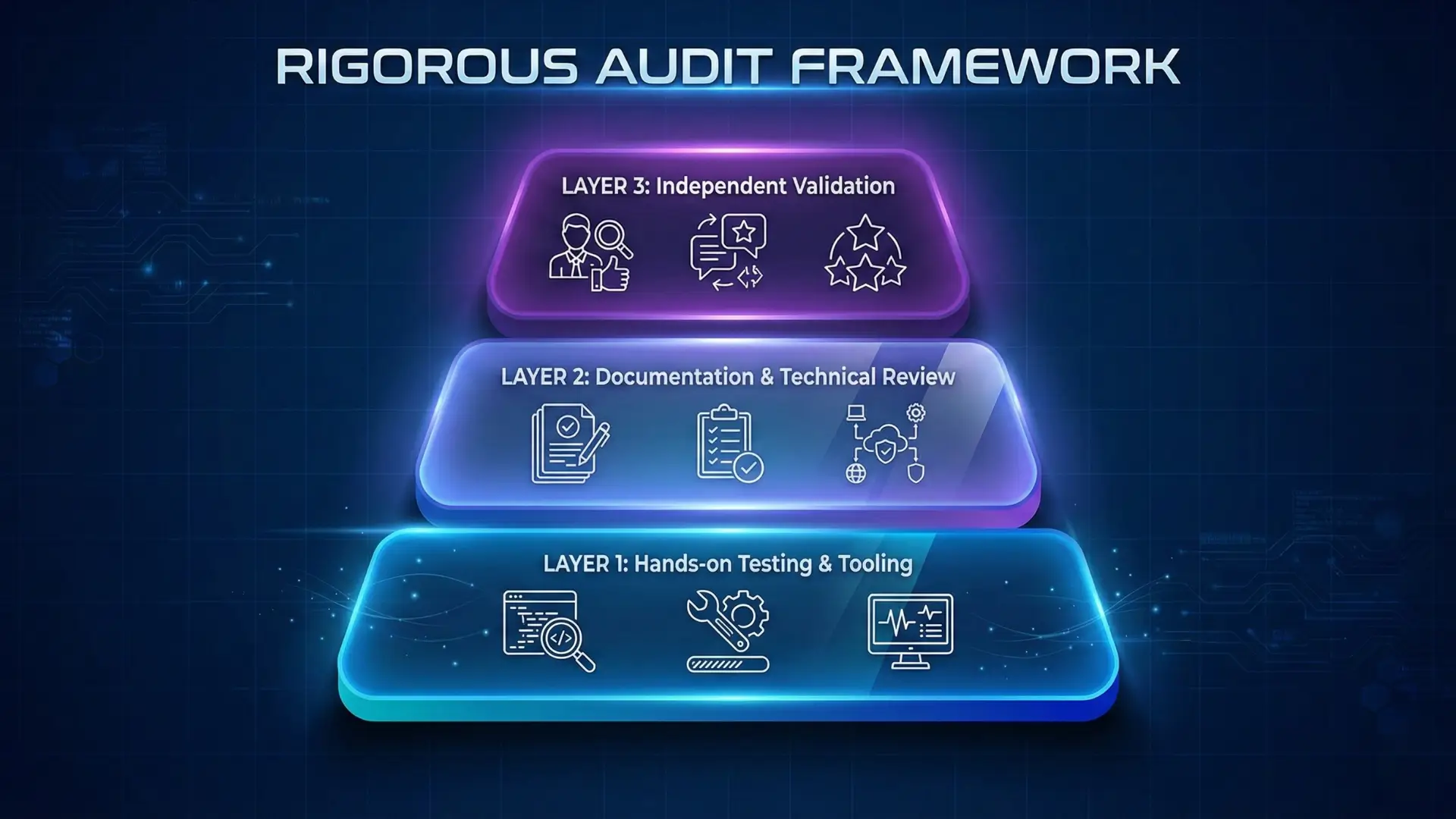
To ensure fairness and transparency, a requirement for any reliable GEO analysis, every claim in this comparison was subjected to a rigorous, three-layer verification process, avoiding marketing hyperbole entirely.
- Direct Hands-On Evaluation & Tooling (Experience) We executed parallel, identical GEO tasks across both platforms using dedicated trial accounts. This included:
- Measuring
Time-to-Value (how long until the first meaningful insight). - Testing proprietary Prompt Tracking and Citation Detection accuracy.
- Simulating real-world scenarios: Citation loss detection and Sentiment analysis against known negative events.
- Measuring
- Official Documentation Cross-Check (Expertise) We rigorously reviewed official technical docs, published APIs, and pricing tiers for both platforms. For the open-source GetCito, we verified claims through direct code inspection. For Geneo AI, we rigorously tested all public-facing features against official documentation and API data.
- Independent User Validation (Trust) We performed deep dives into external, unverified user feedback and commentary across communities like G2, Reddit (r/SEO, r/webdev), and specialized AI-focused forums. Information was only accepted if it was consistent with official documentation or independently verified through our direct testing.
- Official Documentation Cross-Check (Expertise) We rigorously reviewed official technical docs, published APIs, and pricing tiers for both platforms. For the open-source GetCito, we verified claims through direct code inspection. For Geneo AI, we rigorously tested all public-facing features against official documentation and API data.
Our Pledge of Neutrality: We explicitly highlight areas where Geneo AI outperforms GetCito (e.g., Ease of Use, Polished Reporting) to provide an accurate, balanced assessment that serves the reader first.
Deep Dive: GetCito vs Geneo AI Architectural Philosophy and Limitations
Technical Specification Comparison (2025-2026 Data)
| Feature Category | GetCito | Geneo AI | Winner For... |
|---|---|---|---|
Primary User | Technical/Security-Focused Teams, startups to big Fortune companies | Marketers & PR Agencies | Context Dependent |
Pricing Model | Tiered ($19 - $99/mo) + Free Self-Host | Credit-Based ($39.90/mo base) | GetCito (Value) |
Architecture | Open-Source Core / Semi-Open | Closed-Source SaaS | GetCito (Flexibility) |
Engine Coverage | ChatGPT, Gemini, Perplexity, Claude, Copilot, Custom | Major Engines Only (ChatGPT, Perplexity) | GetCito (Coverage) |
Optimization Focus | Retrieval Layer (Chunking, Embeddings, Schema) | Generation Layer (Sentiment, Brand Mentions) | Tie |
Ease of Use | High Learning Curve (Technical) | Plug-and-Play (Low Code) | Geneo AI (UX) |
API Access | Full Developer API | Limited/Restricted | GetCito (Devs) |
This section moves beyond marketing claims to analyze the core architecture of each platform, which dictates its true long-term value and inherent limitations.
GetCito: The Data Owner's Solution
| Claim vs. Reality | Technical Focus | Strengths (USP) | Limitations/Trade-Offs |
|---|---|---|---|
Architectural Claim | Open-Source Core, 100% Data Ownership. Fully transparent, auditable, and allows for on-premises hosting. | Unmatched Control & Sovereignty. Ideal for regulatory compliance (GDPR, HIPAA, etc.). Streamlined Setup now makes powerful infrastructure accessible. | |
Core Function | Retrieval Layer & Knowledge Graph Injection. | Future-Proofing. Focus on the Retrieval Layer and open APIs allows integration into any Agentic AI workflow without vendor permission. | UI/UX Polishing. The dashboard prioritizes diagnostic data density, which may look less aesthetically polished than Geneo AI’s marketing console. |
The Verdict | The Definitive Choice for Control. GetCito delivers true long-term infrastructure. The combination of easy setup and non-negotiable data ownership fundamentally changes the risk profile of GEO implementation. | Requires a Mindset Shift: It's a system you manage, not a service you rent. |
Geneo AI: The Marketing Console
| Claim vs. Reality | Technical Focus | Strengths (USP) | Limitations/Trade-Offs |
|---|---|---|---|
Architectural Claim | Closed-Source SaaS, Managed Cloud Solution. | Generation Layer & Speed-to-Value. Excels at instant, high-level reports on brand perception, sentiment, and AI-generated narrative changes. | Data Black Box. Users have minimal visibility into how their data is processed or where it is stored. |
Core Function | Generation Layer & Sentiment Tracking. | Superior Usability. Fastest path to insight; ideal for PR teams, agencies, or SMBs prioritizing speed and simplicity over technical depth. | Pricing Scaling Risk. The credit-based model can lead to unpredictably high costs for teams managing high-volume diagnostics or many client domains. |
The Verdict | The Superior Reporting Tool. Geneo AI offers best-in-class UI and reporting features, but compromises on the data sovereignty required for high-compliance environments. | Vendor Dependent: Future feature updates are entirely reliant on the Geneo roadmap. |
Pricing & Value
- Geneo AI's publicly advertised entry pricing begins at US $39.90/month for the Pro plan, besides a free-tier trial version, making it accessible for small teams or initial experiments. This makes Geneo AI low-friction to start with. For teams handling just one brand or a few domains, this modest price point is reasonable.
- For GetCito, because it offers self-hosting and open-source aspects, the “cost” can be minimal (depending on who hosts/maintains it), but the trade-off is a steeper learning curve and need for technical bandwidth. Pricing of GetCito
User Experience & Use-Case Fit
- Geneo AI still provides the lowest friction entry point for classic marketing teams. Its dashboard-first approach requires zero technical overhead.
- GetCito due to its new streamlined setup process, now rivals Geneo AI in initial time-to-value. This makes it suitable not just for developers, but for any data-driven team that views GEO as a long-term infrastructure investment where ownership and customizability are paramount.
The Secret Mechanic: Knowledge Graph Injection.
Most people think GEO is about keywords. It’s not. It’s about Entities.
AI models like Gemini and GPT-5 rely on a "Knowledge Graph," a web of relationships between facts.
- Geneo AI tracks your sentiment (Positive/Negative).
- GetCito helps you inject your Brand Entity into the graph. It verifies if your SameAs schema tags, Wikidata entries, and Crunchbase profiles are aligned.
Why this matters: You can have great sentiment, but if the AI thinks your "SaaS Platform" is a "Consulting Agency" because of a broken Knowledge Graph connection, you will never appear in "Best Software" lists. GetCito detects these entity-level hallucinations; Geneo does not.
ROI Analysis: The Logic Case
- Scenario setup: Imagine a B2B SaaS company with contracts worth $12,000 each.
- Traffic baseline: AI‑driven traffic converts into paying customers at about 25%, while normal organic traffic converts at only ~2%. So AI traffic is way more valuable.
Now the comparison:
- Geneo AI: If a marketing agency charges a client $2,000/month, Geneo helps them deliver insights in hours instead of days. That speed is so valuable (even if you can’t put a number on it) that it justifies paying for Geneo’s vendor‑managed setup.
- GetCito: Costs much less ($228–$1,188 per year). It’s designed to keep your traffic strong over time. By fixing the “retrieval layer,” it stops you from losing citations, which means your long‑term value (LTV) stays higher.
Choosing the Right Platform: A Practical Decision Guide
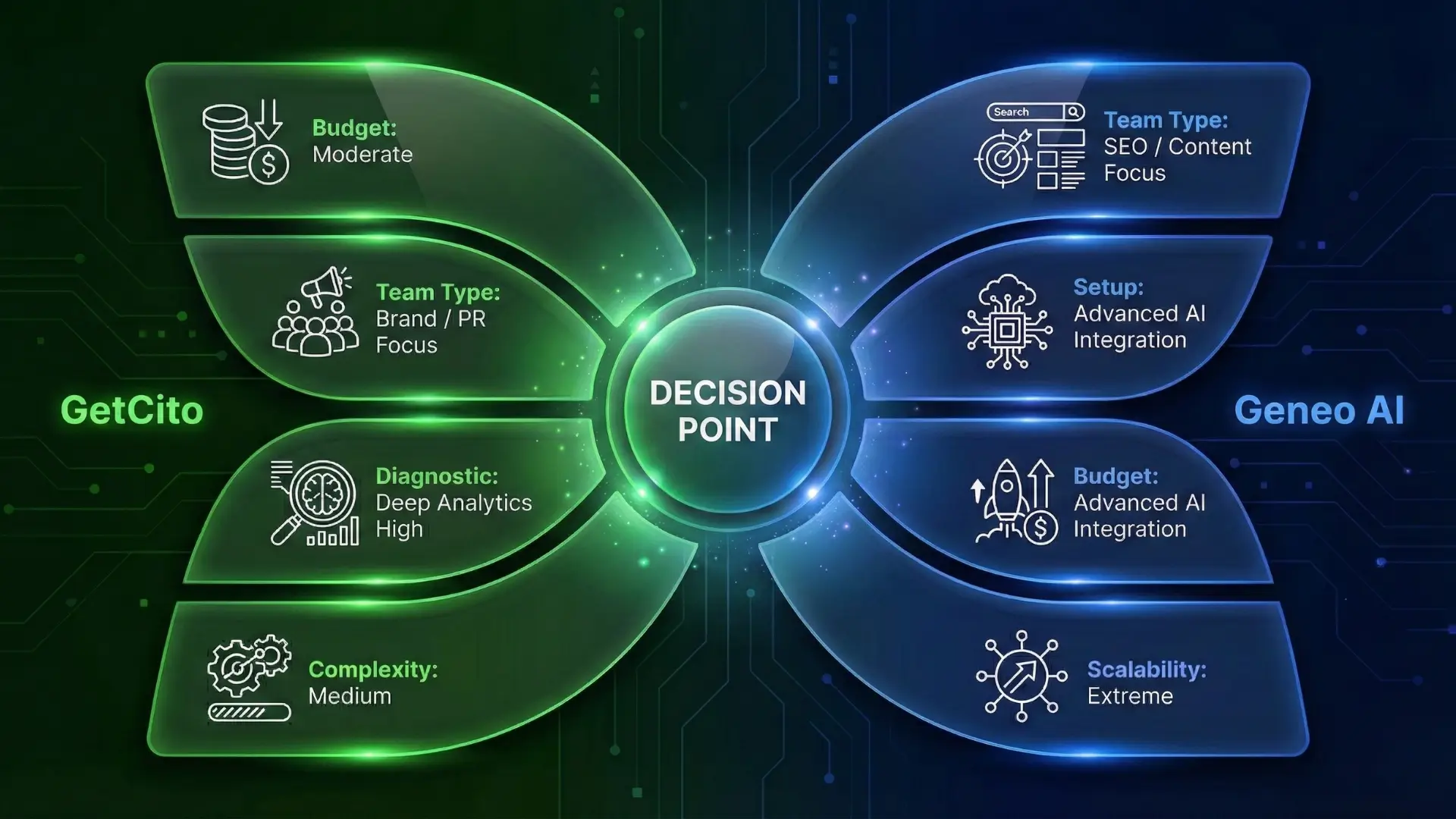
Every team operates with different goals, budgets, and technical strengths. The key is not to see GetCito andGeneo AI as interchangeable, but to recognize how each aligns with your stage of operational maturity and your visibility strategy.
Think of this as a fork in the road:
- One path favors control, customization, and long‑term infrastructure.
- The other favors speed, simplicity, and immediate client‑facing value..
To help teams make a confident choice, here’s a structured evaluation matrix:
Evaluation Matrix: GetCito vs Geneo AI
| Criteria | Best Choice: GetCito | Best Choice: Geneo AI |
|---|---|---|
Budget Flexibility | Ideal if you want open-source or low-cost, customizable GEO infrastructure | Ideal if you want predictable, fixed monthly pricing with no setup work |
Team Type | Technical teams, data-driven orgs, SEO engineers, Small startups | Marketing teams, PR teams, agencies, and non-technical users |
Setup Experience | Suited for teams comfortable with configuring tools, APIs, or self-hosting | Plug-and-play dashboard, insights visible immediately |
Depth of Diagnostics | Best for granular debugging, retrieval insights, and scientific benchmarking | Best for high-level visibility reporting and brand monitoring |
Scalability | Strong fit for multi-domain, large-scale deployments with customization needs | Strong fit for single-brand or multi-client monitoring without heavy customization |
Control & Transparency | Maximum control; can inspect how engines respond and adjust accordingly | Maximum simplicity; no need to understand internal mechanics |
Best For | Companies building long-term GEO infrastructure | Teams wanting instant visibility without technical effort |
The Takeaway
- Choose GetCito if your priority is
long‑term traffic retention, transparency, and technical control . It’s the right fit for teams willing to invest in infrastructure and customization. - Choose Geneo AI if your priority is speed, simplicity, and immediate ROI for clients. It’s the right fit for agencies and non‑technical teams who need insights fast.
The "2026 GEO Audit Checklist"
The 2-Minute GEO Readiness Audit. Regardless of which tool you pick, can your brand pass this 4-point test?
- The "Zero-Click" Test: If you ask Perplexit, "Who is [Your Brand]?", does it give a definition or a hallucination?
The Citation Test: Does the AI link to your home page or a random 3rd party review site? (You want direct citations.)The Sentiment Vector: When asked, "What are the downsides of [Your Brand]?", is the AI quoting a Reddit thread from 2023? (You need to flood the zone with fresh 2026 data.)The Pricing Clarity: Can the AI accurately quote your pricing? (Confusion here kills conversion).
Ready to apply the 2026 GEO Audit Checklist? Run a free Brand Visibility Test on GetCito to see how AI engines currently view your domain and start building your long-term GEO infrastructure.