

AI Overviews are now reaching more than 2 billion people every month, across 200+ countries and in 40 different languages, according to Google. At the same time, ChatGPT has climbed to become the fourth most visited website globally, attracting over 5 billion visits each month, as reported by Semrush. Together, these milestones highlight a major shift: search is no longer just about scrolling through links; it's about receiving a complete, contextual answer directly from AI.
People are beginning to treat search engines like trusted advisors. They ask questions in plain language and receive instant, conversational responses. For users, this is a breakthrough in convenience. But for businesses and content creators, it signals a serious challenge: organic traffic is shrinking at scale.
People today often get the answers they’re looking for without ever clicking a single website. This growing trend, known as Zero-Click Search, is reshaping how information is consumed online.
For brands, it creates two major hurdles:
- Attribution Black Box: AI engines may cite sources occasionally, but more often they blend insights together without giving clear credit.
- Visibility Challenge: It's difficult to know if your content is being used, how it's being interpreted, or whether your expertise is truly represented.
The message is simple: the traditional SEO playbook isn’t enough anymore. To stay visible in this new environment, brands needGenerative Engine Optimization (GEO), a strategy built to make sure your content isn't just discoverable, but also directly cited inside AI-generated answers.
What is Generative Engine Optimization (GEO)?
Generative Engine Optimization (GEO) is the science of ensuring your brand or expertise is cited directly in AI-generated answers. Unlike SEO, which focuses on ranking high in SERP, GEO focuses on visibility within AI-generated responses. To become a certified GEO expert in 2026, you must master LLM fundamentals, structured content, authority signals (E-E-A-T), and AI analytics. With AI Overviews and zero-click searches dominating, GEO certification positions you as the authority brands and AI engines trust.
Digital Visibility in the AI Era
The way people discover information has changed dramatically with the rise of AI‑powered search. Classic SEO tactics like crawling, indexing, and keyword targeting still matter, but they’re no longer enough to secure visibility on their own. Today, winning attention means going beyond traditional search optimization and focusing on Generative Engines that provide direct, conversational answers.
Why GEO Matters
- Research shows that the #1 organic search result can lose over one-third of its clicks when an AI Overview appears.
- Early GEO adopters report up to 40% higher inclusion in AI responses, with leads converting at 4.4x the rate of traditional organic traffic.
- As user behavior shifts from search bars to conversational prompts, GEO is becoming the foundation of digital visibility.
The Risk of Ignoring GEO
Brands that fail to adapt risk invisibility. Valuable content may remain buried while competitors optimized for AI discovery are featured prominently. With rapidly becoming the primary interface for information retrieval, GEO is projected to dominate the digital landscape. Analysts predict that by 2027, GEO will be the main visibility tool across consumer-facing industries.
Bottom Line: The time to build GEO expertise is now. Waiting means losing visibility in the AI‑first world. If you wish to dive even deeper into this topic, you can refer to our dedicated article, “What is Generative Engine Optimization?”
Who is a GEO Expert?

A Generative Engine Optimization (GEO) Expert is more than just a digital strategist; they're the bridge between your brand and the new era of AI-powered search. Their job isn't simply to make content visible; it is to ensure that the content and the entity areunderstood, trusted, and cited by answer engines like ChatGPT, Google Gemini, and Perplexity.
Unlike traditional SEOs that focus on climbing the rankings of “blue links,” GEO specialists concentrate on making content easy for large language models to understand, retrieve, and showcase directly in conversational answers. Their craft is built around three core pillars:
- RAG-Readiness: Organizing information so AI systems can quickly pull it in and generate accurate, useful responses.
- Entity Authority: Establishing your brand as a recognized knowledge source within AI knowledge graphs.
- Citation Optimization: Crafting content that's quotable and explicitly referenced in AI-generated answers.
Core Skills of a GEO Expert
1. Deep Understanding of AI & LLMs
GEO experts don’t need to build models from scratch, but they do need to understand how AI “thinks.” That means having a working knowledge of:
- LLM Training: Knowing how large language models evolve through massive datasets, reinforcement learning, and continuous fine-tuning.
- Natural Language Processing (NLP): Understanding how AI interprets intent, context, and meaning, not just keywords.
- Retrieval‑Augmented Generation (RAG): Making sure your content is structured so it becomes the go‑to source when AI pulls in external data.
- Knowledge Graphs & Embeddings: Positioning your content within AI’s network of connected entities and concepts so it’s easily discoverable.
2. Authority & E‑E‑A‑T on Steroids
Experience, Expertise, Authoritativeness, and Trustworthiness (E-E-A-T) are the foundation of GEO. Experts build credibility through:
- Clear author bios and credentials.
- Transparent citations and references.
- Demonstrable topical authority across niche domains.
3. Technical Acumen for the AI Age:
Beyond SEO basics, GEO experts master:
- Structured Data & Schema Markup: Using advanced schema (FAQPage, HowTo, Article) to give AI unambiguous signals.
- AI Analytics & Response Tracking: Measuring impressions and citations in a world where clicks are disappearing.
4. Strategic & Conversational Content Mindset
They design content for dialogue, not just search.
- Delivering comprehensive, natural-language answers.
- Anticipating follow‑up queries and structuring content conversationally.
- Anticipating follow‑up queries and structuring content conversationally.
- Making content quotable and clear so AI engines can lift and cite it easily.
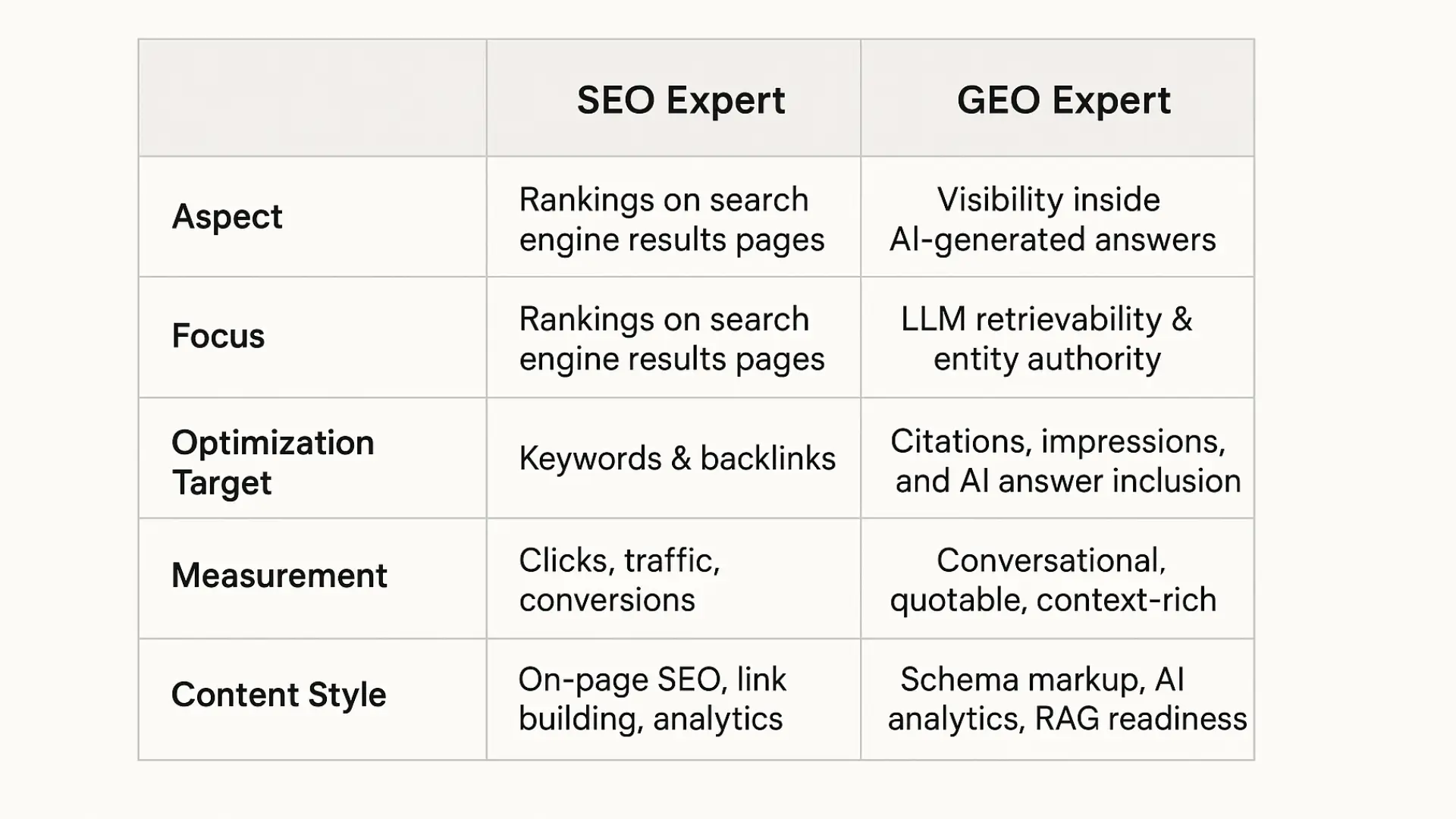
SEO Expert vs GEO Expert
| Aspect | SEO Expert | GEO Expert |
|---|---|---|
Focus | Rankings on search engine results pages | Visibility inside AI-generated answers |
Optimization Target | Keywords & backlinks | LLM retrievability & entity authority |
Measurement | Clicks, traffic, conversions | Citations, impressions, and AI answer inclusion |
Content Style | Keyword-driven, static | Conversational, quotable, context-rich |
Tools | On-page SEO, link building, analytics | Schema markup, AI analytics, RAG readiness |
The 2026 Roadmap: From SEO Generalist to GEO Architect
Mastering Generative Engine Optimization (GEO) isn't about chasing algorithm updates; it is about understanding the architecture of retrieval. To succeed, you must move beyond "optimizing for clicks" and start "optimizing for synthesis." You must ensure your content is not just found, but understood, retrieved, and reconstructed by the AI.
This roadmap outlines the 12 core competencies required to engineer content for the AI era.
The GEO Competency Matrix
| Phase | Focus Area | Key Outcome |
|---|---|---|
Mechanics | Retrieval Architecture | Understanding how LLMs prioritize and fetch data via RAG. |
Content | Information Density | creating "high-gain" content that statistically stands out to models. |
Technical | Entity Establishment | Speaking the machine's language via Schema and Knowledge Graphs. |
Analysis | Model Arbitrage | Measuring and optimizing "Share of Model" visibility. |
Phase 1: Mechanics - Decoding the Machine
Stop guessing what the AI likes. Understand how the AI works.
1. Master RAG (Retrieval-Augmented Generation) Logic
Don't just write "good content." Write content that fits the RAG workflow.
- The Mechanism: AI engines do not "know" your content; they "retrieve" it to answer a query.
- The Skill: Learn to structure data so it fits into the "Context Window" of an LLM. If your content is buried in fluff, the retrieval mechanism will ignore it to save processing power.
- Action: Audit your content for "retrievability." Can a machine extract the answer in the first 50 tokens?
2. Understand Vector Embeddings & Semantic Search

Keywords are dead; vectors are the new currency.
- The Shift: LLMs map words to numbers (vectors) in a multi-dimensional space. "Running shoes" and "marathon training" are mathematically closer than "running shoes" and "formal shoes".
- The Skill: Optimize for Semantic Proximity. Ensure your content covers not just the target keyword, but the entire "constellation" of related concepts (Topical Authority) to move your content closer to the user's intent vector.
3. Analyze "System Instructions" & Safety Guardrails
Every model has a "constitution."
- The Constraint: Models like Gemini and GPT-4 have strict safety and bias guidelines. If your content is inflammatory, overly sales-heavy, or non-neutral, the model's safety layer will filter it out before it generates an answer.
- The Fix: Adopt an "Encyclopedic Tone." Neutral, objective, and data-backed content has a higher acceptance rate in AI responses than persuasive copy.
Phase 2: Content Engineering - Optimizing for Synthesis
Write for the synthesizer, not just the human reader.
4. Maximize "Information Gain."
Differentiation is no longer optional; it is mathematical.
- The Metric: Information Gain = New Information - Existing Consensus.
- The Reality: If your content mimics the top 10 search results, the AI treats it as redundant noise.
- The Strategy: You must provide Novelty. This means original data, unique case studies, or a contrarian expert that exists nowhere else in the model's training data.
5. Master Structural Fluency (The "Answer Shape")
AI models favor content that is easy to parse.
- Format for Machines: Replace long-form prose with structured data formats: Comparison Tables, Bulleted Lists, and Key-Value Pairs.
- The BLUF Method: Bottom Line Up Front. Place the direct answer immediately after the heading. This mimics the "training data" format models prefer, making your content highly quotable.
6. Optimize for Multi-Modal Retrieval
Text is only 50% of the equation.
- The Future: Models are "looking" at images and video frames.
- The Skill: Use descriptive, entity-rich filenames and Alt Text. Ensure your video transcripts are clean and indexable. A chart in a JPEG is invisible unless you describe the data points in the metadata.
Phase 3: Technical Authority - Defining the Entity
You are not a website; you are an Entity in the Knowledge Graph.
7. Build a "Knowledge Graph" Strategy
Become a named entity, not just a URL.
- The Goal: You want the AI to know who you are without needing to crawl your site every time.
- The Execution: Use Schema markup aggressively. Define your Organization, Author, and SameAs properties. Link your brand to other authoritative entities (Wikidata, Crunchbase, LinkedIn) to solidify your place in the Knowledge Graph.
8. Implement "Citation Architecture."
Links pass juice; Citations pass trust.
- The Strategy: AI models weigh "co-occurrence." If your brand name appears frequently alongside words like "expert," "leading," and "study," the model associates you with authority.
- Action: Focus Digital PR on high-authority publications and academic journals. Being cited in a PDF or whitepaper is often more valuable for GEO than a standard do-follow blog link.
9. Python for SEO & API Prototyping

Stop relying on UI tools; go to the source.
- The Skill: Learn basic Python to interact with OpenAI and Gemini APIs.
- The Test: Feed your URL into an API and ask the model to "Summarize this page." If the model hallucinates or misses your key value prop, your GEO signals are broken.
Phase 4: Measurement & Adaptation – The Feedback Loop
Analytics has moved from "Sessions" to "Citations."
10. Track "Share of Model" (SoM)
Rankings are fluid; visibility is the new metric.
- The Metric: How often is your brand cited in the top AI answer for your core queries?
- The Tooling: Move beyond Google Search Console. Use manual auditing and emerging GEO tools to track how frequently Perplexity, ChatGPT, and Gemini reference your brand vs. competitors.
11. The "Sandboxing" Methodology
There is no playbook, only experimentation.
- A/B Testing: Test different H1 tags, summary formats, and data presentations. Does adding a "Key Takeaways" table increase your citation rate in Perplexity?
- Feed the Beast: Upload unique datasets (PDFs, whitepapers) to public repositories and track if models begin citing this data in relevant queries.
12. Continuous Learning: The Research Paper Workflow
Don't follow influencers; follow the engineers.
- The Source: Algorithm updates are now "Model Updates." Read research papers on NLP (Natural Language Processing) and Information Retrieval from ArXiv.org.
- Why it matters: Grasping concepts like Chain‑of‑Thought Prompting or Context Windows gives you the ability to reverse‑engineer how a model processes information. That insight can put you months ahead of competitors who are still waiting for the next blog post to explain it.
Actionable Step
Audit your "Answer Shape" today. Pick your top-performing blog post. Paste the text into ChatGPT and ask: "Extract the core answer from this text in one sentence."
- If it takes the AI more than 3 seconds or the answer is vague, your content is not GEO-ready.
- Rewrite the introduction using the BLUF (Bottom Line Up Front) method and re-test.
GEO Certification Courses in 2026
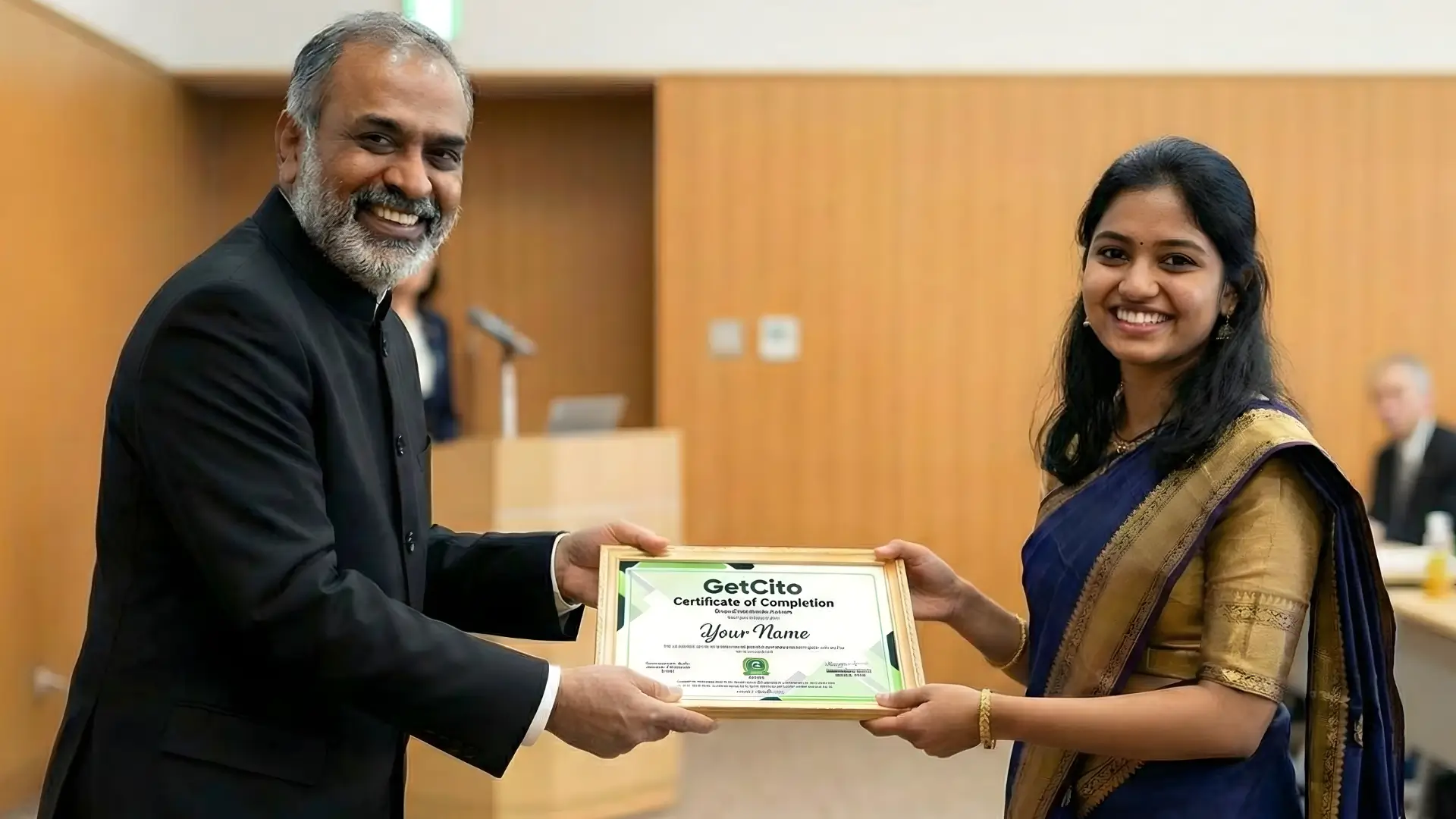
If you're aiming to become a Certified Generative Engine Optimization (GEO) Expert, structured learning programs are one of the fastest ways to establish credibility. These courses don’' just sharpen your technical skills, they also act as clear authority signals that both AI engines and employers pay attention to.
Best Generative Engine Optimization & Answer Engine Optimization Courses
- GetCito Free GEO Certification Course →
A practical, hands-on program designed to teach the fundamentals of Generative Engine Optimization. Includes modules on AI citation tracking, structured content, and visibility scoring. Certificate available upon completion. - GetCito Answer Engine Optimization Course →
Focused on optimizing for zero-click environments and AI Overviews. Covers strategies for quotability, semantic authority, and monitoring brand presence in generative engines. - Coursera GEO Specialization →
Beginner-friendly 8-week program covering GEO foundations, E-E-A-T principles, and AI visibility strategies. Flexible schedule, certificate of completion included. - Generative AI Courses & Certifications →
Offered by Google, DeepLearning. AI, MIT and Oxford. Covers LLMs, RAG, embeddings, and applied generative AI skills. Options range from free introductions to advanced professional certifications. - Class Central GEO Courses →
Curated list of 20+ free and paid GEO courses. Includes training on ranking in ChatGPT, Perplexity, and Google AI Overviews, with certificates available for select programs.
Why Certification Matters
- Authority Signal: Certificates demonstrate expertise to employers, clients, and AI engines that value E-E-A-T.
- Practical Skills: Courses cover schema markup, AI analytics, conversational content, and multimodal optimization.
- Career Growth: GEO is projected to become the default visibility strategy by 2027. Certification positions you ahead of competitors.
Enrolling in a GEO or Answer Engine Optimization course in 2026 is the fastest way to prove your expertise, gain visibility in AI-powered search, and future-proof your career.
The Future of GEO: The Backbone of Digital Visibility
Why GEO Is Here to Stay
Generative Engine Optimization (GEO) may sound new, but it's already reshaping how brands show up online. As AI-powered search engines become the default way billions of people find information, GEO is quickly becoming the cornerstone of digital discovery.
Search behavior is evolving. Instead of typing static queries, people are now engaging in dynamic, conversational prompts with AI. This shift means brands can't rely on traditional SEO alone; they need strategies built for an AI-first world.
Evolution of LLMs and Multimodal Search
- Smarter LLMs: Future models will pull in real-time data, understand context, and personalize answers at scale.
- Multimodal Search: Discovery won't stop at text. Voice, images, video, and even AR/VR will become part of the search journey. GEO will expand to cover visual storytelling, audio signals, and immersive content.
- Conversational AI as the Interface: The search bar is fading. Chat-driven assistants are becoming the new gateway to instant answers.
Predictions for 2027 and Beyond
- Voice-First Discovery: Smart speakers, wearables, and in‑car assistants will make spoken queries the norm. GEO must adapt to natural language responses.
- Personal AI Assistants: By 2027, most users will rely on personalized AI companions to filter and deliver information. GEO will evolve into personalized optimization, where visibility depends on being trusted by each user's AI.
- Industry-Wide Adoption: GEO will move from experimental to essential. It will be the default visibility strategy across every sector.
Conclusion
Digital marketing is entering its biggest transformation yet. Millions already depend on AI-powered search engines, and adoption is accelerating every day. Generative Engine Optimization isn't a niche tactic; it's the new frontier of digital strategy.
Sitting out is no longer an option. Competitors are already moving fast, and the brands that lean into GEO today will be the ones that dominate visibility in the AI-first era. By shaping your content to match how AI engines think, respond, and recommend, you're not just keeping up with the trend, you're securing your place in the discovery landscape of tomorrow