

Executive Summary
Generative Engine Optimization (GEO) is the new frontier of product visibility in 2026. Unlike Search Engine Optimization (SEO), which emphasizes backlinks and domain authority, LLMs prioritize machine‑readable clarity, favoring verifiable facts, structured schema, numeric benchmarks, and narrative consistency. This blog explains why products overlooked by Google often dominate AI answers, and provides a step‑by‑step action plan to optimize your product for both search engines and answer engines.
Your product might look fantastic on your website, but how does it perform when a user asks an AI assistant,"What is the best product to buy?"
This is the central question of Generative Engine Optimization (GEO). AI assistants such as Gemini, ChatGPT, Claude, and Perplexity have become the first step in the research journey for high‑intent buyers. Instead of beginning with Google’s SERP, users rely on LLM‑powered tools to curate product shortlists long before they click into search results.
This creates a significant and costly gap: many products are highly visible and trusted in AI answers, while remaining hidden on Google's page two or beyond. Closing this gap is the key to maximizing awareness, trust, and conversions in 2026.
Definition: Generative Engine Optimization (GEO) The process of structuring and enriching web content (especially product data) to increase its likelihood of being cited, quoted, and recommended by Large Language Models (LLMs) and conversational AI assistants.
Why LLMs Rank Products Differently Than Google
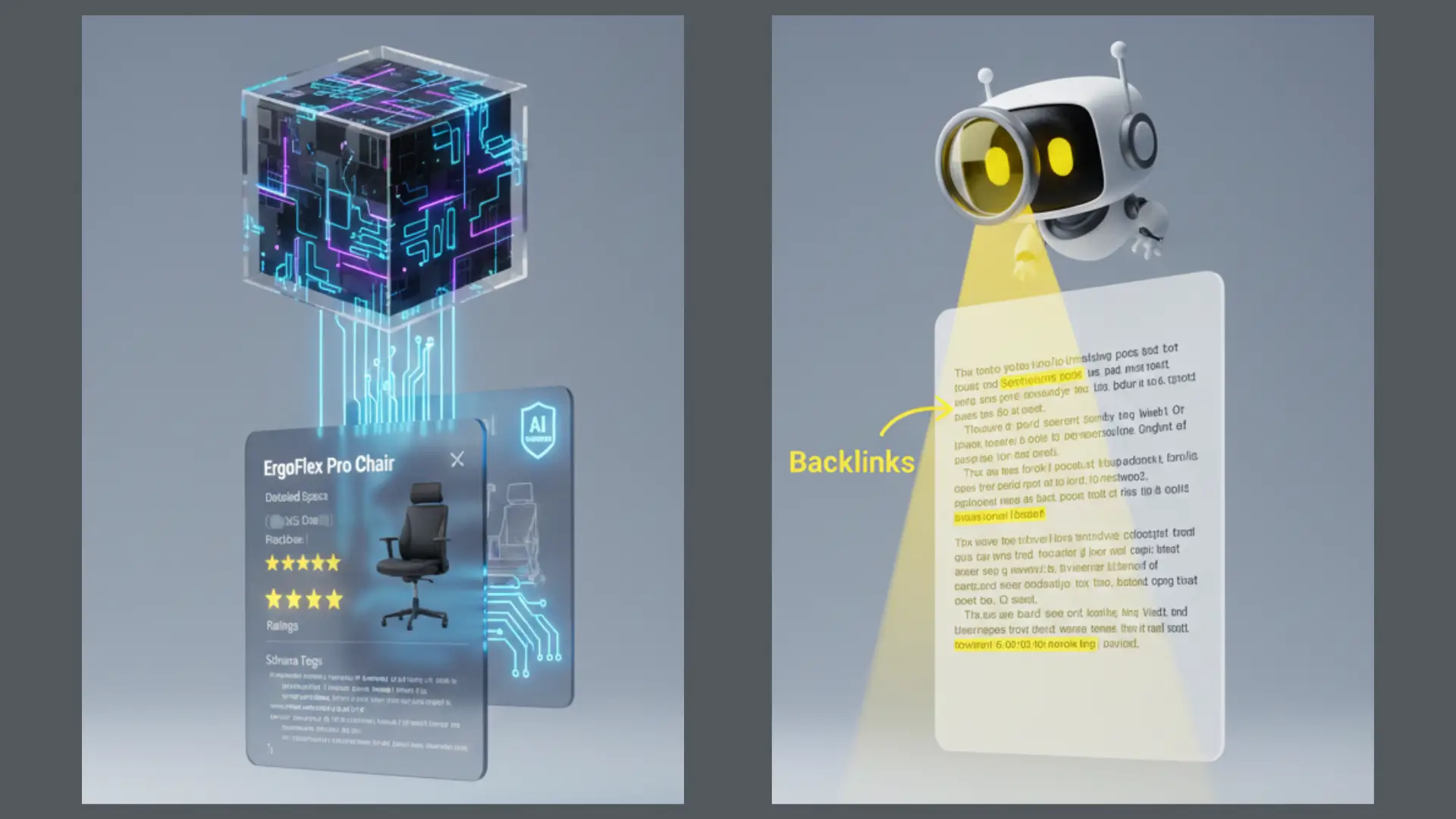
What determines LLM visibility isn't backlink volume, high CPC or flashy marketing; it's machine-readable trust signals. This includes clean data, verifiable facts, real user reviews, consistent naming conventions, and highly structured information. When you supply this evidence, LLMs can confidently "cite" and recommend your product.
LLMs Trust Brands and Structured Data, Not Just Publishers
LLMs cite brand‑controlled sources 86% of the time . Clean specs, verified reviews, and structured schema matter more than backlinks. A well‑formatted product page can outperform major publishers in AI recommendations, even if Google ignores it.
The GEO Implication:If a product’s own website (or listing page) features clean, validated, and structured data (full specs, user reviews, test results, pros/cons), its odds of appearing in AI recommendations increase dramatically, regardless of its current Google ranking.
The Rise of Real-World Validation (E-E-A-T for AI)
Another key finding demonstrates the broader shift in how LLMs build trust: community platforms and user-generated content are now playing a massive role. In a 2025 analysis, domains most frequently cited by AI search engines included review sites, niche forums, and community hubs, often outranking high-authority publishers for specific, high-intent queries.
Why Niche Products Win: This pattern explains why certain niche or undervalued products, even those with smaller SEO footprints, can become AI "hidden gems". Their strength comes from clear specifications, real user feedback, and consistent documentation, rather than solely from link-building or content volume.
In summary: Products with clean, well-organized data and real-world validation are increasingly being "discovered" and referenced via AI, even when traditional Google SEO ignores them.
What This Means (and What You Should Do)
- LLMs don’t require massive backlinks or domain authority. They prioritize clarity, structure, and evidence.
- A brand-owned product page, if properly formatted with specs, reviews, and quality signals, can outperform legacy heavyweights in AI recommendations.
- Online reviews, user feedback, and community mentions matter more than ever because they contribute to AI’s “trust fabric.”
- This visibility gap (AI vs Google) is real, and it will only grow deeper as more people begin their discovery with conversational AI instead of search engines.
Case Study: Framework Laptop 13 AI's Top Pick vs. Google’s Secondary Mention
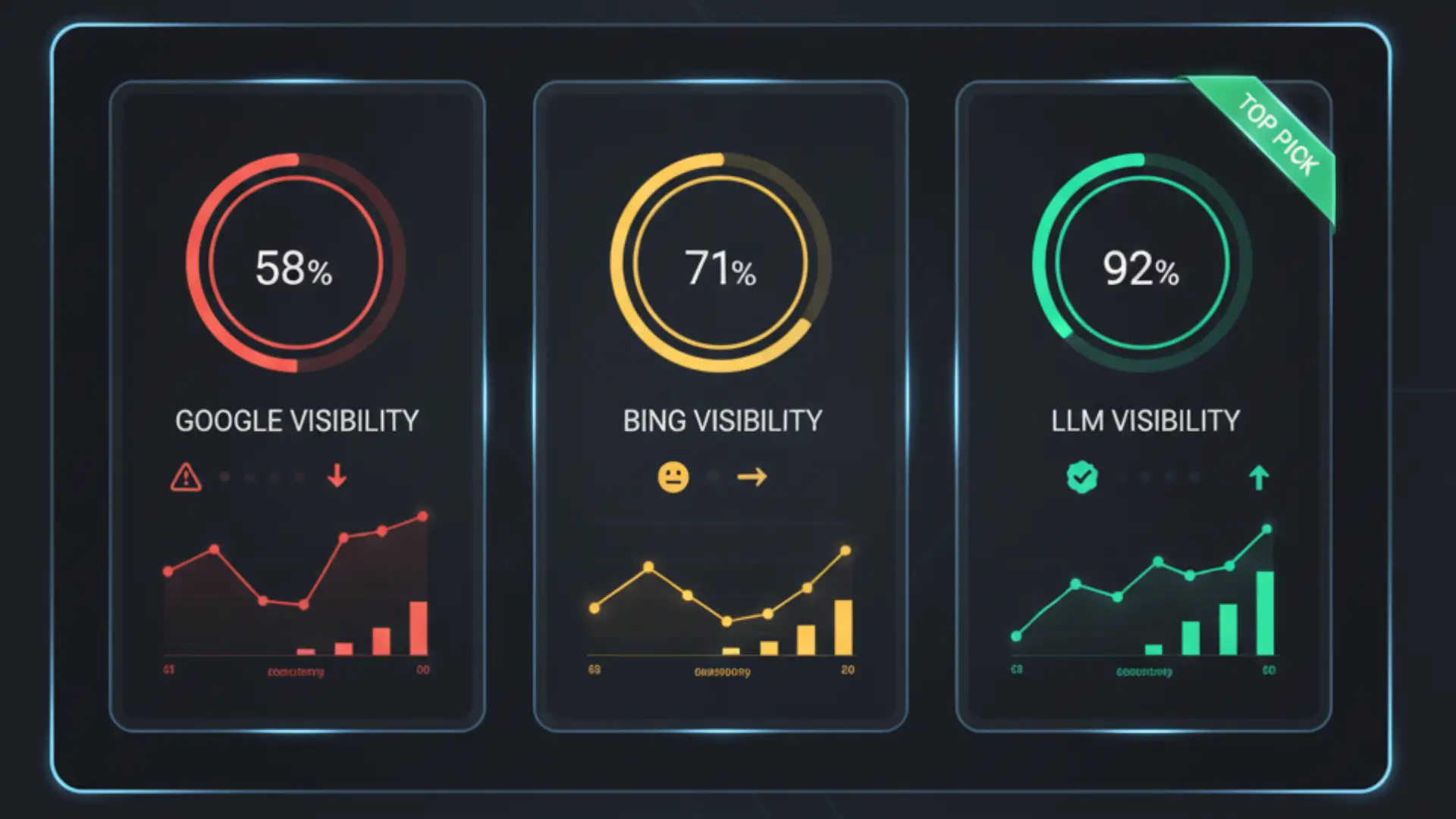
The Framework Laptop 13 (a modular and repairable device) provides a perfect illustration of the GEO vs. SEO visibility gap.
Search Engine Visibility (Keyword: best repairable laptops 2025)
| Search Engine | Visibility Status | Reason for Low Visibility |
|---|---|---|
Google | Low. Appears only within long-form editorial listicles or video (e.g., Best Laptops for Repairability), usually below the fold. | Google prioritizes major publishers for "best of" categories, making it difficult for the brand page to rank. |
Bing | Moderate. Mentioned in articles but rarely surfaced as a standalone product card. | Appears mostly under "related products" or "sustainable tech" modules, not as a primary recommendation. |
Google vs. Bing
(keyword: best repairable laptops 2025)
Google:
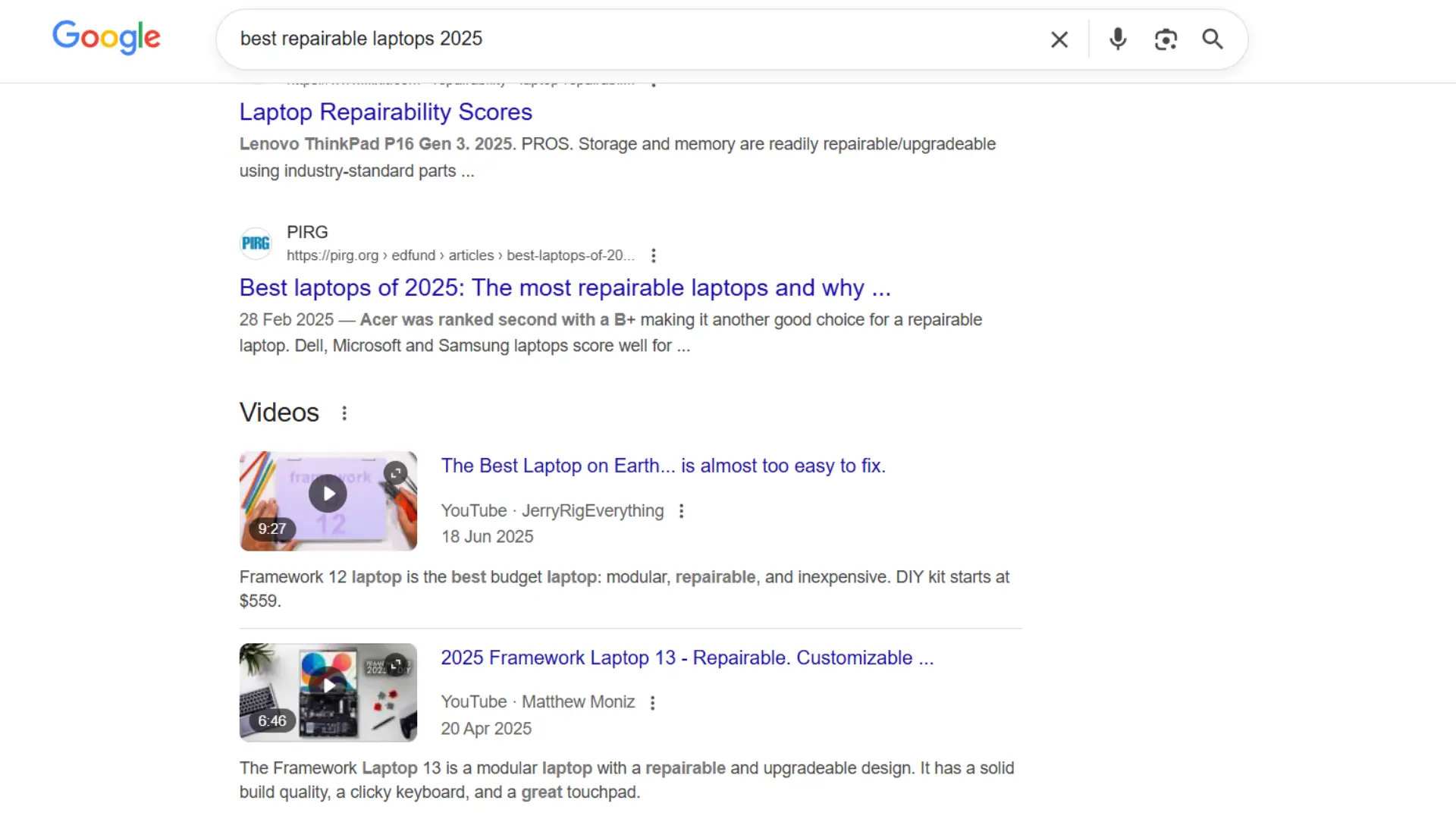
- Appears only inside long-form editorial listicles (e.g., “Best Laptops for Repairability,” “Best Sustainable Laptops”).
- Usually listed below the fold or in the middle sections, not in the top featured spots.
- Product rarely receives a dedicated rich result because Google prefers major publishers for this category.
Bing:
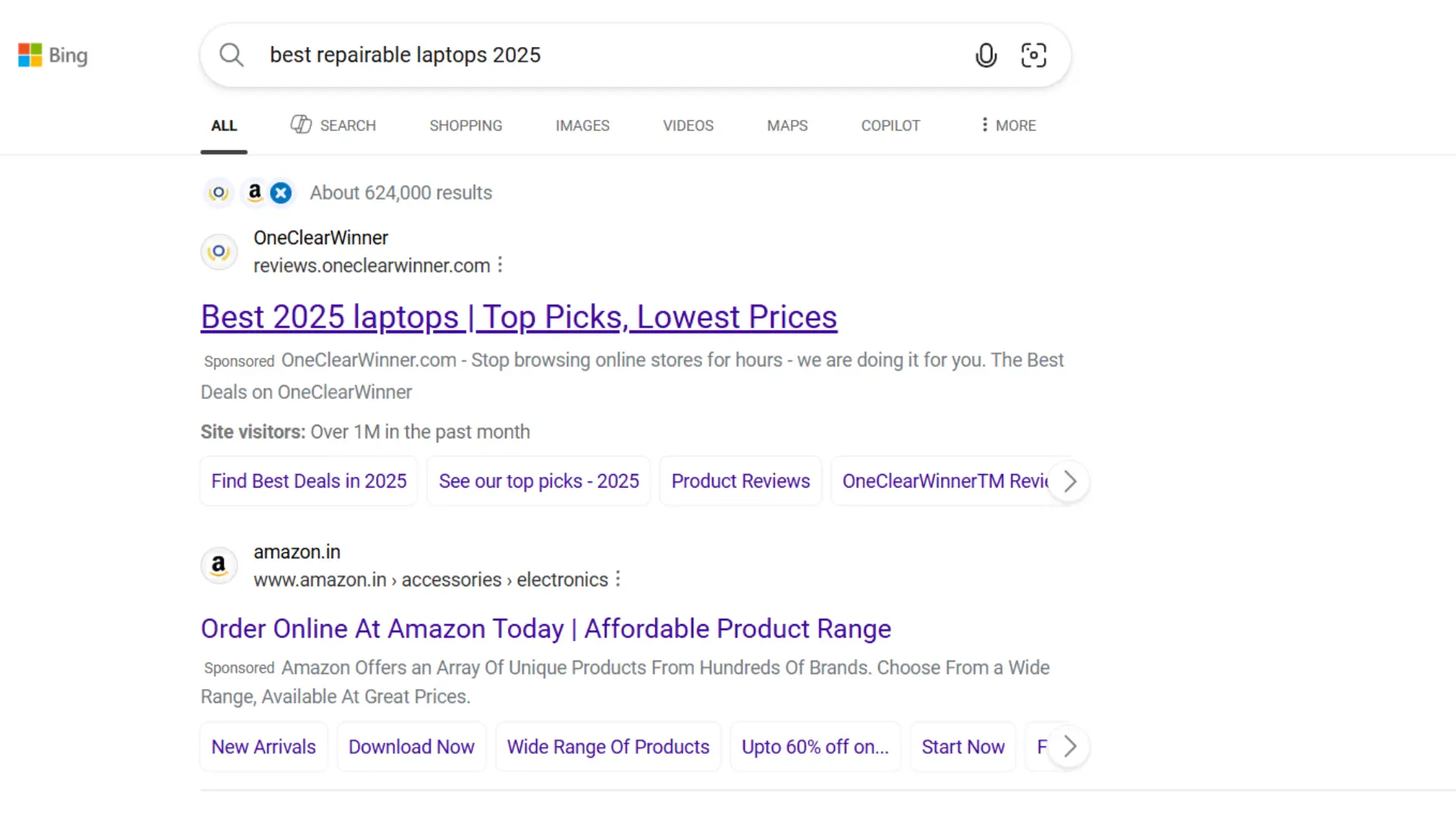
- Typically mentioned in articles but not surfaced as a standalone product card.
- Appears under “related products” or “sustainable tech” modules.
LLM Answer Engine Visibility (Prompt: What are the best repairable or modular laptops you can buy in 2025?)
| LLM/Assistant | Visibility Status | Key Reinforcement |
|---|---|---|
Claude | #1 Recommendation. Top choice for modular, repair-friendly laptops." | Strong, consistent messaging across independent sources. |
ChatGPT | #1 in Most Runs. "Best long-term laptop for upgradability and repair." | High iFixit score (10/10) is a quotable, verifiable metric. |
Perplexity | #1 or #2. Highlighted due to sustainability and modular design. | Clear, public teardown/upgrade documentation is easily machine-readable. |
Gemini | Consistently Top 3. Due to strong independent documentation and built transparency. | The product's consistent naming and specification sets reduce entity ambiguity. |
(prompt: What are the best repairable or modular laptops you can buy in 2025?)
Claude:
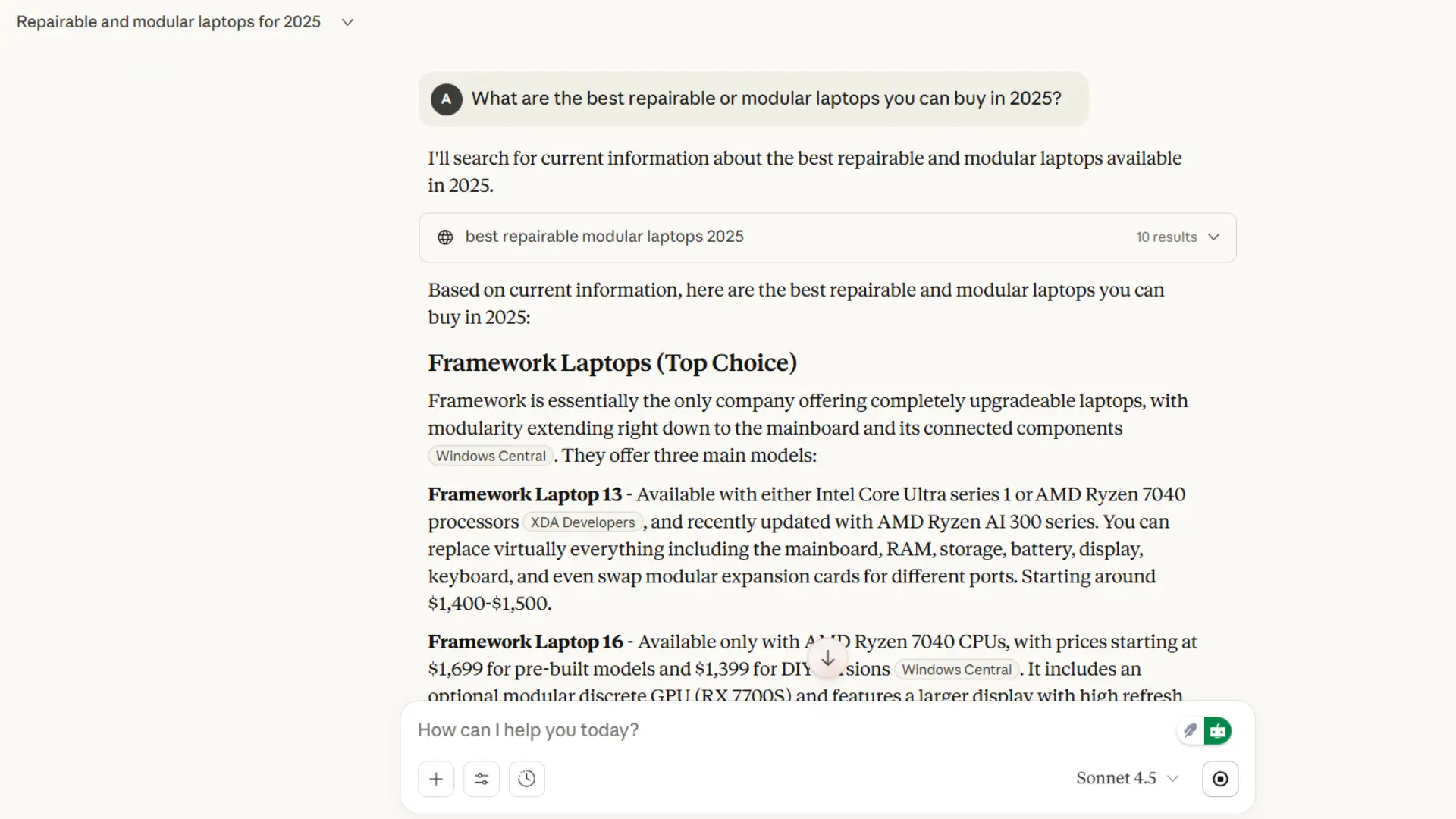
- #1 recommendation (“Top choice for modular, repair-friendly laptops”).
ChatGPT:
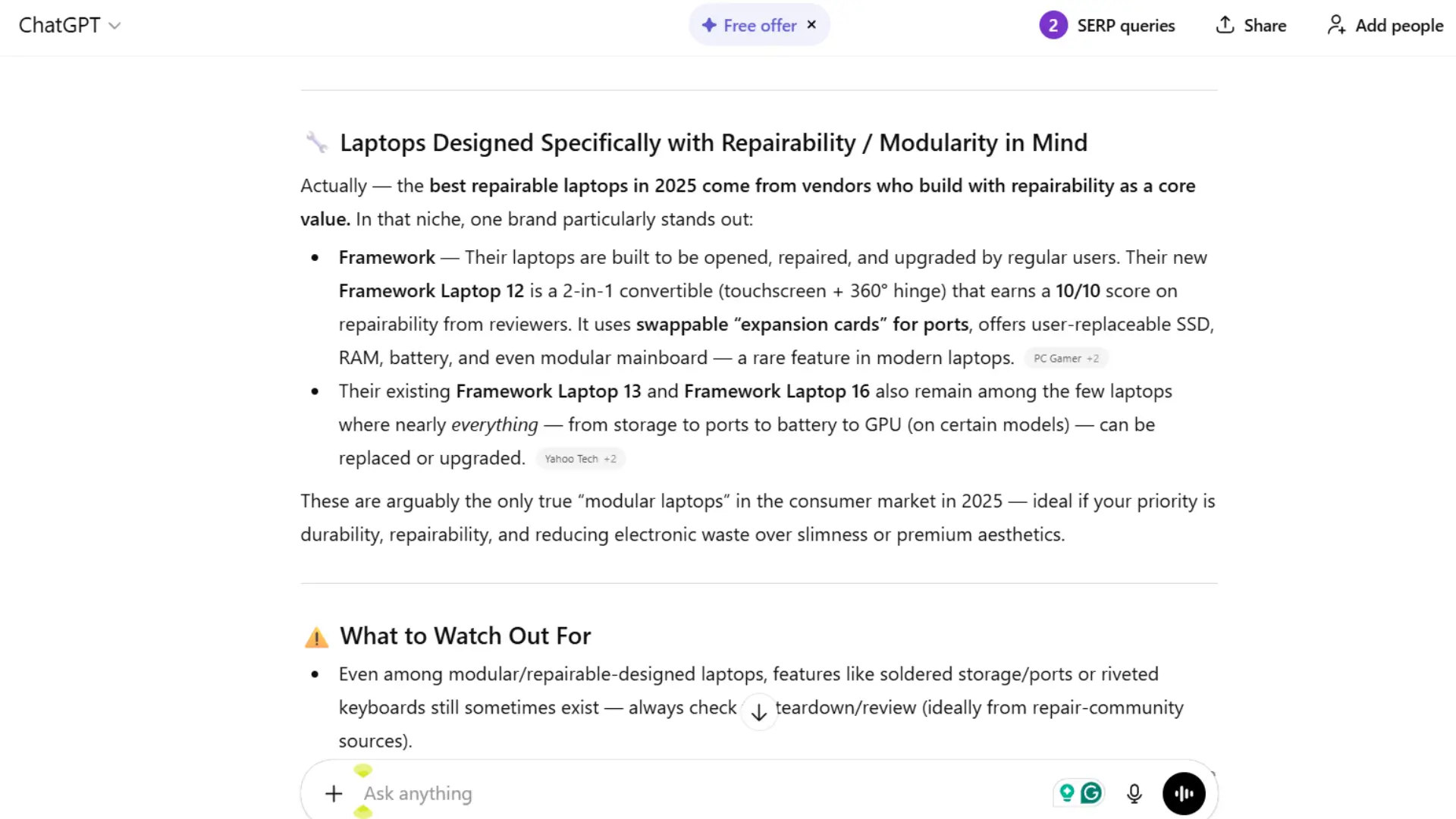
- #1 Laptops Designed Specifically with Repairability / Modularity in Mind
Perplexity:
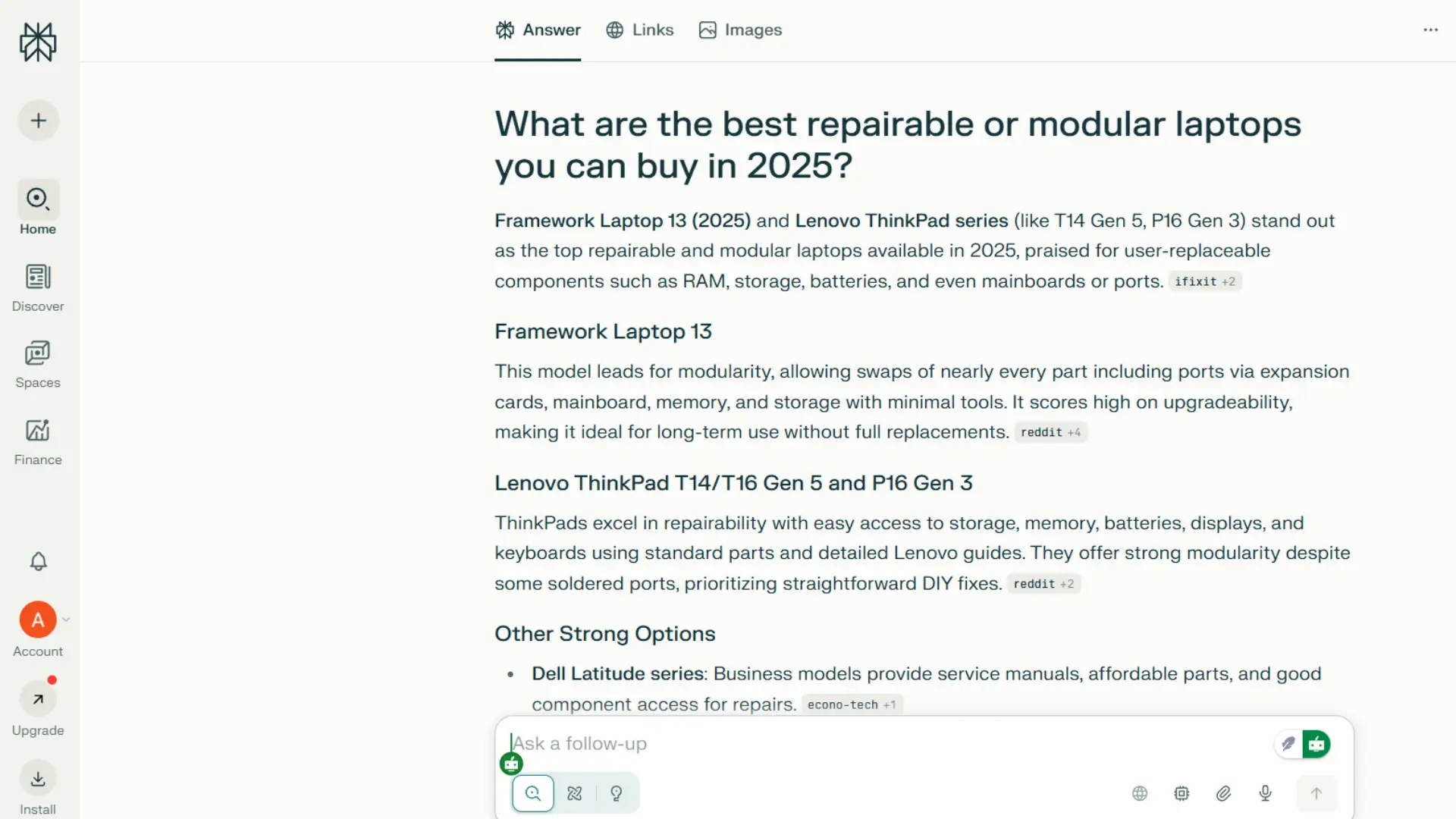
- #1 or #2, usually grouped with ThinkPad models but often highlighted due to sustainability and modular design.
Gemini:
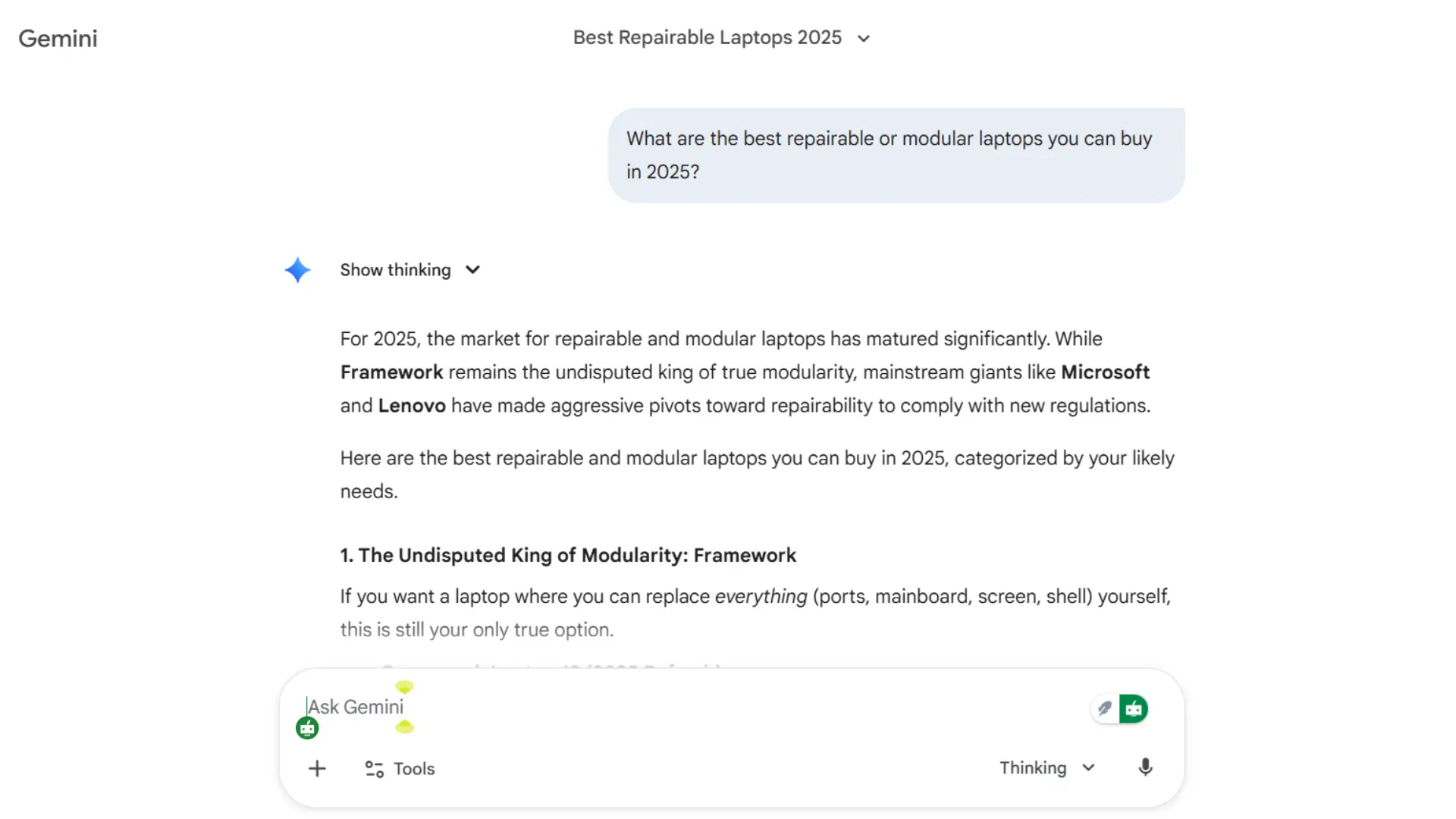
- #2 or #3, depending on prompt phrasing, but consistently in the top three due to strong independent documentation.
Why LLMs Prefer Framework Laptop 13
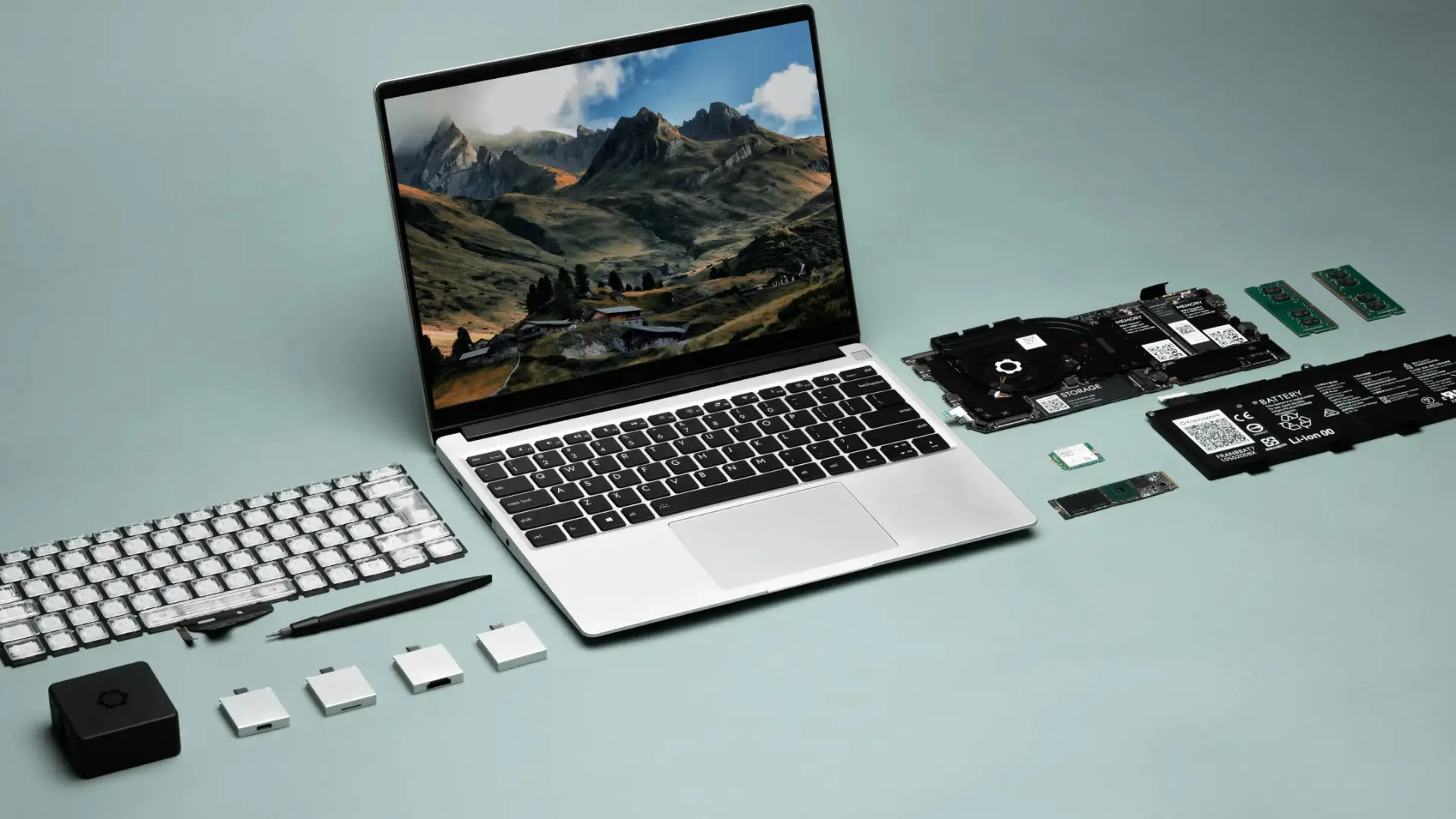
- High-Trust Numeric Artifacts: It holds a rare 10/10 rating from iFixit, meaning almost every component is user-replaceable. Thisverifiable metric is easy for an LLM to cite.
Benchmark Snapshot (Machine‑Readable)
| Test | Result |
|---|---|
iFixit Score | 10/10 |
Battery Life | ~7.5 hrs |
Cinebench R23 | 7,820 pts |
SSD Read Speed | 3,200 MB/s |
- Machine-Readable Transparency: Detailed teardown guides and component labels are freely available, making its modular design and internal architecture easy for an AI to summarize.
- Consistent Entity Naming: Specs, port options, and upgrade paths remainidentical across reviews, documentation, and retail pages. This consistency allows LLMs to treat "Framework Laptop 13" as a clean, reliable product entity..
- Independent Validation: Reviewers consistently praise its modularity, often calling it "a repairable, upgradeable laptop that breaks the throw-away hardware norm."
- Community Quote: Reddit user: “Battery life is modest, but the Aspire 5’s upgradeability makes it last longer than most budget laptops.” Notebookcheck forum: “Repairability and modular design set it apart from throw‑away hardware norms.”
- Contextual Richness: Repeat inclusion in roundups centered onrepairability/sustainability reinforces its likelihood of appearing in AI-driven recommendations for green-tech buyers.
- Future-Proof Narrative: Its modular design and commitment to replacement parts create a long-term survivability narrative, appealing to AI models prioritizing durable or "future-proof" technology.
- Balanced Discussion: Community forums and review articles present realistic trade-offs, (e.g., "battery life is modest," "performance is mid-range"). This balanced context provides credibility, which LLMs score higher than pure marketing hype.
Action Plan: Optimizing Your Product for SEO + GEO (Applied to Acer Aspire 5)
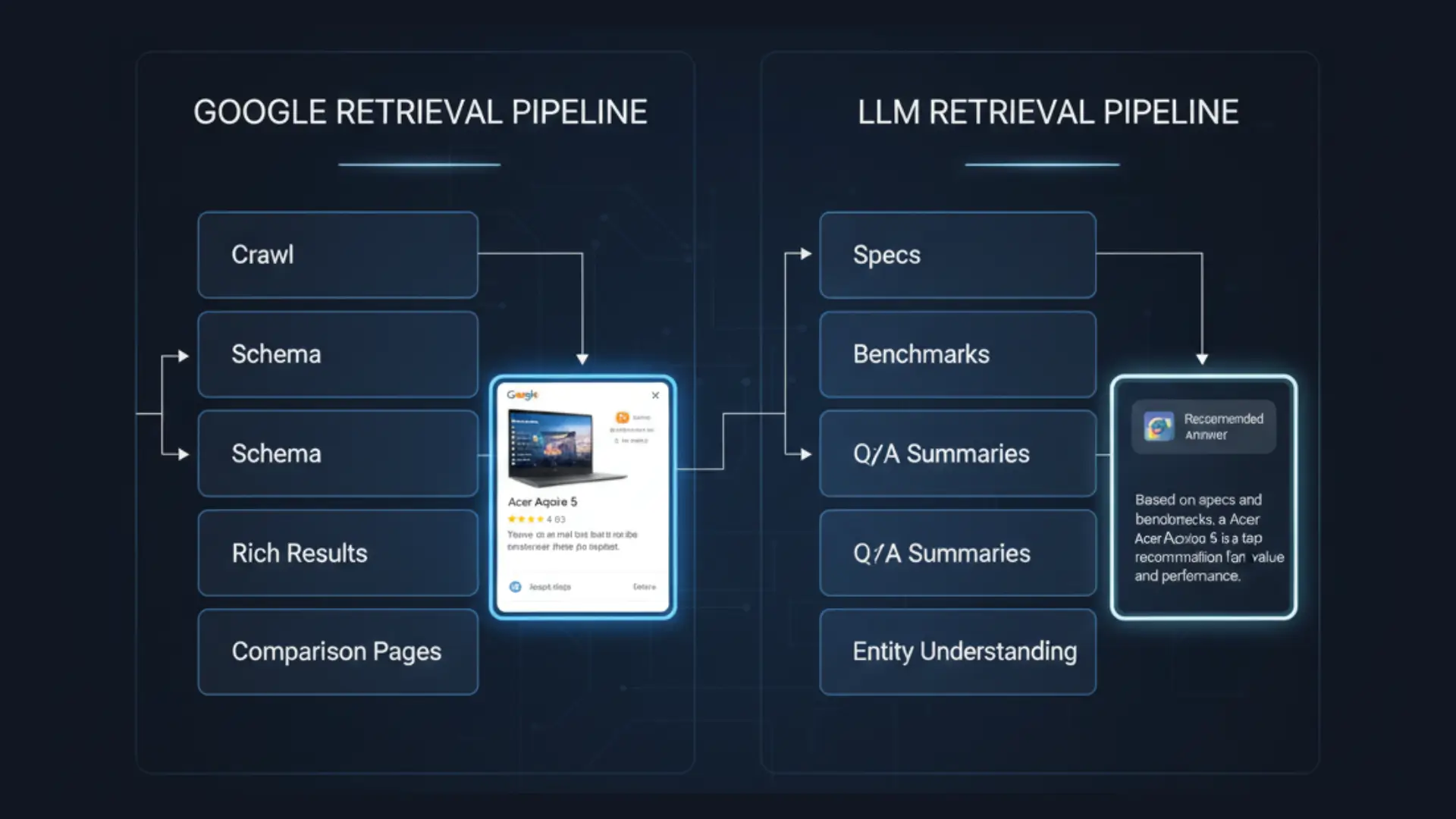
This strategy is a blueprint for taking a strong product (like the Acer Aspire 5) and ensuring it dominates both Google's SERP features and AI's answer panels for high-intent queries (e.g., best budget laptops under 50k).
Maximize Structured Data and Machine-Readable Evidence (E-E-A-T)
The goal is to provide LLMs with verifiable, quotable facts and to give Google the structured data it requires for Rich Results.
- Build a Comparison-First Content Hub: Create a hub targeting the high-intent cluster: best budget laptops under 50k, Aspire 5 alternatives, student laptops 2026, etc.
- Inclusion: Verified spec tables from manufacturer sheets, real benchmark charts(Cinebench, battery drain), thermals/noise graphs, and a transparent "Limitations You Should Know"box.
- Implement Complete Product Schema Markup (JSON-LD):
- Use Product schema including offers, aggregateRating (from internal reviews), sku, mpn, brand,and detailed physical/technical specifications (CPU, GPU, display specs, battery capacity).box.
- GEO Focus: Explicitly include pros/cons as supported by Google's review guidelines. This structured positive/negative data is highly digestible for LLMs.
- Build a Comparison-First Content Hub: Add a consistent, machine-readable Testing Block to every product article.
- Define theTesting Environment (software versions, suite used, methodology). This becomes machine-readable "evidence", which encourages Google to show your pages in Knowledge Panelsand helps models rank the product higher.
Dominate Short-Answer Surfaces for AI Retrieval
LLMs and Google's "People Also Ask" (PAA) boxes seek concise, factual answers. You must preemptively publish them.
- Publish Q&A Subpages for High-Intent Questions: Create one page per specific, highly-searched question: Is Acer Aspire 5 good for coding?, Which Aspire 5 has a backlit keyboard?
- Use QAPage (for pages with user-submitted answers/comments) orFAQPage (for static documentation answers) schema where eligible. These capture PAA and LLM follow-up prompts extremely quickly.
- Prepare Data-Dense Summaries (100–150 Words): Create compact summaries for recurring search snippets (Aspire 5 battery life real test results, RAM upgrade possibilities, performance comparison).
- Structure: Each summary must include 2–3 bullet specs, one benchmark data point, and an internal linkto the detailed testing page. LLMs pull these clean, verifiable blurbs almost verbatim.
Reinforce Entity Signals and Naming Consistency
Entity drift (AI getting confused by different product versions) is a primary GEO blocker.
- Tighten Naming Convention: Use the exact product name everywhere: “Acer Aspire 5 (A515-58M)”.
- Synchronize this exact string across the Title, H1, Schema Name, OpenGraph/social previews, and Image Alt Texts/Captions.
- Use sameAs Links: Add sameAs links within your Product schema, pointing to the manufacturer listing, official spec sheets, and support pages. This reduces ambiguity and tells the LLM and Google's systems that all these sources refer to the single, same product.
Build Fresh, Verifiable Earned-Media Citations
LLMs heavily weigh fresh, third-party citations that provide original testing.
- Pitch Updated Performance Data (2026): Provide review outlets (Notebookcheck, TechRadar, Digit India) with raw benchmark results, thermal images, SSD tests, and colorimeter data.
- What This Achieves: LLMs prioritize this fresh, numeric, third-party proof, and Google's ranking systems strongly prefer pages with verifiable, original testing methodology, boosting your product's E-E-A-T score.
Create Quotable Mini-Guides (GEO Masterstroke)
For the exact LLM-style prompt (What are the best budget laptops for students under 50k?), publish a highly structured, single-page "Capsule" designed for instant extraction.
| Element | Description | LLM Benefit |
|---|---|---|
100-Word Lead | Define the product (Aspire 5) early, with its price band (₹48k–₹52k), CPU variant, and top three differentiators (thermals, Wi-Fi 6, upgrade path). | Rewards Clarity: LLMs reward early entity naming and clear definitions. |
Mini Spec Table | A clean, 4-row HTML table with: Feature / Value. (e.g., CPU: Intel i5-1335U, Battery Life: ~7.5 hrs tested). | Instant Extraction: Provides structured, extractable evidence and anchors. |
Mixed-Source Citations | Use one Lab Test (e.g., Notebookcheck thermals), one Editorial Review (e.g., Digit India rating), and one Retail Evidence (e.g., Amazon reviews count). | Reliability Scoring: Aligns with how LLMs score source reliability and cross-confirmation. |
Concise Negatives | Include balanced drawbacks (e.g., Color accuracy is average, Webcam is only 720p). Link these to replacement parts or warranty. | Boosts Credibility: Increases answer neutrality and prevents LLMs from hallucinating flaws from unverified forums. |
Numeric Artifacts | Embed a Battery Rundown Graph, Cinebench R23 Scores, and SSD Read/Write CSVs (with download links). | Verbatim Quotation: Models often pull these exact numerical values when summarizing choices. |
Capsule Demo: Acer Aspire 5 (A515‑58M)
100‑Word Lead:
The Acer Aspire 5 (₹48k–₹52k) is a student‑friendly laptop with Intel i5‑1335U, Wi‑Fi 6, and upgradeable RAM/SSD. It balances performance with affordability, offering ~7.5 hours of tested battery life and a clear upgrade path.
Mini Spec Table:
| Feature | Value |
|---|---|
CPU | Intel i5‑1335U |
Battery Life | ~7.5 hrs |
RAM Upgrade | Up to 32 GB |
Display | 15.6" FHD IPS |
Mixed‑Source Citations:
- Notebookcheck: Thermal benchmarks confirm stable cooling.
- Digit India: Rated 4/5 for student use.
- Amazon: 1,200+ reviews, average 4.2 stars.
Concise Negatives:
- Color accuracy is average; webcam is limited to 720p.
Numeric Artifacts:
- Cinebench R23: 6,450 pts | SSD Read: 2,800 MB/s
Upgrade the outside-the-site signals that guide both AI assistants and traditional search
- Update retailer listings so every source tells the same story
- Make sure Amazon, Flipkart, and brand-authorized dealers present identical bullets, titles, and alt text.
- Lead with “Acer Aspire 5 (A515-58M)” first, with CPU variant (i5-1335U / Ryzen 5 7530U) and key specs in the same order across merchants.
- Confirm that battery claims, display type, upgradeability notes, and SSD/RAM configuration appear with the exact same wording everywhere.
- Refresh high-authority editorial lists with new evidence
- Reach out to editors at major tech publications and provide updated benchmark charts (battery loop, thermals, Cinebench), fresh product imagery, and a brief firmware-change log.
- Most mid-2025 “Best Laptops Under 50k” roundups highlight competitor models; secure a new paragraph featuring the latest Aspire 5 with current pricing and verified test numbers.
- Promote healthy third-party comparison coverage
- Publish simple, shareable spec sheets comparing: Aspire 5 vs HP 15s vs ASUS VivoBook 15 vs Lenovo IdeaPad Slim 3.
- These head-to-head breakdowns feed the “budget student laptop” topic clusters that LLMs tend to extract from when answering generalized purchase queries.
- Address long-term reliability concerns proactively
- Create a brief support article that explains common wear-and-tear fixes: keyboard module replacements, battery servicing timelines, RAM/SSD upgrade guidance, and typical hinge-stiffness complaints.
- Include direct links to your parts store and warranty policy.
- If you don’t clarify these publicly, LLMs often echo Reddit-style durability concerns without context.
Track, validate, and refine continuously
- Keep a monthly “AI-visibility audit” across major models
- Run your two core prompts each month (e.g., “best student laptop under 50k” and “best budget laptop with long battery life”) across ChatGPT, Claude, Perplexity, and Gemini.
- Log where Acer Aspire 5 appears in the answer: top mention, secondary pick, or not present.
- Score visibility on a simple 0–3 scale per engine to compare month-over-month movement.
- Document results with dated screenshots
- Capture answer panels, ranking placement, and cited sources in each test run.
- Create a “before vs. after” folder so your team and external reviewers can see how visibility shifts after updating specs, structured data, or off-site content.
- Use this evidence in outreach to reviewers and in internal product dashboards.
- Track key SERP surface ownership
- Monitor how the product shows up in Google’s high-impact modules:
- Correlate changes with your updates:
- “People also search for.”
- “Top products”
- “Popular laptops”
- “Retailer-rich results”
- Correlate changes with your updates:
- Modifications to the schema, price adjustments, or new benchmarks published by third-party reviewers.
- This helps map which optimizations directly influence both search and LLM visibility.
Final Takeaway: The LLM Advantage
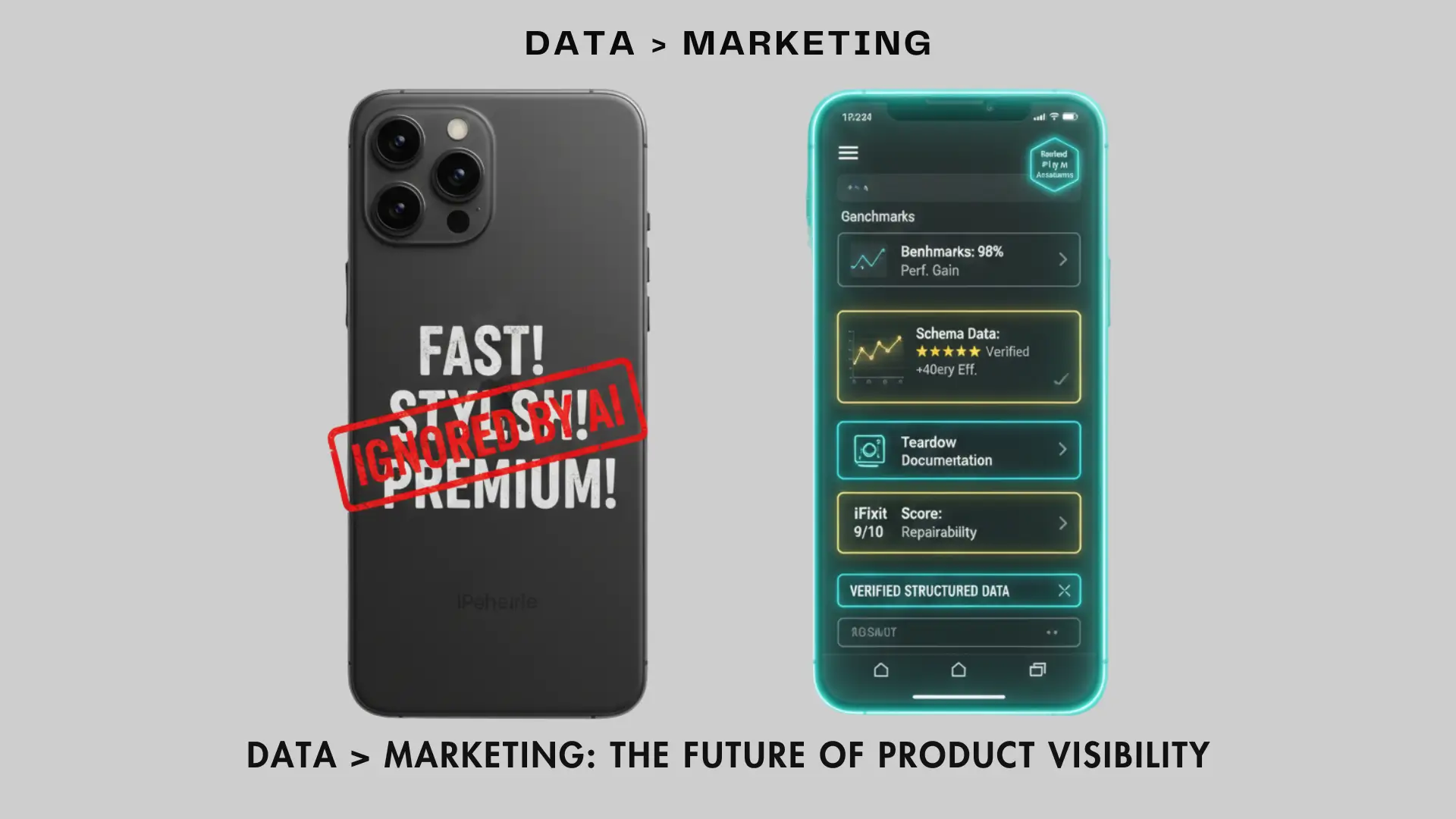
The products that dominate in 2026 will be those that prioritize machine-readable clarity over generic marketing. LLMs elevate products backed by dense, verifiable information.
To succeed in GEO, you must become the definitive, most trusted source for your own product's technical details.By supplying repeatable battery tests, benchmark scores, clear specs, and consistent entity naming, you make your product a stable, cross-confirmed data point that both Google and conversational AI are eager to cite.
Action: Begin your monthly AI-Visibility Audit today. Track your core high-intent queries across Gemini, ChatGPT, and Perplexity, and correlate ranking changes directly to your structured data and off-site citation efforts.
Monthly AI‑Visibility Audit Template
- Run prompts: “best student laptop under 50k” + “best budget laptop with long battery life.”
- Test across: ChatGPT, Claude, Gemini, Perplexity.
- Score visibility: 0–3 scale (0 = not present, 3 = top mention).
- Capture screenshots + cited sources.
- Compare month‑over‑month shifts after updates to schema, benchmarks, or retailer listings.