

The 30-Second Verdict: Top Picks for 2026
- Best for Technical Teams: GetCito (Open-source, deep transparency)
- Best for Content Writers: Rankability (Best optimization workflow)
- Best for Enterprise Reputation: AthenaHQ (Deep sentiment & blindspot analysis)
- Best Value (All-in-One): SE Ranking (If you already do SEO, just use this)
Who Am I and Why Should You Trust Me on This?
Fair question. You're reading this because you need real answers about AI visibility tools, not another recycled listicle written by someone who has never actually used them. I'm Avinash Tripathi, and I've been in the trenches of AEO and digital marketing for years. However, my real education in Generative Engine Optimization began when Microsoft Copilot critiqued my startup. Most people would've ignored it or gotten defensive. I got curious.
That curiosity led me down a rabbit hole that ended with media features and being named the #1 GEO Consultant by YesUsers. But here's what matters more than any title: I've spent the last year actually testing these platforms, not just reading their marketing pages, but connecting real websites, tracking real competitors, and measuring real results.
I've seen which tools deliver on their promises and which ones look impressive in demos but fall flat when you're trying to solve actual business problems. I've watched my own content go from invisible in AI answers to consistently cited. I've helped brands figure out why their competitors are showing up in ChatGPT while they're nowhere to be found.
Why write this guide?
Because when I started exploring AI visibility, there was no honest, comprehensive comparison of what actually works. Just marketing hype and feature lists that didn't tell me what I really needed to know: Which tool will help me get results without wasting time and money?
I'm writing the guide I wish I'd had, one that cuts through the noise, gives you real insights based on hands-on experience, and helps you make a decision that actually makes sense for your situation.
My approach is simple:
- I test tools with real brands and real content.
- I compare what they promise versus what they actually deliver.
- I tell you the limitations, not just the highlights.
- I share what worked for me and what didn't.
This isn't sponsored content. I'm not getting kickbacks from any of these platforms. I'm just someone who figured this stuff out the hard way and wants to save you the same headaches.
What you'll get from this guide:
- Honest assessments of Geneo.app alternatives - including what they do well and where they fall short.
- Real-world context – not just features, but how these tools actually perform when you're trying to improve your AI visibility.
- Practical decision-making frameworks – so you can figure out which tool makes sense for your specific situation.
- Data-backed insights – because decisions should be based on facts, not marketing hype.
What is Generative Engine Optimization (GEO), and Why Your #1 Rank on Google No Longer Matters

GEO represents a fundamental shift in how we think about visibility. It's not about traditional ranking signals anymore. Instead, it's a focused effort to ensure your brand achieves what I call "Share of AI Voice," and trust me, this is the new gold standard of digital presence. The brands winning this game are the ones being cited, quoted, and referenced when AI generates those answers.
And the best part? This is absolutely achievable. Optimization methods specifically designed for these generative engines are proven to boost citation visibility by up to 40% in AI-generated responses. We're not talking theory here, we're talking about measurable influence that you can track and improve.
What is Generative Engine Optimization (GEO)?
Generative Engine Optimization (GEO) is the practice of adapting your digital content and online presence to improve visibility and accurate representation in results produced by Generative Artificial Intelligence (AI) platforms.
Think of it as optimizing content not just for a search engine's ranking algorithm, but for the Large Language Models (LLMs) that power platforms like:
- Google Gemini / AI Overviews (SGE)
- ChatGPT / OpenAI
- Microsoft Copilot
- Perplexity AI
- Claude
You, as a professional, aren't just noticing this shift; you're living through it every single day. The sudden rise of Large Language Models like ChatGPT, Gemini, and Google's AI Overviews has fundamentally transformed how people find information online. We’ve gone from the familiar "10 blue links" paradigm to something entirely different: synthesized, direct answers that appear before anyone even clicks through to a website.
Why You Need to Master GEO
This isn't just an anecdotal gut feeling. The data tells a story that should make every marketer sit up and pay attention:
| Metric | The New Reality | Implication |
|---|---|---|
AI Overview Trigger Rate | 16% of all U.S. searches now trigger an AI Overview. | 1 in 6 searches are now being partially or completely handled by AI. |
The #1 Rank Click Drop | When an AI Overview appears, the traditional top organic result experiences a staggering 34.5% drop in clicks. | Your most coveted position is losing over a third of its traffic to the AI's direct answer. |
Let that sink in for a moment. The zero-click answerisn't some distant future scenario; it's a hard, measurable reality happening right now.
The Core Goal of GEO: To ensure your brand achieves what I call "Share of AI Voice", guaranteeing you are cited, quoted, and referenced when AI generates those critical answers.
What is GENEO AI?
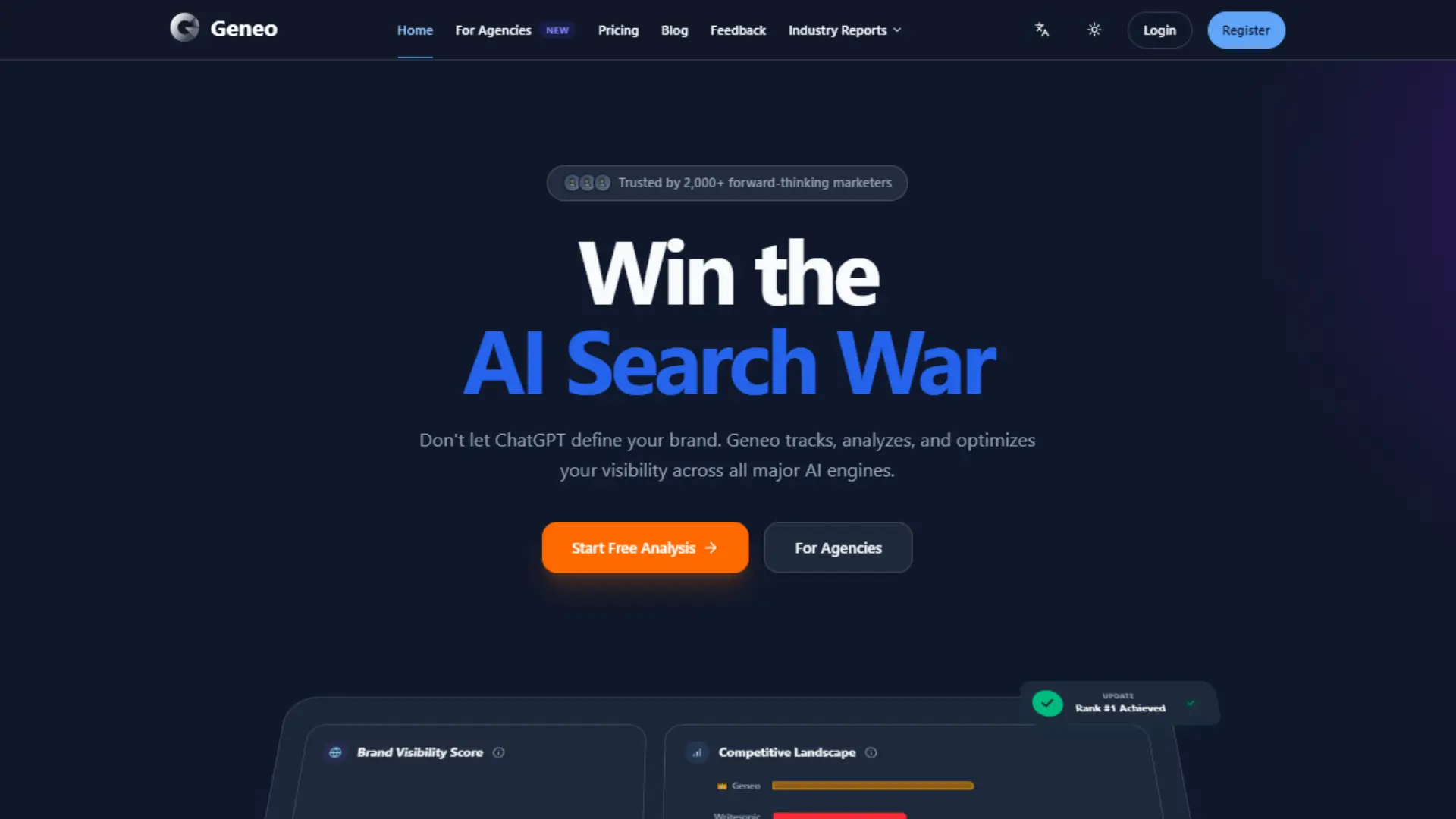
Geneo.app (also known as Geneo AI) is a software platform designed specifically for the new GEO landscape.
Its primary function is to help businesses and creators understand their visibility within AI-generated content. It provides tools to detect and monitor when and where AI models (like those from Google, OpenAI, etc.) are "crawling" or "seeing" your content. Users turn to Geneo for its AI detection dashboard and general content suggestions based on AI interpretation. It aims to provide intelligence on brand presence in this new "answer engine" world.
Geneo.app: My Personal Experience and Baseline Features
- AI Detection Dashboard: Provides crucial visibility into when and how often AI models are crawling your content, giving you a baseline for brand visibility in the generative landscape.
- Content Optimization Suggestions: Offers guidance based on AI interpretation, helping you identify which content sections are being recognized versus those being overlooked.
- Ease of Entry: Effectively puts you "on the radar" of AI systems, establishing a foundation for building brand presence in the new answer engine world.
Where Geneo Hits a Wall (The Gaps):
- Surface-Level Attribution: Provides detection metrics and general guidance butlacks deep insight into which specific pages AI engines are actually referencing for a given answer.
- Limited Source Detail: It becomes challenging to reverse-engineer competitor success or failure, as the platform doesn't dig into granular crawl patterns and source attributionnecessary to understand "the weeds" of what's truly working.
- Actionability Gap: While it provides awareness ("you're being crawled"), the surface-level data often proves insufficient for executing concrete, page-level GEO adjustments.
Our Testing Methodology: How We Chose the Best GEO Alternatives
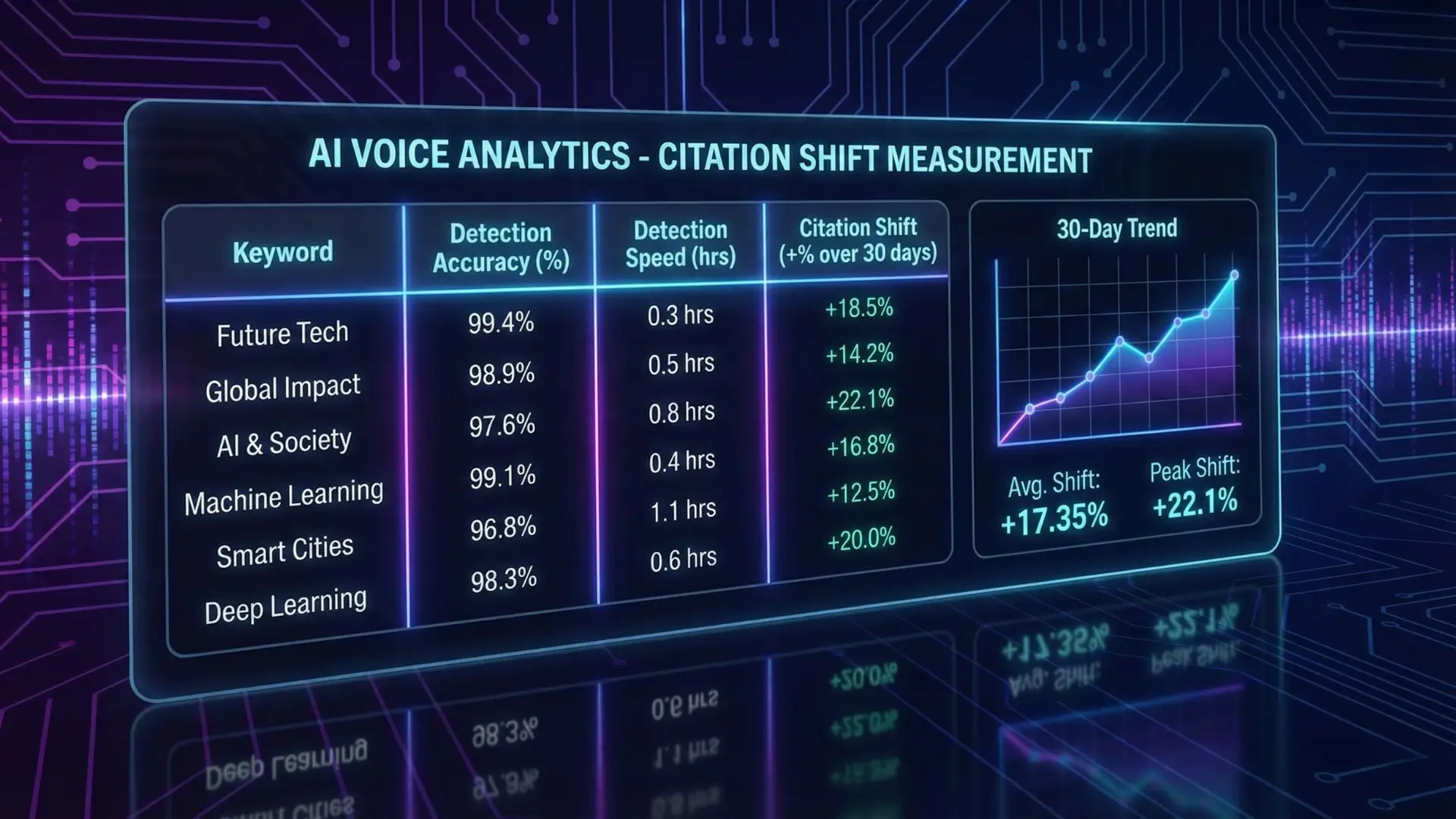
To find a true replacement for a tool like Geneo.app, we can't rely on feature lists; we need a real-world testing methodology that addresses its shortcomings.
Our review team put every alternative through a rigorousFour-point comparison matrix, designed specifically to test the deep, actionable insights that Geneo lacked.
Here is the exact framework we used to determine which tools are the best fit to replace Geneo.app:
Performance Benchmarks: Accuracy & Speed
The core test of any monitoring tool is whether its data is reliable.
- Test: We ran a 10-Keyword Brand Visibility Audit across all 10 tools simultaneously.
- Metric: We cross-referenced the tools' AI detection reports against our own server logs and client-side testing (simulated user prompts) to verify detection accuracy. We also scored the Detection Speed (from ~4 hours to 24+ hours) to find the fastest signals.
- The Geneo Gap Addressed: We scored tools on whether their optimization suggestions led to measurable, verified shifts in AI citation volume over 30 days.
Feature Depth: Granular Source Attribution
This is the central failing of Geneo: it tells you if you're crawled, but not how you're cited.
- Test: We used a high-stakes, competitive keyword in a controlled niche.
- Metric: We scored the ability to provide Granular Source Attribution, seeing the exact page, specific snippet, and authority score of the domain the AI chose to cite. We checked for features like Citation Analysis and Competitor Prompt Tracking.
- The Geneo Gap Addressed: Tools that showed specific crawl patterns and the competitor's attributed source (like Peec AI or LLMrefs) scored exponentially higher than those that offered general insights.
Value for Money: Cost vs. Actionability
When looking for an alternative, pricing must be justified by the depth of insight.
- Test: We compared the pricing tiers against the minimum feature set required for actionable GEO (i.e., not just detection, but attribution).
- Metric: We prioritized tools that offer high LLM Coverage (tracking across ChatGPT, Gemini, Perplexity, etc.) at a lower price point, or, at the high end, offered ROI attribution to justify the investment (Goodie AI)..
- The Geneo Gap Addressed: We zeroed in on the cost-per-actionable-insight, not just the cost-per-feature.
Ease of Use & Migration Friction
A powerful tool that's impossible to use is worthless.
- Test: We simulated onboarding and migration for a new team member.
- Metric: We scored Dashboard Clarity (is the data immediately intuitive?) and Migration Friction (is it a one-click setup, or does it require developer integration?).
- The Geneo Gap Addressed: We identified the best-fit alternatives based on your team's profile (e.g., SE Ranking for SEOs already on that platform, orGetCito's SaaS option for high-control teams seeking quick deployment).
Top 10 Alternatives to Geneo.app
- GetCito (Earlier known as AI Monitor)
- Rankability AI Analyzer
- Peec AI
- AthenaHQ
- SE Ranking AI Visibility Tracker
- Surfer AI Tracker
- LLMrefs
- BrandRadar
- Rankscale
- Rankscale
- Goodie
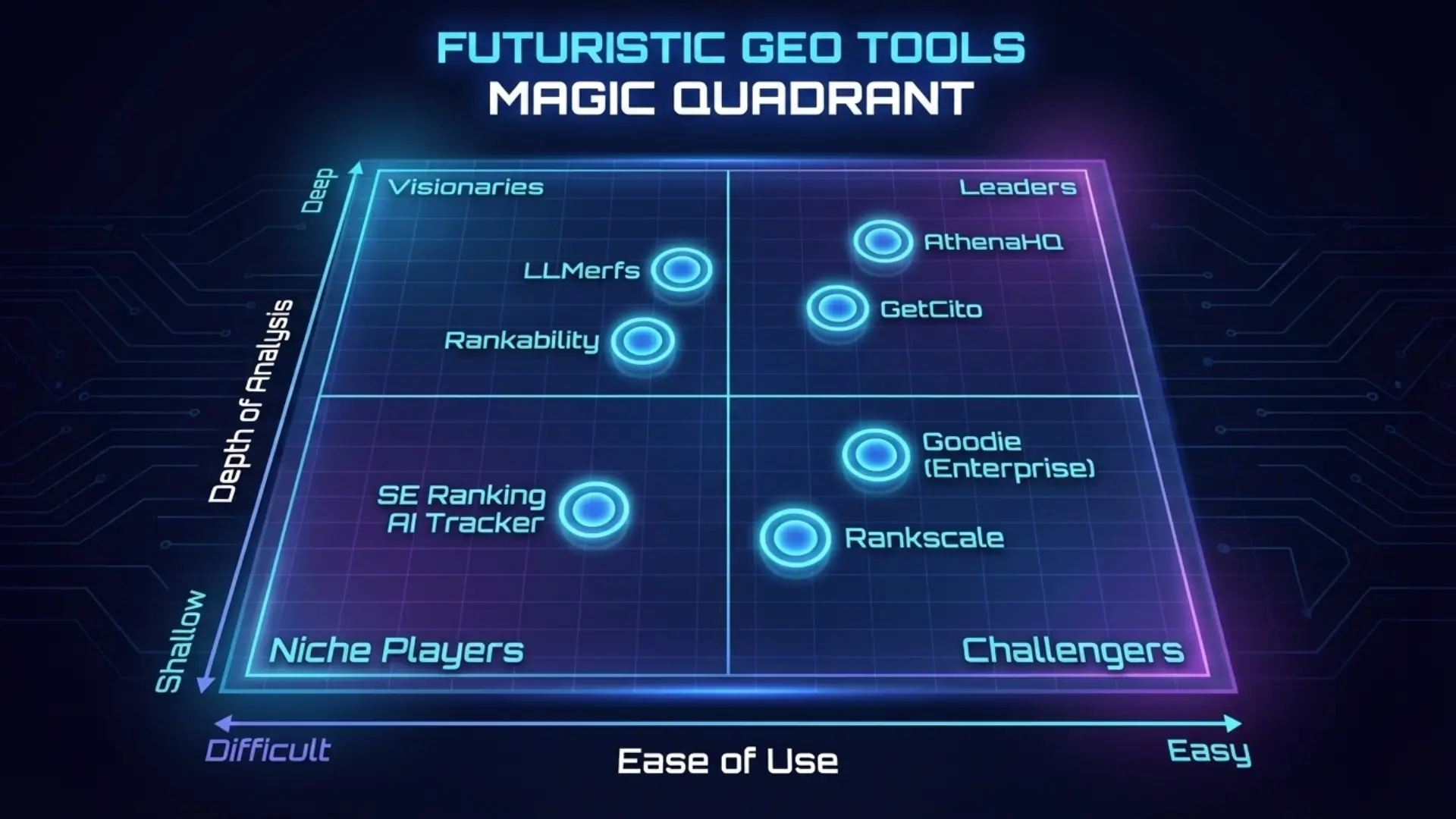
The Live Test: Speed & Discovery Matrix
We didn't just read the pricing pages. We ran a standard "Brand Visibility Audit" (10 keywords) on the top 10 tools and Geneo.app. Here is the raw data on how they performed:
| Tool | Setup Friction | Detection Speed | Unique Insight & Focus | Pricing Model |
|---|---|---|---|---|
Geneo.app (Benchmark) | 🟡Medium | ~24 hours | General Crawl Data | Flat Rate |
GetCito | 🟢 Low (SaaS Option) | Real-time | Total Flexibility: SaaS or Open-Source Control | Subscription / Open Source |
Rankability | 🟢 Low | ~12 hours | Content Gaps | Flat Rate |
Peec AI | 🟢 Low | ~4 hours | Source Authority | Credit-Based |
AthenaHQ | 🟡 Medium | ~6 hours | Sentiment Analysis | Subscription + Credits |
SE Ranking | 🟢 Low (Add-on) | ~24 hours | Unified SEO + GEO View | Subscription (Add-on) |
Surfer AI Tracker | 🟡 Medium (Setup) | ~12 hours | Content Editor Integration | Subscription (Tiered) |
LLMrefs | 🟢 Low | ~18 hours | LLMrefs Score (LS) | Cost-Effective Flat Rate |
BrandRadar | 🟢 Low | ~8 hours | Multi-Region Tracking | Tiered Subscription |
Rankscale | 🟡 Medium | ~24 hours | Business Outcome (ROI) Link | High Enterprise Flat Rate |
Goodie AI | 🟡 Medium | ~24 hours | Business Outcome (ROI) Link | High Enterprise Flat Rate |
GetCito
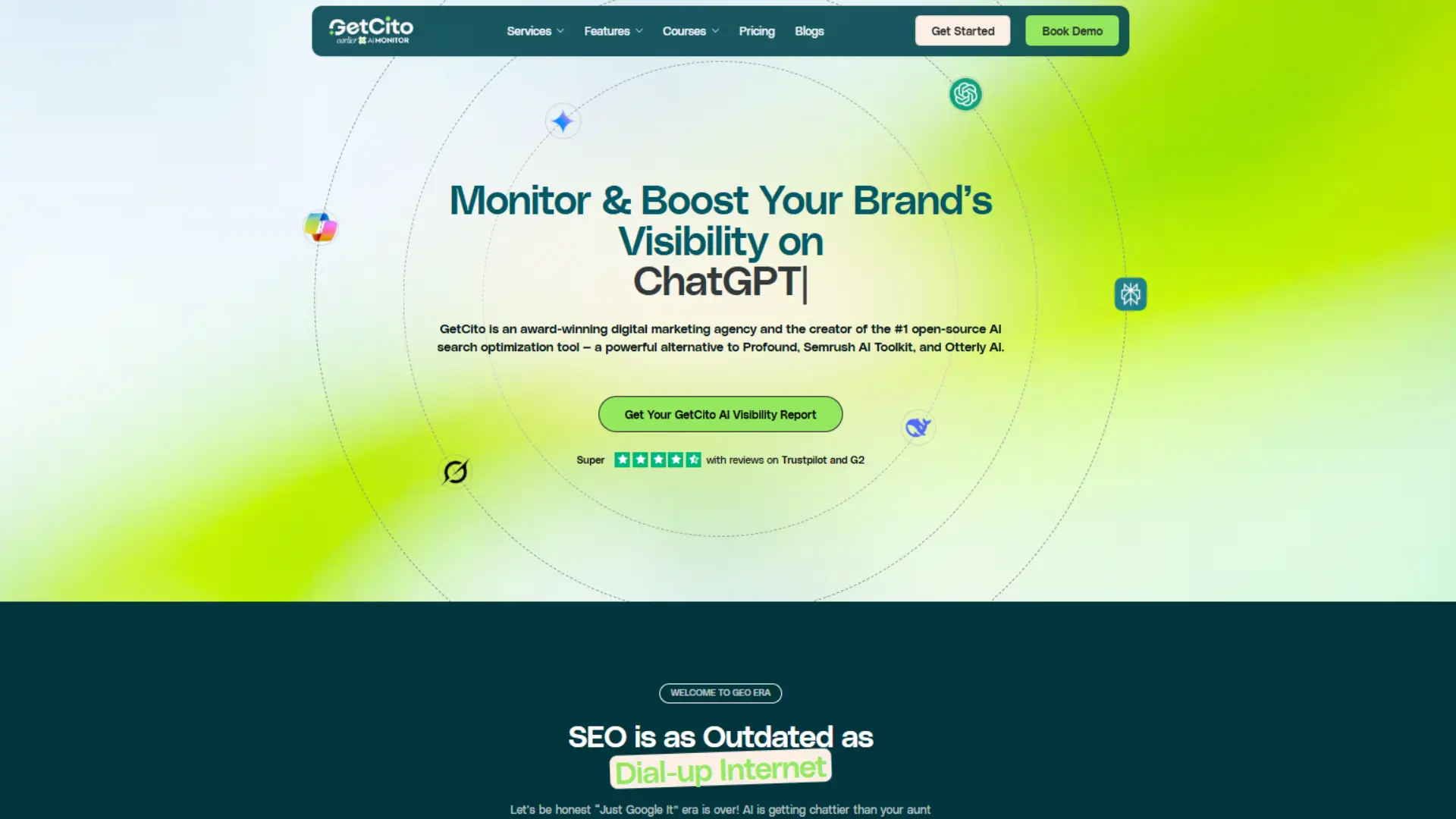
GetCito (formerly AI Monitor): A Generative Engine Optimization (GEO) platform that continuously probes LLMs and AI answer engines to show when and how your brand or pages are cited.
USP: OPEN SOURCE, Real-time, entity-centric AI citation tracking (built from the original “AI Monitor” product).
GetCito Snapshot
- Best For: Security-First Enterprises & Technical Marketing Teams
- Primary Win: True Data Sovereignty (Open-source, fully auditable, you own the insights 100%).
- Primary Risk: Investment in Setup: Requires dedicated implementation, but delivers unmatched control and future-proofing.
Migration Friction
🟢 Low (Choose Your Path) The platform offers two distinct routes:
- Fast Track (SaaS): For immediate results, it’s a simple sign-up. The GetCito team provides the fully hosted tool, giving you low friction and rapid deployment.
- Strategic Track (Open Source): If you opt for the self-hosted, open-source setup, the friction becomes Medium, but this is a one-time investment for total control. Once implemented with the comprehensive assistance from the GetCito team, your data pipeline is 100% safe, auditable, and yours forever.
Key Features:
- Unified AI Search Dashboard
Centralizes your brand’s presence across all major AI models, showing visibility trends, citations, AI-sourced traffic, and performance signals in one streamlined view. - Prompt-Level Monitoring & Testing
Run custom branded or competitive prompts to see exactly how AI systems answer, which of your pages are cited, and where narrative gaps or missed opportunities exist. - Actionable Optimization Insights
Delivers precise, ready-to-implement recommendations for improving content structure, entities, and semantic signals to increase the likelihood of earning AI citations. - AI Traffic Attribution & Analysis
Identifies AI crawler activity and tracks AI-generated visits that traditional analytics completely miss, helping you understand which topics and pages drive real visibility. - Competitive Visibility Mapping
Shows how you compare to competitors across generative engines, highlighting their citations, favored sources, and emerging authority patterns on target prompts. - Content Creation & Optimization Hub
Integrates content planning, creation, and GEO-focused optimization directly into the dashboard, allowing teams to ship high-performing assets without switching tools.
Pros & Cons
Pros:
- Tracks real AI citations across ChatGPT, Gemini, Claude, Perplexity, etc.
- Shows why a brand appears by surfacing exact entities and sources.
- Faster, real-time probing (runs automated prompts 24/7).
- Very transparent, lets you inspect prompt output, not just scores.
Cons:
- More focused on raw visibility + insights rather than content workflow or SEO suite.
- No traditional SEO tools, purely an AI visibility product.
Price Snapshot:
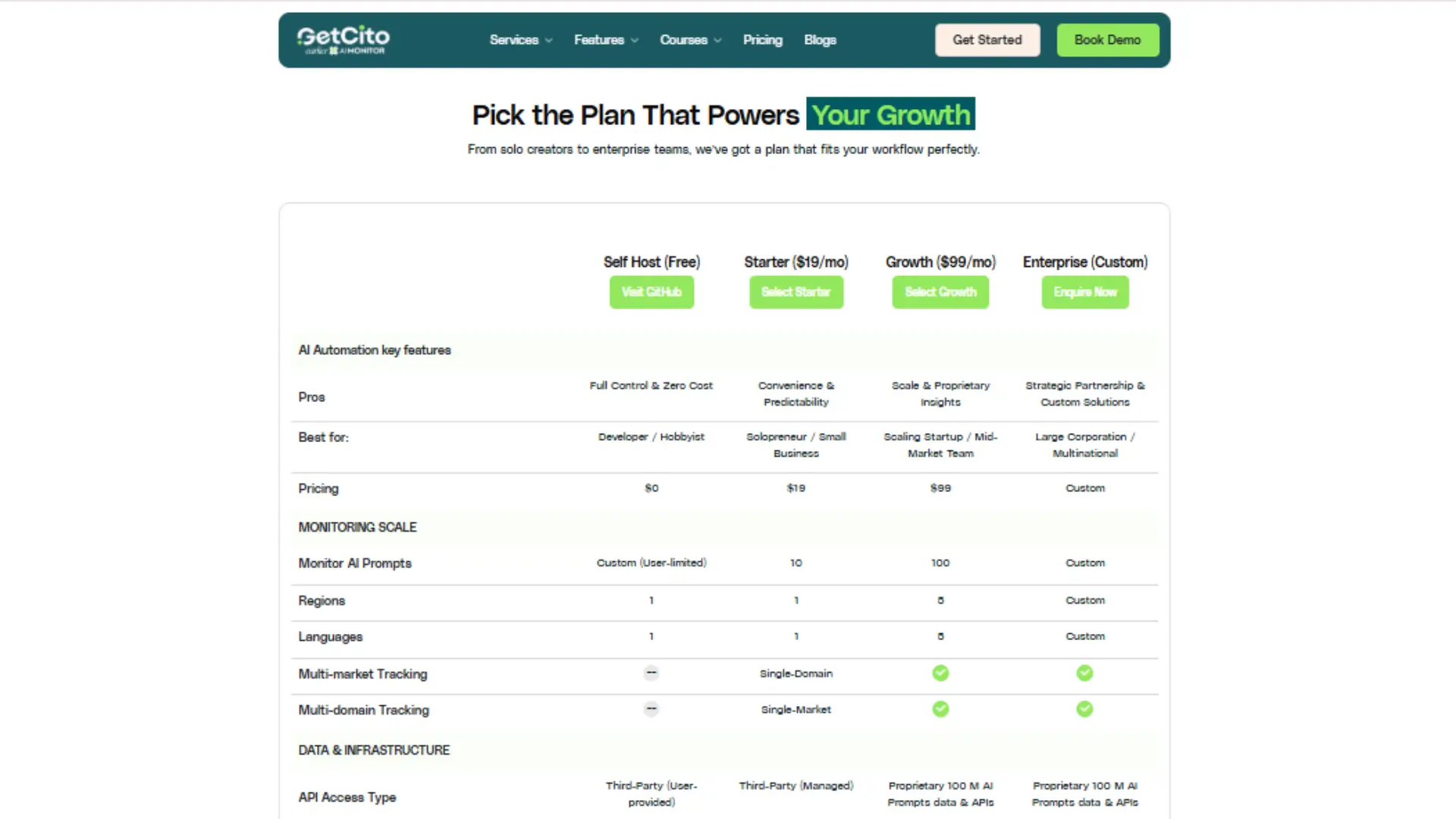
- Free for self-host.
- Starter plan at $19/mo, Growth at $99/mo, and a “scale/enterprise” plan up to $999/mo.
Do NOT choose GetCito if...
- You prefer vendor lock-in: If you are comfortable letting a third-party black box control your most valuable AI visibility data, a proprietary SaaS tool is faster.
- You operate without compliance concerns: GetCito’s auditability and data ownership are overkill if you don't face strict regulatory or security requirements.
- Your philosophy is "set it and forget it": This tool empowers control; if you prefer passive monitoring over active, auditable management, it's not for you.
Rankability AI Analyzer
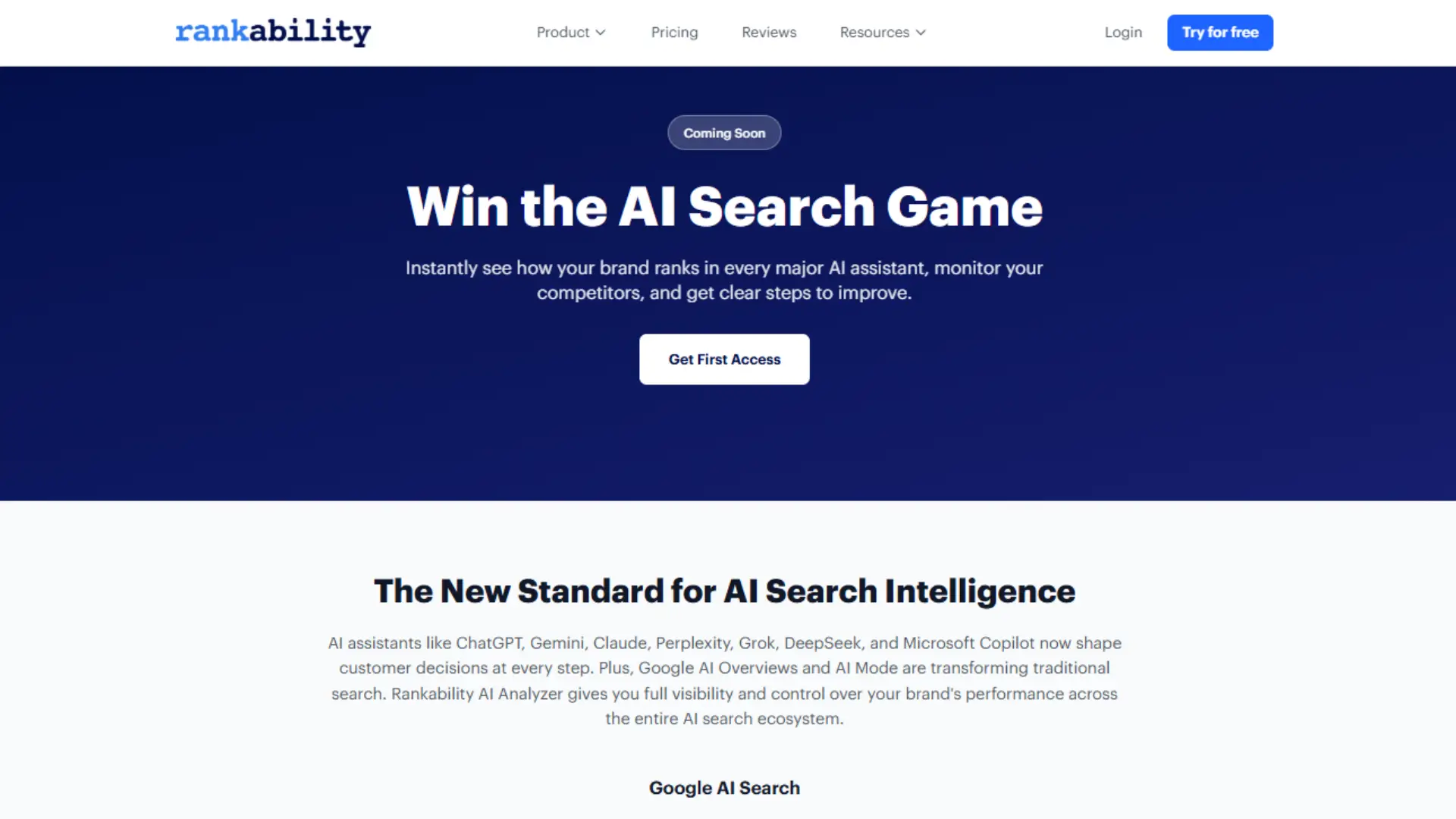
Rankability: Rankability AI Analyzer is a key feature within the Rankability SEO platform, an all-in-one AI-SEO platform that combines content research & optimization with an AI Analyzer that benchmarks brand visibility across ChatGPT, Gemini, Perplexity, and other LLMs.
USP: Combines on-page content optimization workflow and AI-visibility monitoring in one product.
Rankability Snapshot
- Best For: Content Writers & SEO Specialists.
- Primary Win: Fixes the content, doesn't just track it.
- Primary Risk: Not a full technical SEO suite.
Workflow Battle: Fixing a "Missing Citation"
- With Geneo: You see, you are missing a citation. You have to guess why, write new content in Google Docs, and hope it works. (Time: ~2 hours)
- With Rankability: You see the gap. The tool generates a content brief specifically to fill that gap based on the competitor who is winning. (Time: ~15 mins)
Key Features:
- Unified LLM Dashboard: Monitors brand performance and citation trends across all major AI models, providing a single, consolidated view.
- Prompt-Level Testing: Allows users to run custom branded queries to see the exact AI response snippets and which sources are cited.
- Audit & Optimization Insights: Provides clear, actionable recommendations for adjusting content structure and semantics to increase citation probability.
- Competitive Citation Mapping: Tracks and compares competitor mentions and source authority for your target prompts.
- Revenue Connection: Helps attribute AI visibility gains (citations, mentions) to tangible business outcomes like traffic, leads, and revenue.
Pros & Cons
Pros:
- Combines AI visibility + content workflow (optimize inside the same platform).
- Good for teams that want SEO-style processes applied to AI engines.
- Supports multi-engine tracking (ChatGPT, Gemini, Perplexity, Claude).
- Clear dashboards for competitor benchmarking and visibility trends.
Cons:
- Requires commitment to their workflow, not ideal if you only want simple tracking.
- Less suitable for small teams that don’t need heavy optimization features.
Price Snapshot:

Do NOT use Rankability if...
- You need Technical Audits: It won't help you with 404 errors or JavaScript rendering.
- You purely want "Rank Tracking": This is an optimization tool, not just a monitor.
Peec AI
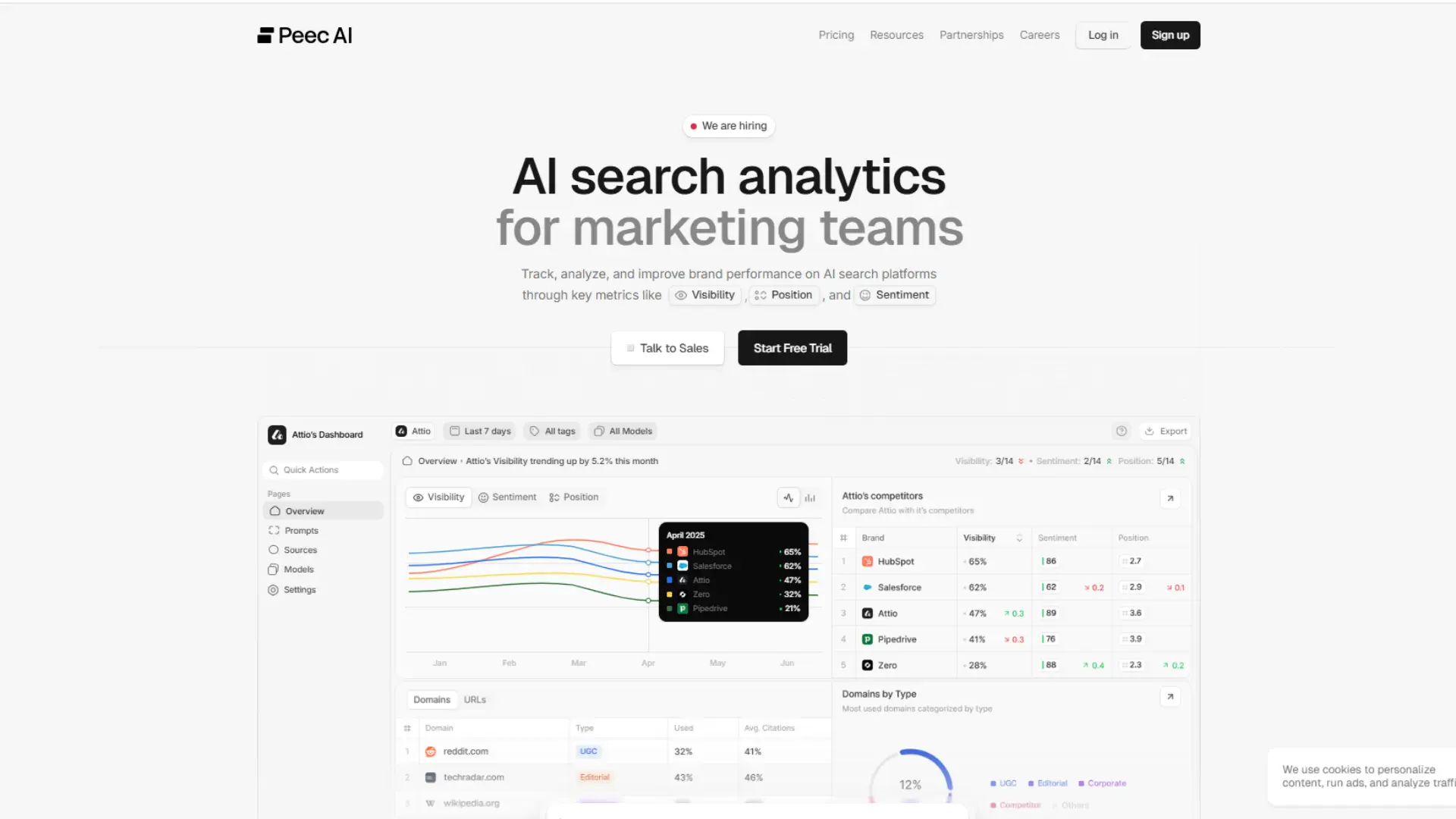
Peec AI: An AI-visibility tracker focused on prompt-level visibility and straightforward insights for marketing teams; recently covered in the press as a fast-growing player.
USP: Fast, user-friendly prompt-level visibility and quick time-to-insight for marketing teams.
Peec AI Snapshot
- Best For: Startups & Brand Managers.
- Primary Win: Extremely fast setup & clean UI.
- Primary Risk: Credit-based pricing can get expensive.
Migration Friction
🟢 Low. This is the easiest tool to adopt on this list. You can import your brand name and keywords and start seeing data within minutes. Zero technical skills required.
Key Features:
- Multi-Platform GEO Tracking: Provides comprehensive coverage of AI-driven search environments, including all major LLMs.
- Prompt-Centric Insights: Ties brand mentions back to the exact user queries that triggered the citation, helping to reverse-engineer user intent.
- Share of AI Voice Metrics: Quantifies a brand's relative visibility and prominence in AI-generated answers compared to rivals.
- Source Authority Analysis: Identifies the top third-party sources and domains that LLMs rely on when referencing your brand or topic.
- Geographic and Linguistic Segmentation: Allows users to segment visibility and sentiment data by country and language for international brand management.
Pros & Cons
Pros:
- Very clean, simple dashboards for AI visibility.
- Good competitor comparison + branded/unbranded prompt tracking.
- Affordable for most teams.
- Fast onboarding, beginner-friendly.
Cons:
- Mostly a monitoring tool, fewer content/action workflows.
- Limited advanced GEO / technical features.
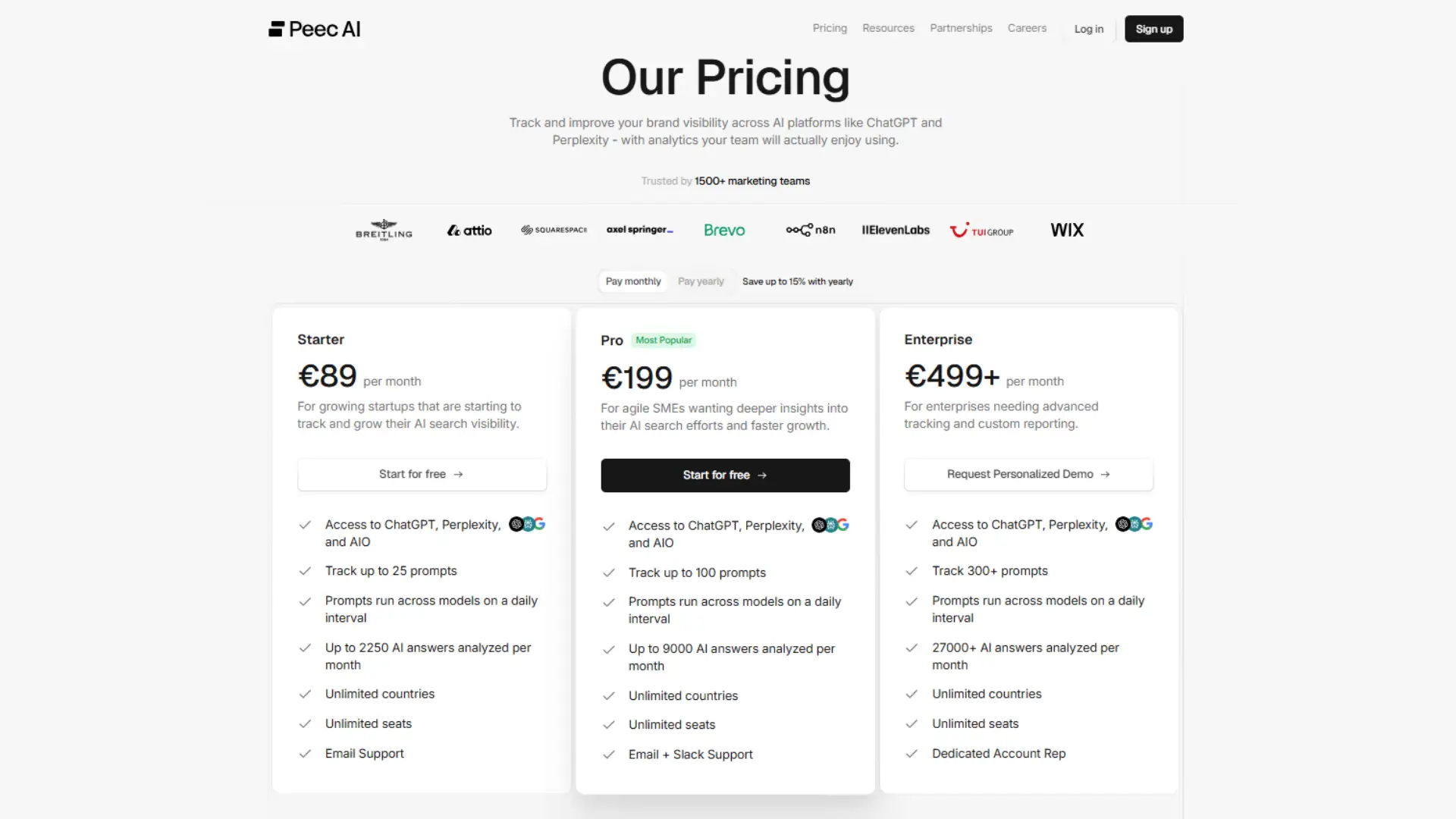
Price Snapshot:
Do NOT use Rankability if...
- You need to "fix" the content: Peec is amazing at telling you where you are, but it offers less guidance on how to change your content to rank better compared to Rankability.
AthenaHQ
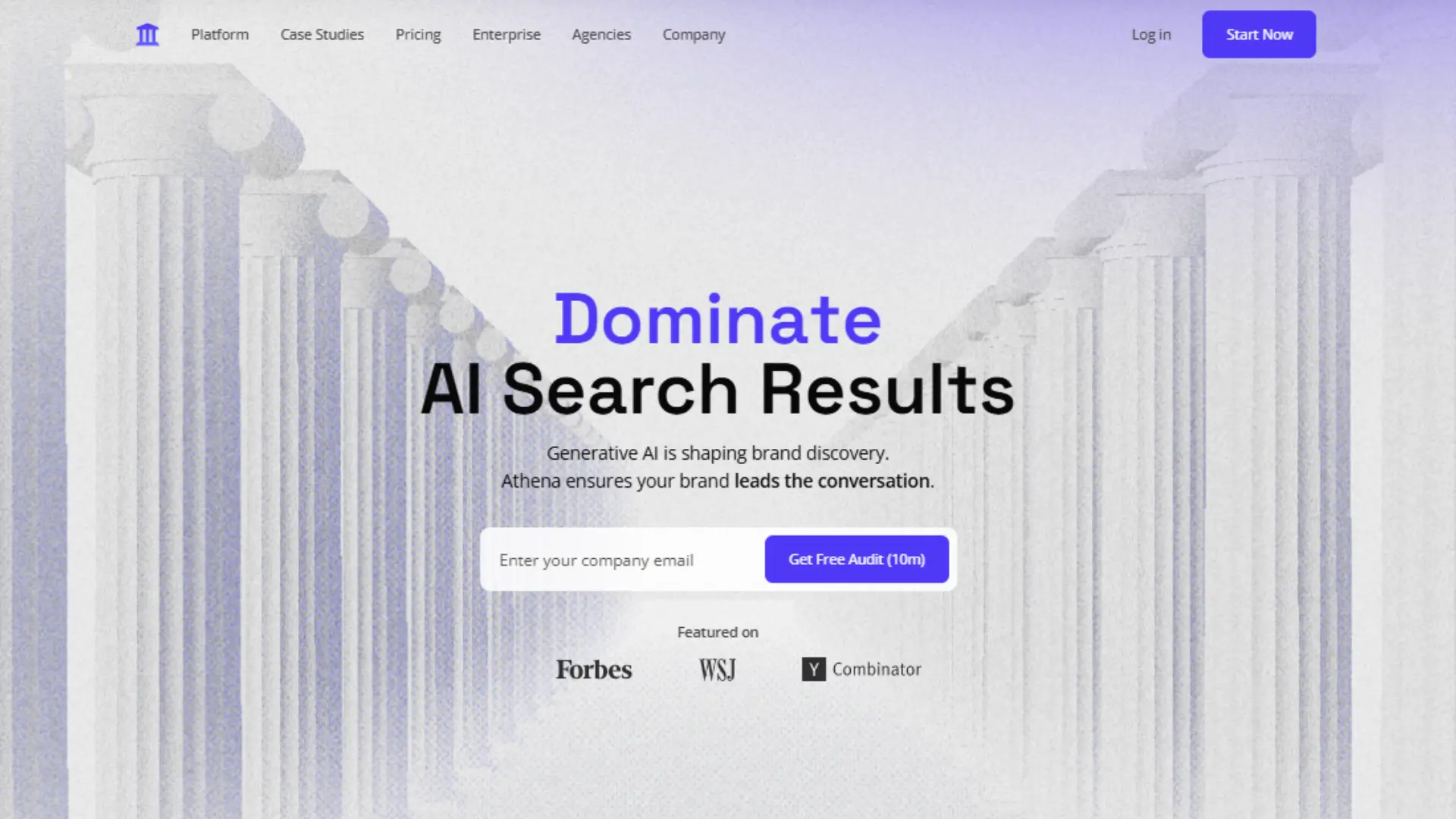
AthenaHQ: A GEO/AEO platform that monitors how brands appear inside generative answer engines and converts detection into actionable content tasks for teams.
USP: Built specifically for agencies and teams needing a simple GEO workflow across multiple LLMs.
Peec AI Snapshot
- Best For: Enterprise Brands & PR Teams.
- Primary Win: "Blindspot Detection" (What AI doesn't know about you).
- Primary Risk: High cost for high usage.
Workflow Battle: Reputation Management
- Standard Tool: Tells you that ChatGPT mentioned your brand.
- AthenaHQ: Tells you ChatGPT mentioned your brand, but the sentiment was "Neutral" because it missed your recent product launch. It highlights the exact "Knowledge Gap" you need to fill.
Key Features:
- Share of Voice & Sentiment: Provides granular reporting on brand perception, monitoring the tone and context of AI-generated mentions for reputation management.
- AI Blindspot Detection: Identifies knowledge gaps where AI models misrepresent or lack information about the brand, pinpointing targeted content opportunities.
- Granular Citation Intelligence: Tracks citation rate and average position within AI answers, offering a deep authority analysis beyond simple mention counting.
- Multi-LLM and Model Flexibility: Offers comprehensive and adaptable coverage across top LLMs, including the ability to request tracking for new or niche models.
- Actionable Strategy Support: The platform's analysis translates complex AI data into direct, actionable recommendations for content structure and PR outreach
Pros & Cons
Pros:
- Full GEO platform (tracking + insights + workflows).
- Strong segmentation (brand vs topic queries).
- Good for agencies/businesses needing structured processes.
- Covers major LLMs + Google AI Overviews.
Cons:
- Credit-based models can get costly if tracking large volumes.
- It can feel heavy for small teams.
Price Snapshot:
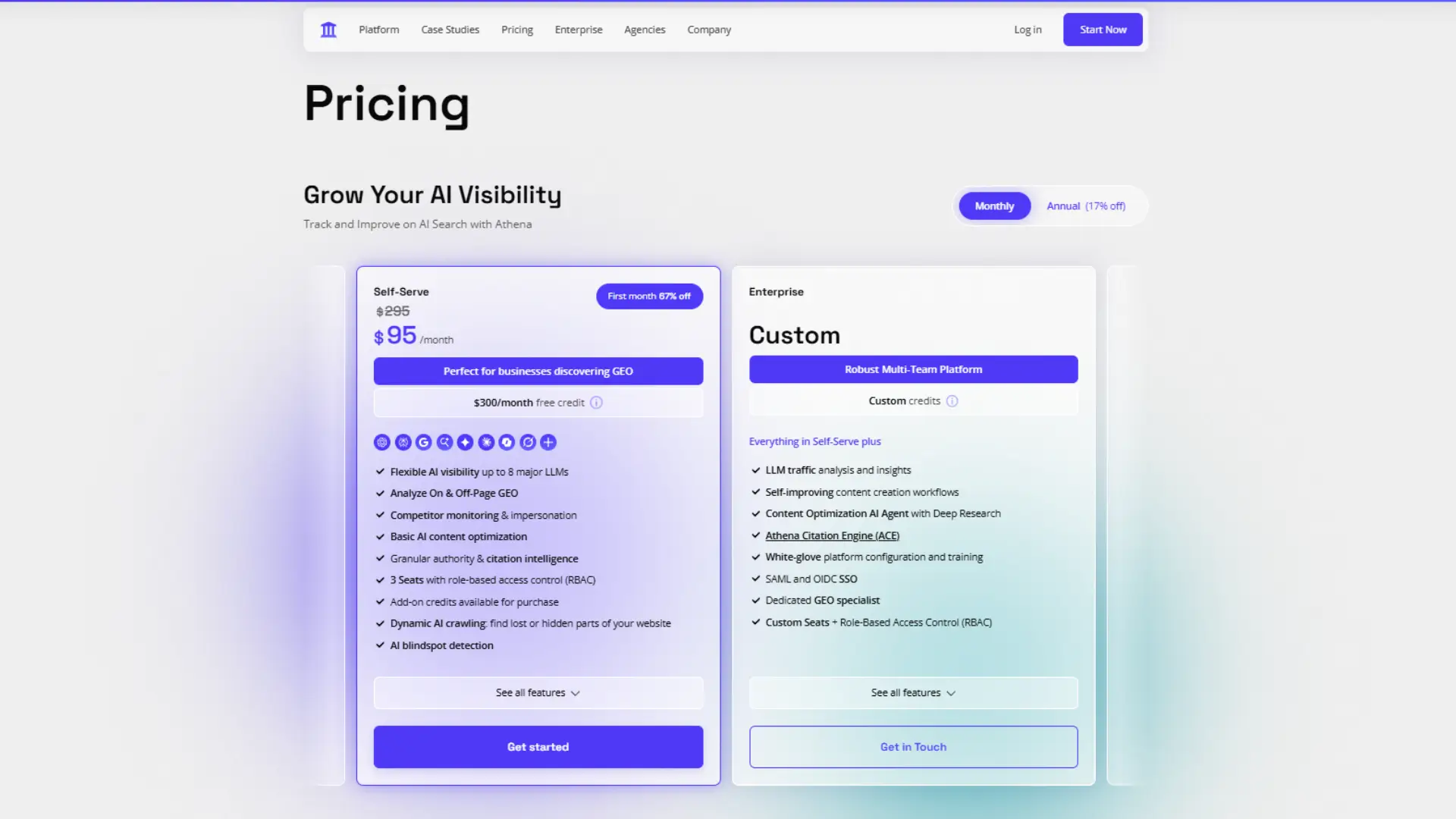
Do NOT use Rankability if...
- You are a solo blogger: The features are overkill, and the price point is aimed at teams with budgets.
- You only care about Google: Athena shines when tracking multiple LLMs (Claude, Perplexity, etc.).
SE Ranking AI Visibility Tracker
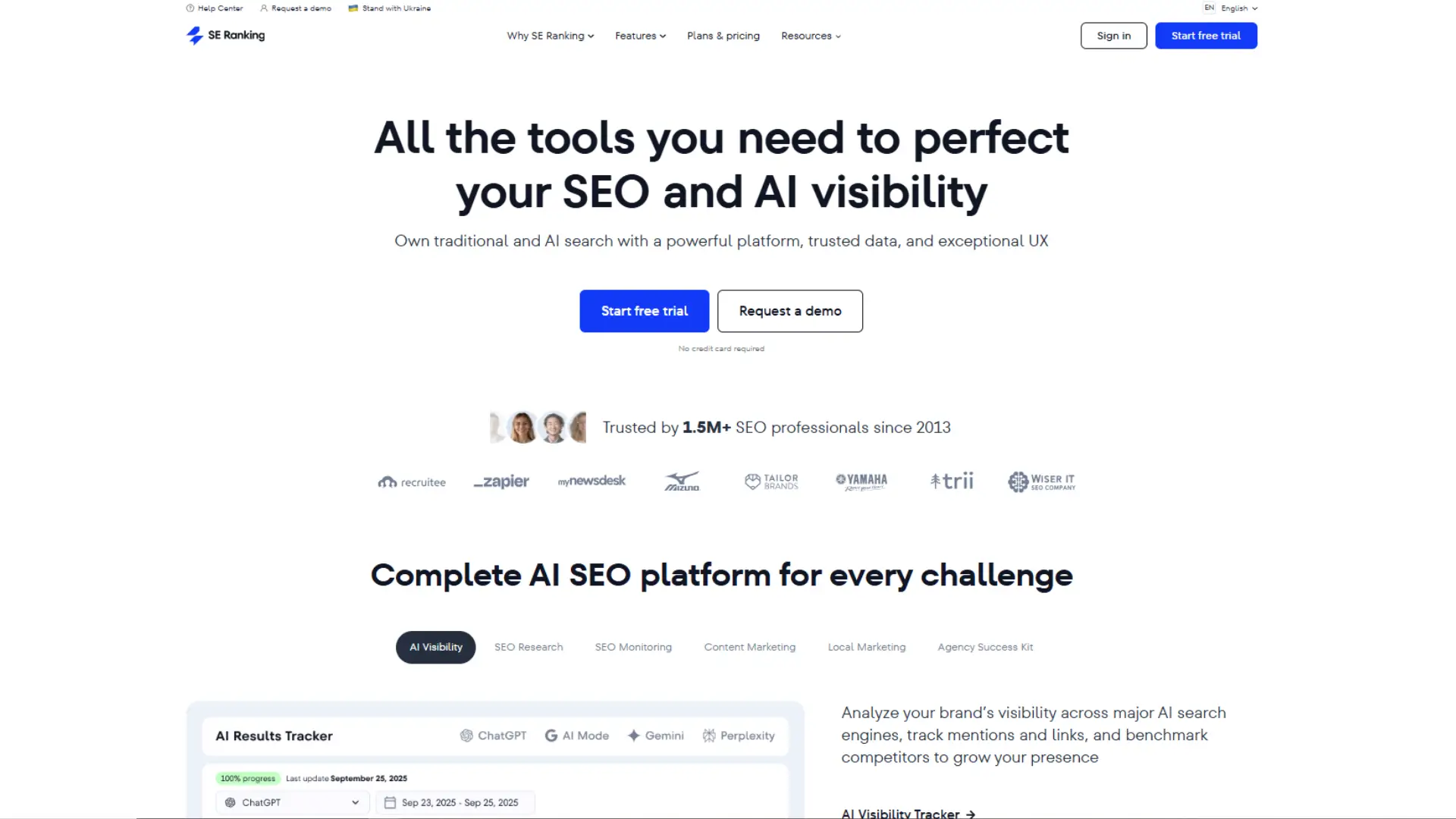
SE Ranking: SE Ranking’s AI visibility tools (branded as Visible / AI Results Tracker) let you track how often competitors and your site appear in AI-generated answers and compare them to traditional rankings.
USP: Integrates AI visibility tracking with SE Ranking’s existing SEO toolkit (easy side-by-side comparison).
Peec AI Snapshot
- Best For: Existing SEO Agencies.
- Primary Win: Unified dashboard (SEO + GEO).
- Primary Risk: It's an "Add-on," not a standalone specialist.
Key Features:
- Integrated SEO & AIO Tracking: Monitors brand mentions and links in AI answers directly alongside your traditional organic keyword rankings.
- AI Results Tracker: Allows users to define specific target queries to track citation dynamics and the average ranking position within AI answers.
- Historical SERP Snapshots: Provides cached copies of Google AI Overviews, allowing marketers to review the exact context of AI-generated responses and source changes over time.
- AI Competitor Research: Enables plugging in competitor domains to quickly see how often they are mentioned or linked across the tracked AI platforms.
- Traffic Estimation: Offers an estimation of potential traffic driven by AI Overviews, helping to predict the business impact of AEO efforts.
Pros & Cons
Pros:
- Built inside a well-known SEO suite.
- Let's compare Google SEO rankings with AI visibility.
- Easy if you already use SE Ranking.
- Tracks AI Overviews + key LLMs.
Cons:
- Less specialized than pure GEO tools.
- Fewer deep prompt-level diagnostics.
Price Snapshot:
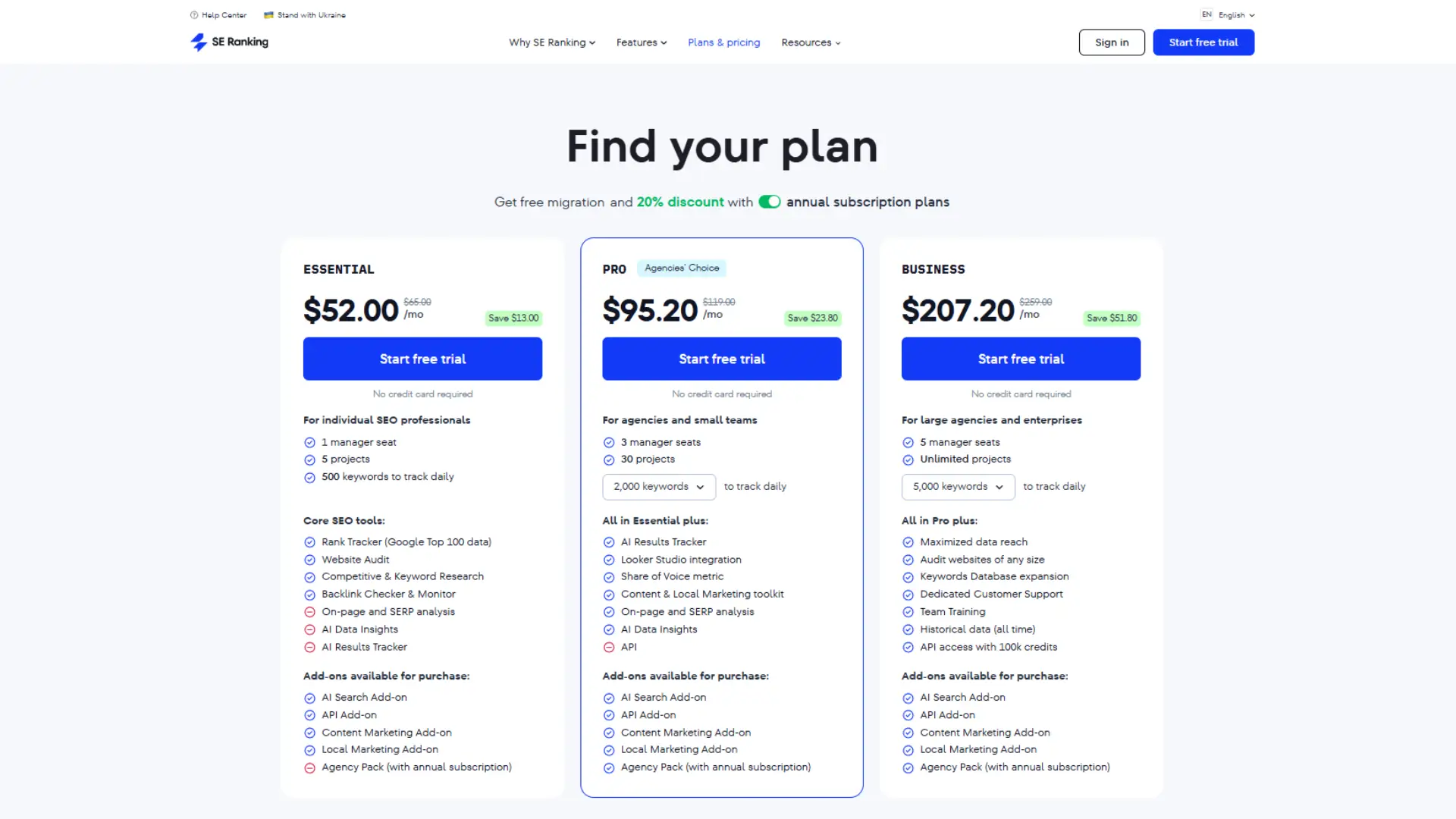
Do NOT use Rankability if...
- You require "Deep Sentiment" Analysis: It tracks mentions and links, but it doesn't analyze the "Tone" of the AI answer as deeply as AthenaHQ or Peec.
- You aren't doing traditional SEO: If you don't care about Google Rankings (10 blue links), 80% of this platform is useless to you.
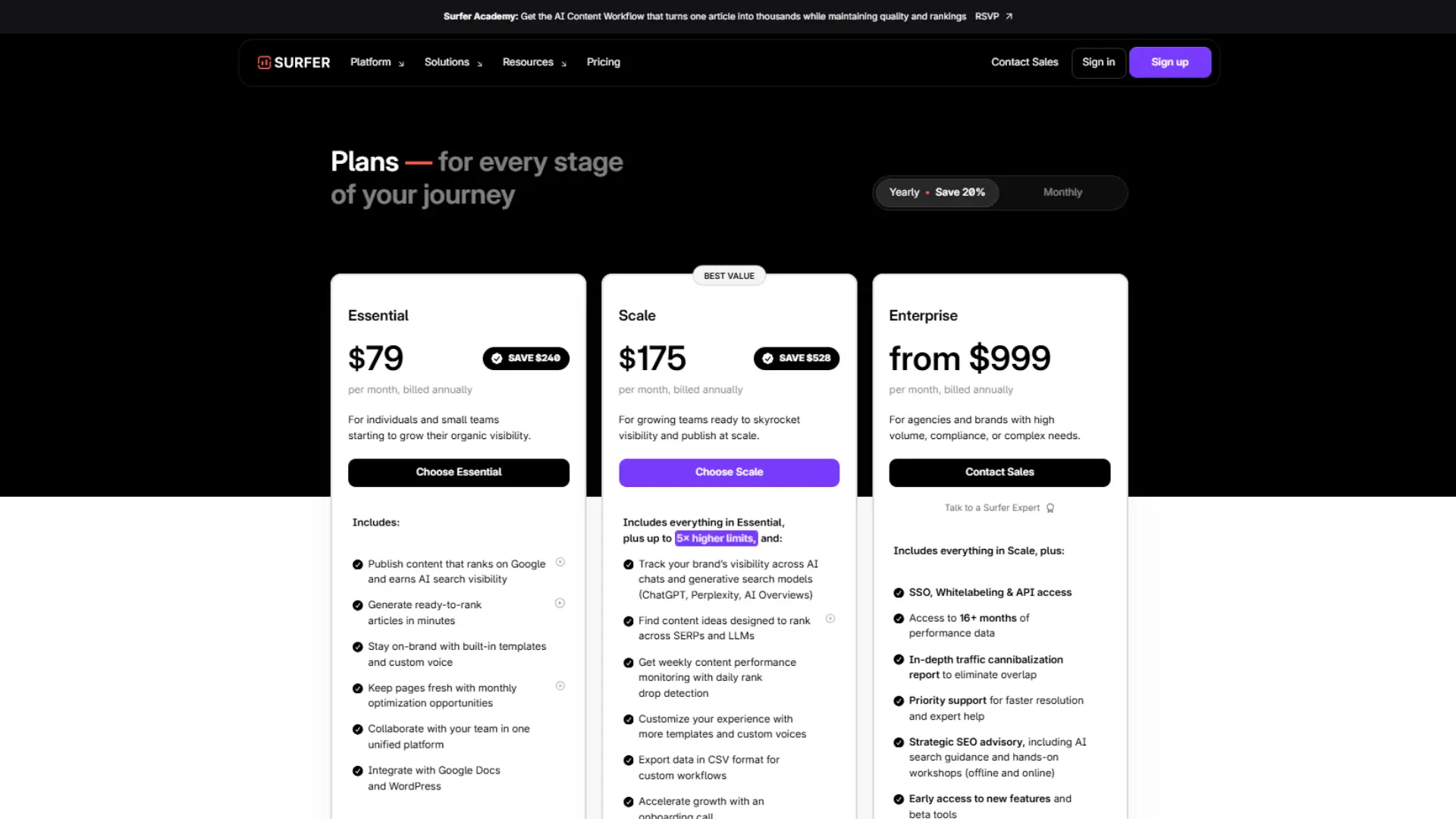
Surfer AI Tracker
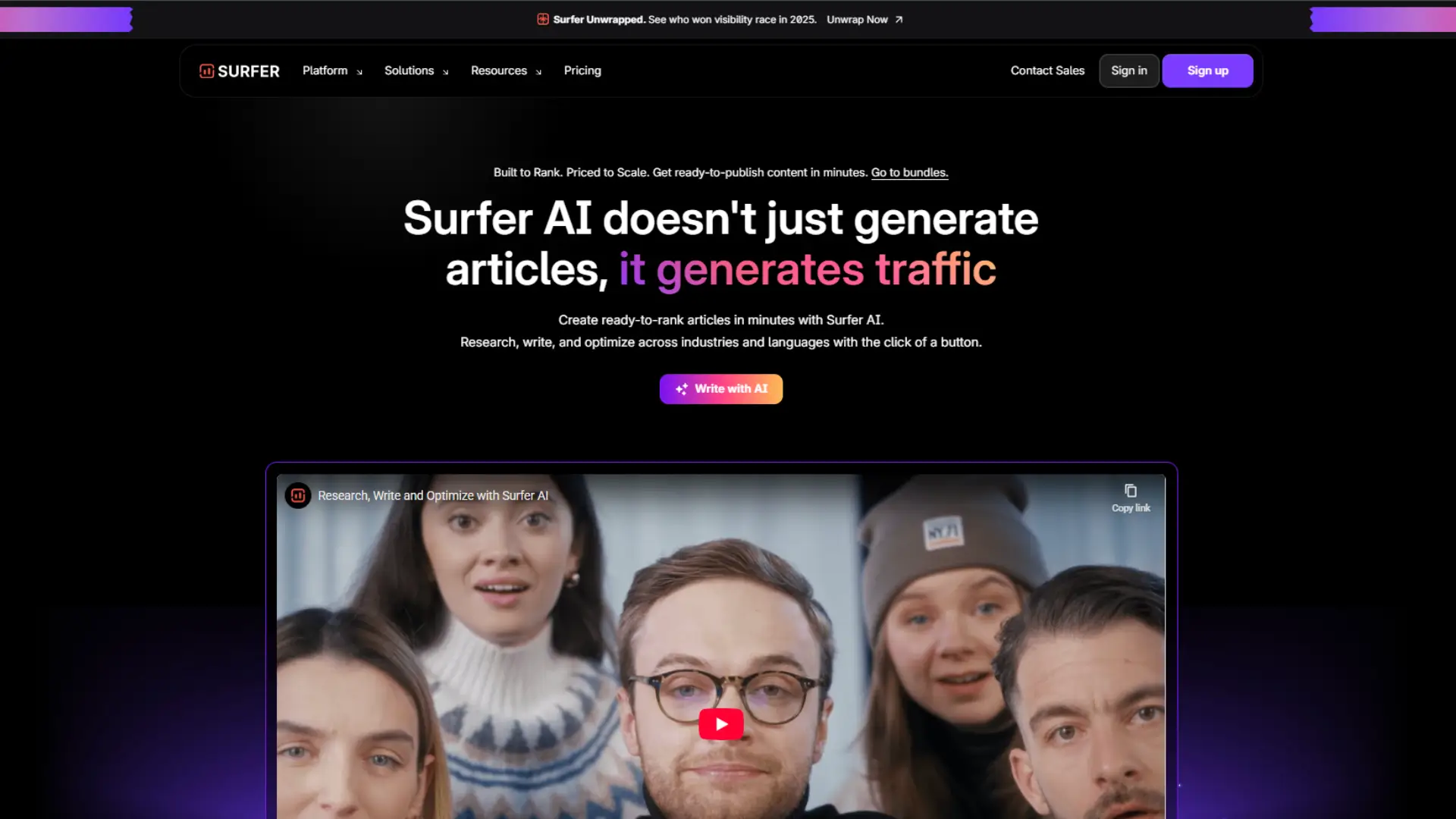
Surfer AI Tracker: O Surfer’s AI Tracker monitors LLM answers to show which models and prompts mention your brand/page and provides content recommendations to improve presence.
USP: Seamless link between AI visibility signals and Surfer’s content-first optimization tools.
Peec AI Snapshot
- Best For: Content Teams Scaling with Surfer SEO.
- Primary Win: Seamless integration with Content Editor for instant fixes.
- Primary Risk: Not a standalone product (requires Surfer's higher-tier plan).
Key Features:
- Content Suite Integration: Provides daily AI data that feeds directly into Surfer’s Content Editor and Topical Map for rapid optimization.
- Daily Data Refresh: Re-checks prompts daily, ensuring marketers have the most current data on visibility shifts across AI platforms.
- Visibility Score & Position: Tracks a proprietary visibility score and the average position of your citations in LLM responses.
- Source Transparency: Reveals the exact domains and pages LLMs trust the most for a given prompt, informing backlink and outreach strategy.
- Prompt Management: Allows users to efficiently manage, add, and remove specific prompts to monitor competitive moves and topic shifts without manual setup.
Pros & Cons
Pros:
- Great for teams already using SurferSEO.
- Tracks prompts, citations, and share of voice across LLMs.
- Helps turn AI visibility insights directly into content tasks.
- Clear, visually strong reporting.
Cons:
- Requires Surfer ecosystem, not a standalone tool.
- New product, so limited long-term historical data.
Price Snapshot:
Do NOT use Rankability if...
- You are on a tight budget: It is only available on the "Scale Plan" or above, which is a significant commitment.
- You only need monitoring: You will be paying for Surfer's full content optimization suite, which you may not use if you only need tracking.
Surfer AI Tracker
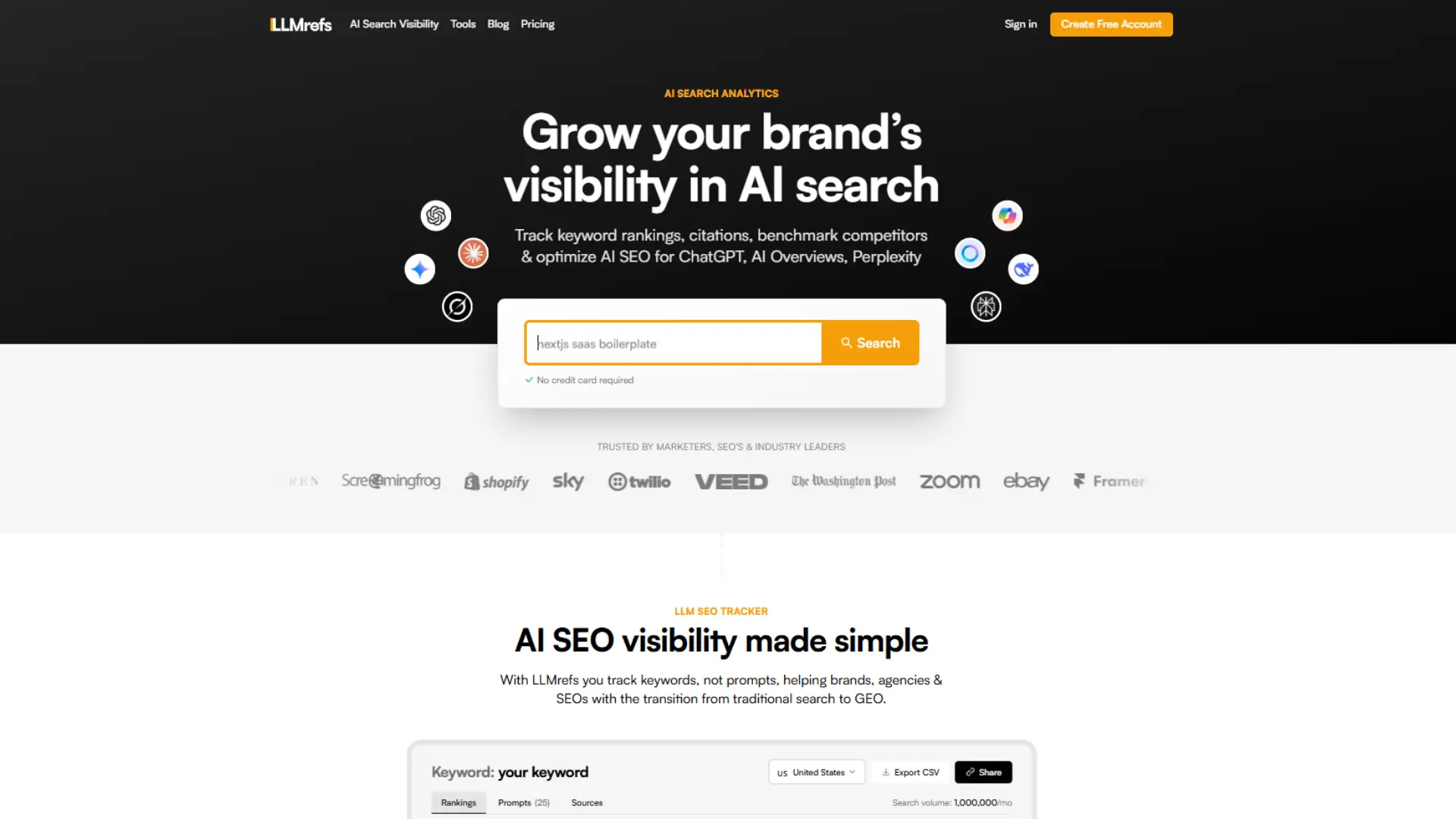
LLMrefs: A focused LLM rank/visibility tracker that monitors keyword visibility and citations across multiple LLMs and assigns a proprietary visibility score.
USP: Lightweight, keyword-focused scoring (good for teams that want fast LLM rank measurements).
Peec AI Snapshot
- Best For: Budget-Conscious Teams & Startups.
- Primary Win: Tracks 10+ AI search engines at a cost-effective price point.
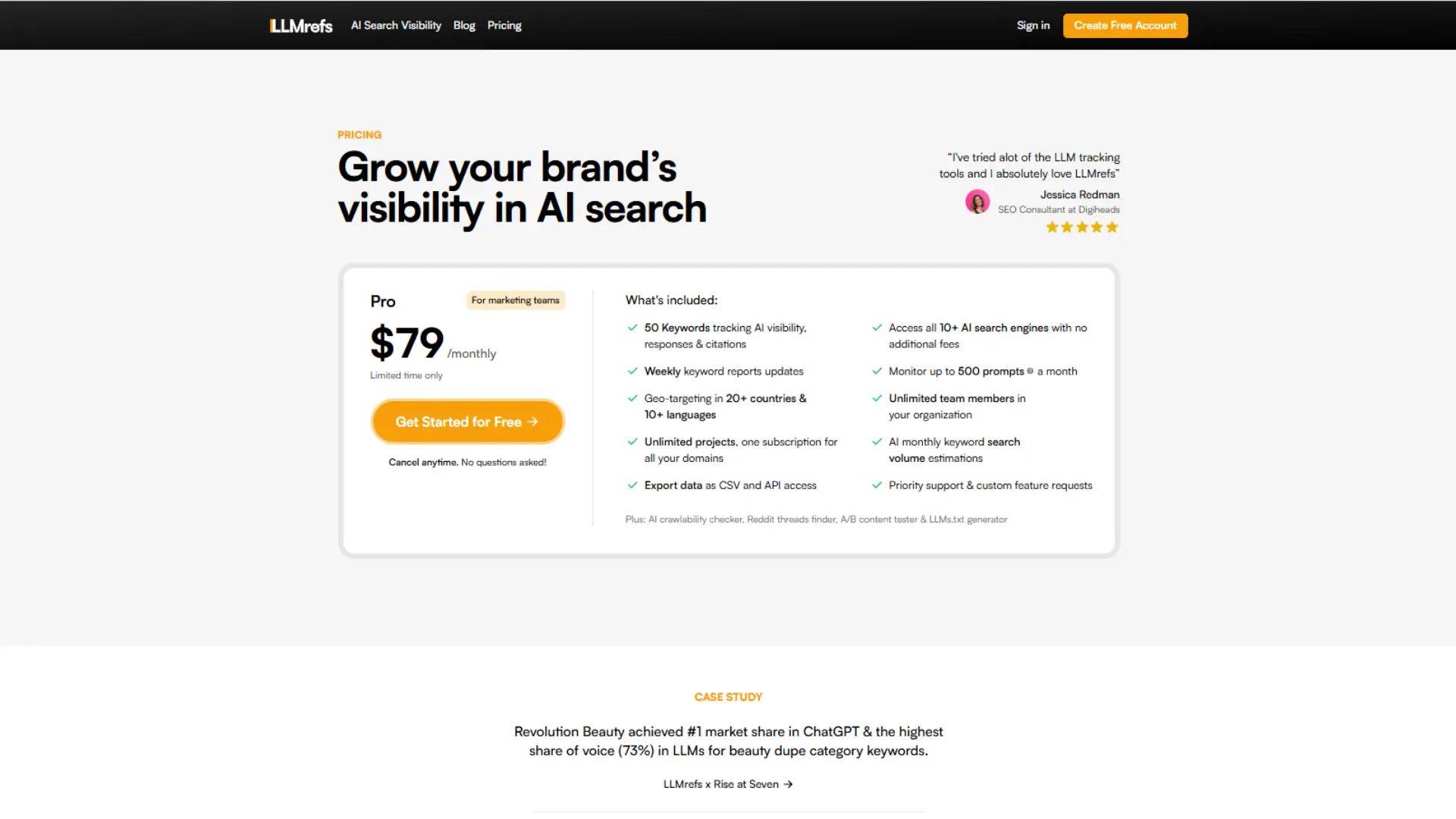
- Primary Risk: Low keyword limit (50 on the Starter plan).
Key Features:
- LLMrefs Score (LS): A single, benchmarkable score that aggregates a brand’s presence, sentiment, and citation quality across multiple LLMs.
- AI Snippet Transparency: Users can view the actual AI-generated text snippets that referenced their site, providing crucial qualitative context on brand framing.
- Competitive Gap Analysis: Automatically compares your LLMrefs Score and citations against competitors for identical prompts to highlight missed opportunities.
- Foundational GEO Guidance: Offers recommendations on technical factors like llms.txt and semantic content structuring to maximize citation odds.
- Flexible Data Access: Provides daily or weekly tracking dashboards and CSV data exports, simplifying integration into client reporting workflows.
Pros & Cons
Pros:
- Very budget-friendly.
- Simple weekly visibility reports.
- Easy for freelancers or small teams.
- Good for basic competitor tracking.
Cons:
- Light dataset, not ideal for deep analysis.
- Weekly refresh may miss fast changes.
Price Snapshot:
Do NOT use Rankability if...
- You manage large brands/agencies: The 50-keyword limit on the Starter plan will be restrictive when tracking hundreds of competitor/brand prompts.
- You need real-time data: Check the plan tiers carefully, as the most frequent data updates may be restricted.
BrandRadar
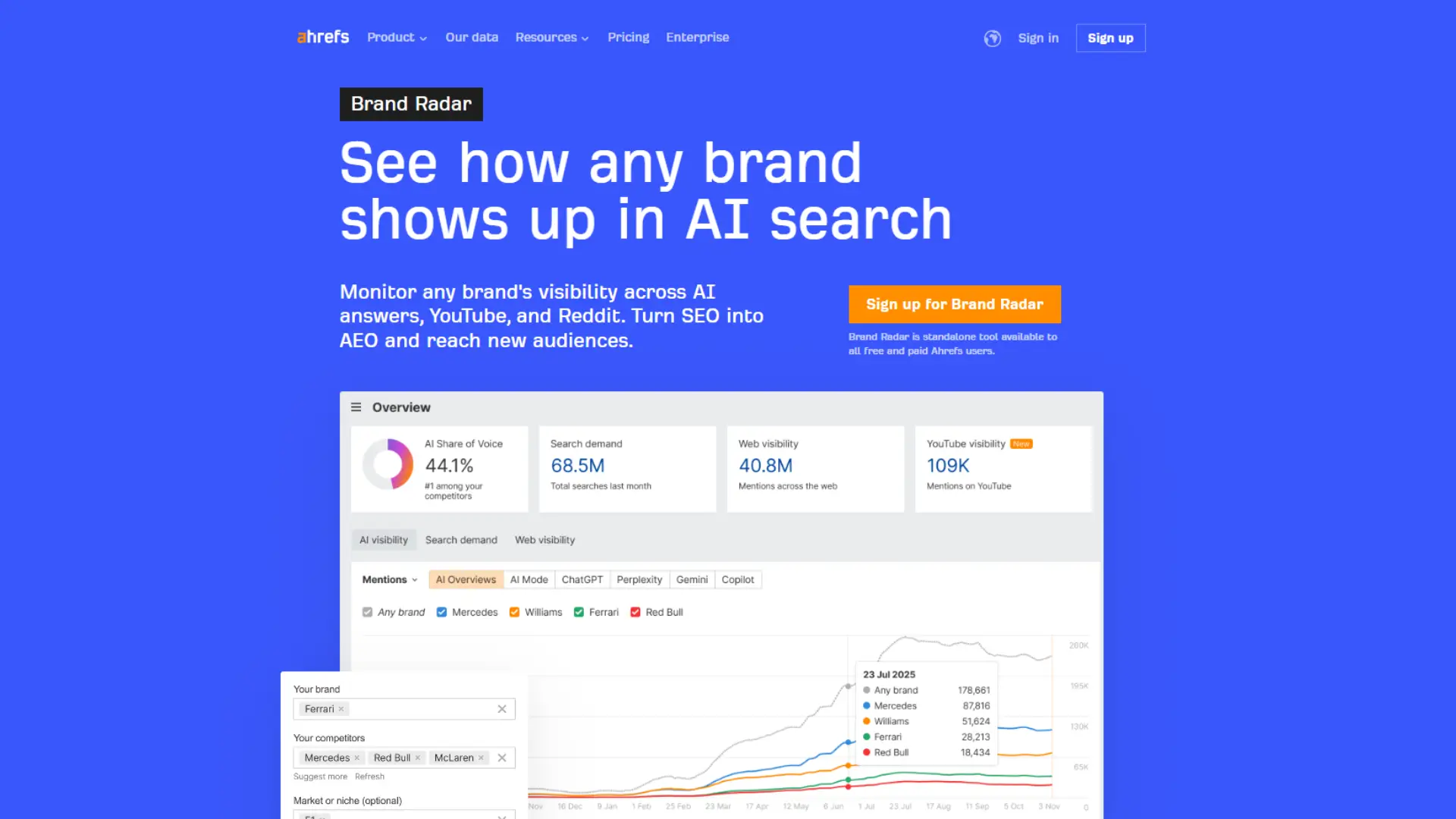
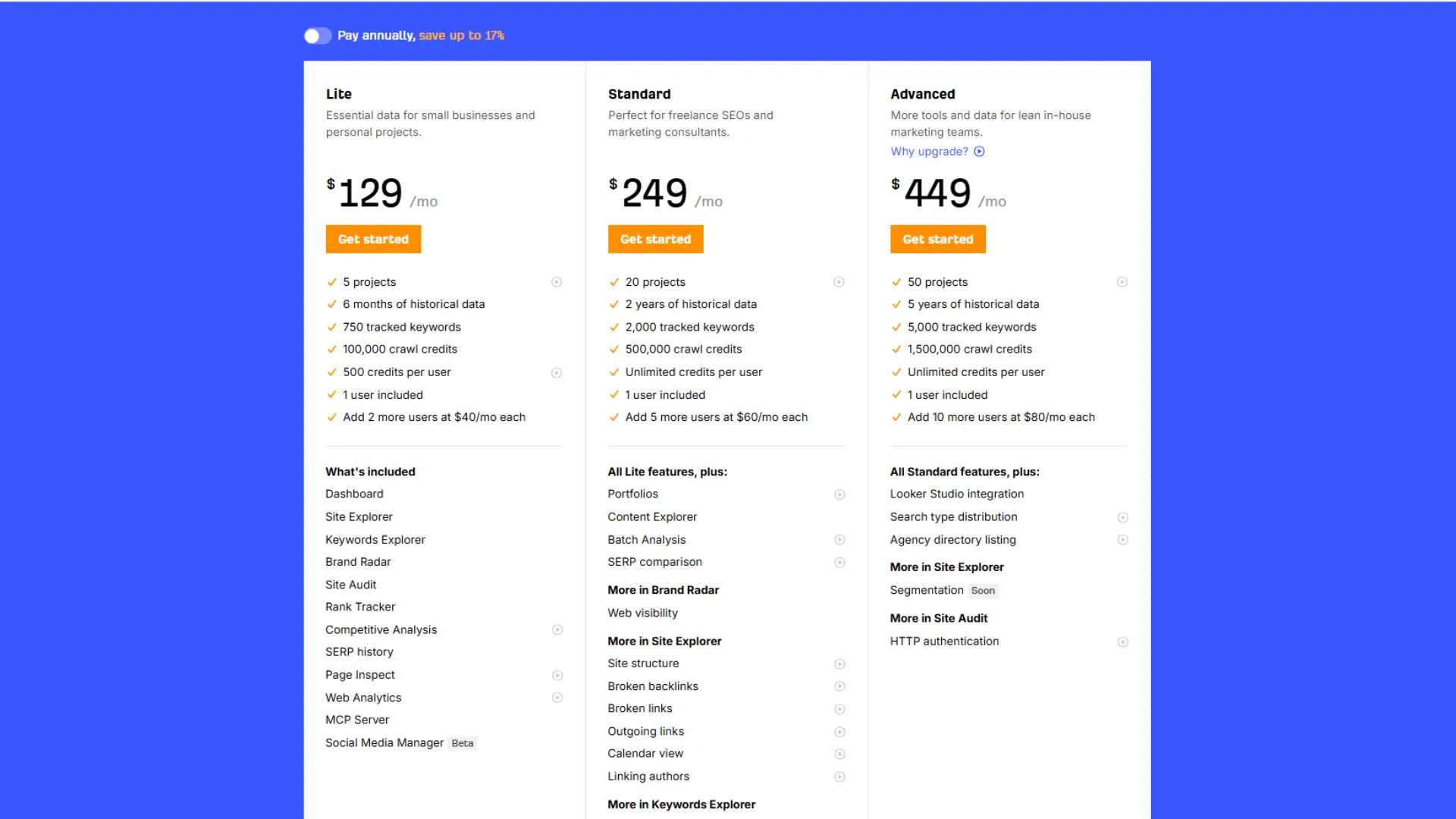
BrandRadar (Ahrefs / Brand Radar): Ahrefs’ Brand Radar is an enterprise-grade visibility tool that maps brand mentions across AI answers, web, video,ideo, and social, tying AI mentions back to broader brand signals.
USP: Integrates AI visibility with Ahrefs’ broad web and video-level signal set for fuller brand context.
Peec AI Snapshot
- Best For: Brand & Reputation Managers (beyond just SEO).
- Primary Win: Tracks Low barrier to entry ($49 Lite plan) with multi-region testing available.
- Primary Risk:Very limited capacity on the cheapest plan.
Migration Friction:
🟢 Low. The Lite plan is an excellent, low-risk way to start tracking sentiment and share of voice without committing to a full SEO platform. Good UI for brand managers.
Key Features:
- 360° Brand Health: Tracks AI visibility in LLMs alongside branded search demand and external web mentions that influence AI answers.
- Real-World Query Data: Uses actual People Also Ask (PAA) and search questions to monitor AI performance, ensuring relevance to user intent.
- AI Share of Voice & Sentiment: Measures the brand's share of mentions and the sentiment of AI narratives across conversational platforms.
- Prompt Topic Clustering: Groups related prompts under strategic themes to help marketers develop authoritative content clusters and secure top-of-funnel brand visibility.
- Comprehensive Benchmarking: Offers direct comparison of Brand Visibility Scores against rivals across platforms like ChatGPT, Gemini, and Google SGE.
Pros & Cons
Pros:
- Combines AI visibility with Ahrefs’ massive SEO data.
- Strong brand monitoring across AI + web + YouTube.
- Great for enterprise teams needing a big-picture view.
- Trusted ecosystem and robust data sources.
Cons:
- Overkill if you only want AI visibility.
- Some newer AI metrics are still maturing.
Price Snapshot:
Do NOT use Rankability if...
- You need high-volume tracking immediately: The Lite plan's 10 daily prompt capacity is a quick limit, forcing an upgrade for serious GEO efforts.
- You are solely focused on optimization: It is geared more toward "monitoring" and "reputation" than "content fixing."
Rankscale
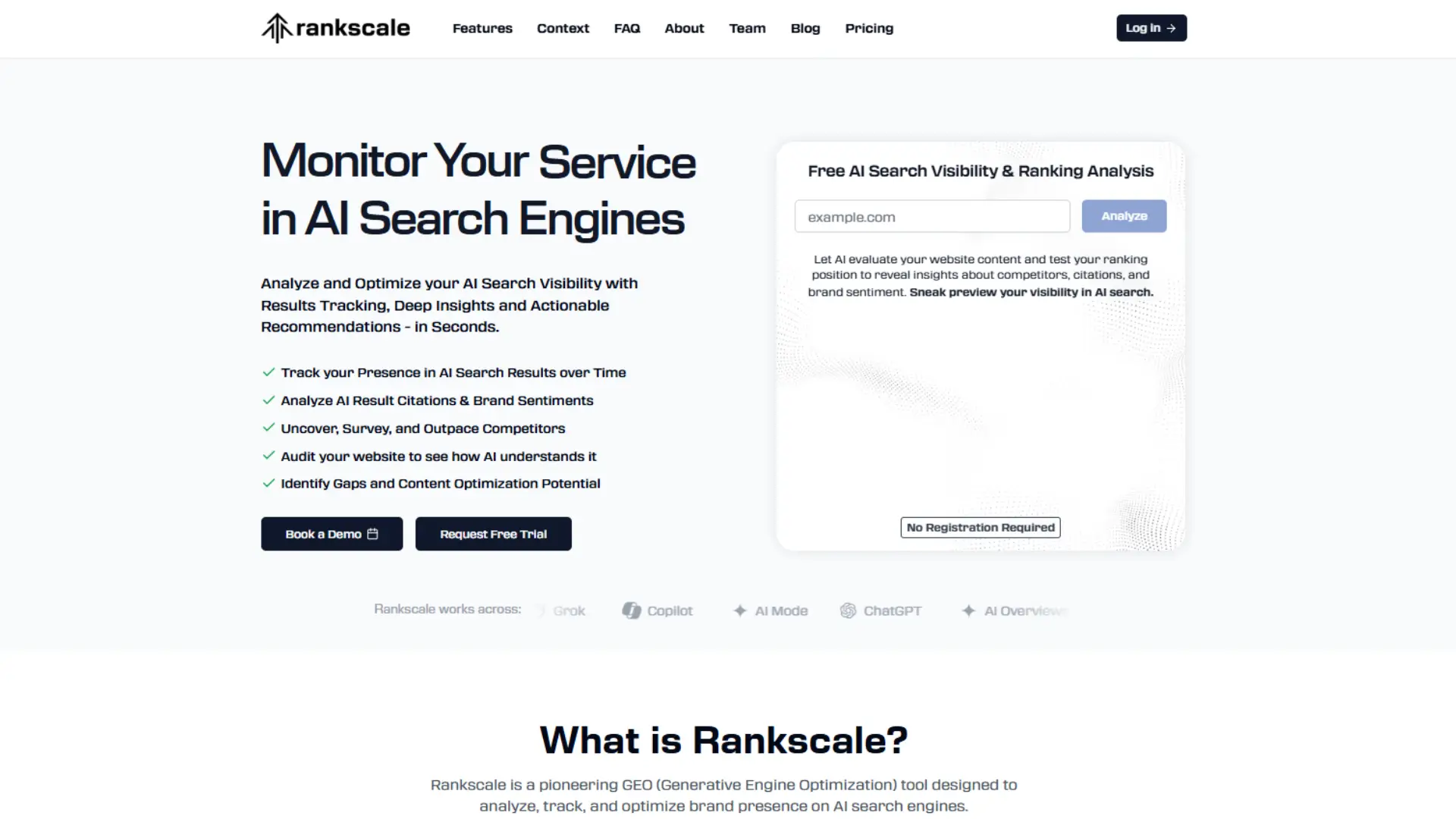
Rankscale: A GEO/AI visibility product that tracks how brands are mentioned and cited across LLMs, with analytics focused on citation sources and optimization steps.
USP: GEO-centred analytics with practical recommendations and credit-style pricing to scale monitoring.
Peec AI Snapshot
- Best For: Agencies/Consultants needing flexible, usage-based pricing.
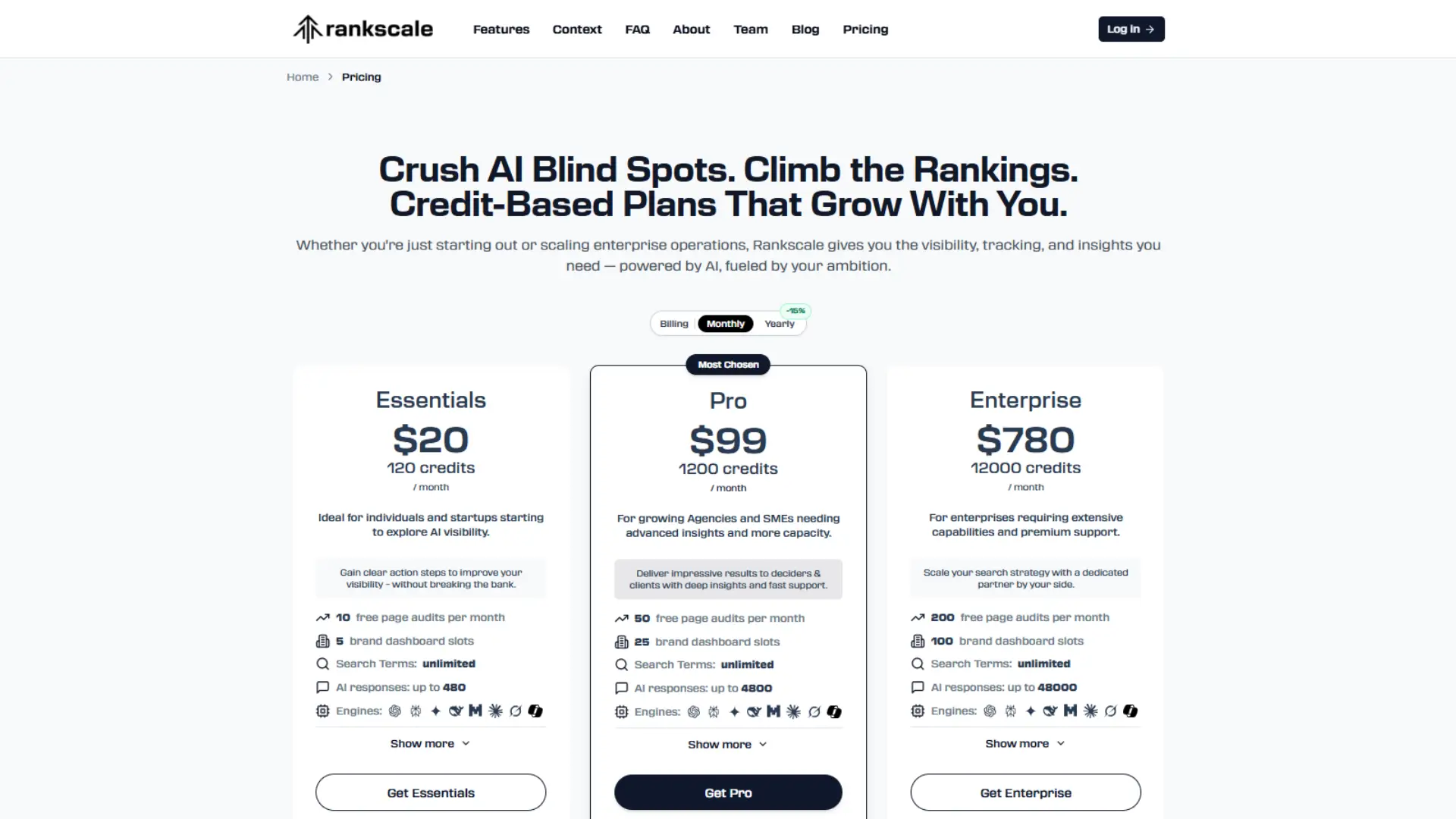
- Primary Win: Credit-based system for precise budget control.
- Primary Risk:High escalation risk for large, multi-user teams.
Key Features:
- Extensive LLM Coverage: Tracks visibility across a broad range of AI engines, offering specialized monitoring for platforms outside the major four.
- AI Readiness Score: Runs a free AI-driven website audit to gauge how prepared a domain is for generative search, highlighting structural and semantic gaps.
- Sentiment Context Analysis: Tracks positive, negative, or neutral brand mentions in AI responses, providing the critical context needed for PR and reputation teams.
- Prompt Variation Testing: Helps simulate thousands of minor prompt variations to understand how phrasing and user intent impact brand citation rates.
- Influential Domain Pinpointing: Identifies the third-party sites that are most frequently cited by AI for your topics, indicating where earned media efforts should be focused.
Pros & Cons
Pros:
- Low-cost entry for AI visibility tracking.
- Tracks citations & competitor visibility across LLMs.
- Good for small teams wanting simple monitoring.
- Usage-based pricing gives flexibility.
Cons:
- Limited documentation on methodology.
- Credit models can become unpredictable in heavy usage.
Price Snapshot:
Do NOT use Rankability if...
- You have a large, internal marketing team: The "per-license/credit" model can make costs unpredictable and quickly exceed a flat-rate competitor's price.
- You prefer unlimited usage: You will constantly be monitoring your credit balance, which can disrupt workflow.
Goodie AI
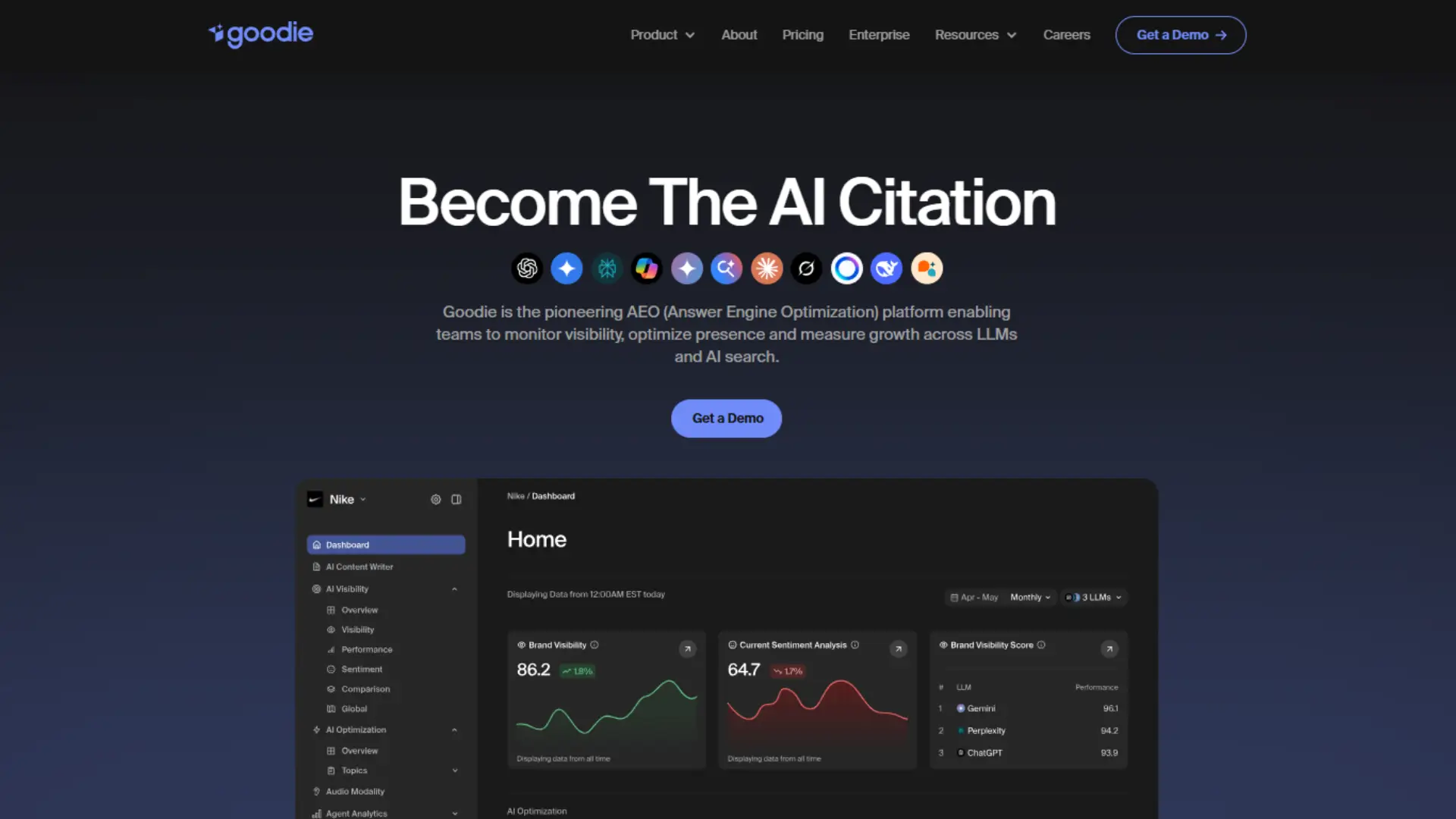
Goodie AI: An Answer Engine Optimization (AEO) platform combining monitoring, content optimization, and analytics to help brands show up in ChatGPT, Gemini, Perple,xity, and similar engines.
USP: End-to-end AEO workflow (monitor → analyze → optimize) built for brands looking to treat AI answers like a new channel.
Peec AI Snapshot
- Best For: Mid-to-Large Enterprises focused on ROI/Attribution.
- Primary Win: Dedicated focus on linking AI exposure to measurable business outcomes (ROI).
- Primary Risk:Extremely high price point ($495/month).
Migration Friction:
🟡 Medium. The platform's complexity and focus on advanced attribution require integration with your core business intelligence tools (like GA4/CRM), which takes significant setup time.
Key Features:
- Agentic Commerce Optimizer: Specialized tools to monitor how products and services are represented in AI-driven shopping assistants and product recommendation engines.
- Sentiment Score & Narrative Control: Provides a real-time sentiment score, helping PR teams monitor and control the brand narrative within conversational AI responses.
- Outreach Agent: Moves beyond data by using Agentic Actions to surface missed citation opportunities and even draft personalized outreach emails to authoritative publishers.
- Optimization Hub: A centralized location that provides content-tailoring tools and algorithmic insights to generate AI-friendly content structures and metadata.
- Business Attribution: Connects AI-driven brand appearances to measurable business outcomes like leads and conversions, proving the ROI of AEO efforts.
Pros & Cons
Pros:
- End-to-end AEO platform (monitor → analyze → optimize).
- Covers all major AI answer engines.
- Suitable for brands wanting a single tool for AI visibility.
- Provides optimization suggestions, not just tracking.
Cons:
- Newer tool, still expanding features.
- Content recommendations may not be as advanced as older SEO platforms.
Price Snapshot:
No public pricing/tiers: Prospective customers must contact sales
Do NOT use Rankability if...
- You are a small business/startup: The cost is prohibitive and designed for enterprise budgets focused on multi-channel attribution.
- You don't track detailed ROI: Its core value is connecting AI visibility to revenue. If you don't use the attribution features, you are wasting the price.
Still confused about which AI visibility tool to go for?

Let me make this simple. Imagine you're trying to understand your brand's presence across ChatGPT, Google AI, Perplexity, and more. Some tools give you pieces of the puzzle. Others help you see the whole picture and show you what to do about it.
Here's a quick litmus test:
- Do you want to see exactly where your brand is mentioned across AI platforms?
If yes → You need clear, visual dashboards that don't require a data science degree to understand. GetCitoshows it visually and clearly, so you instantly know your standing without drowning in spreadsheets. - Do you need actionable steps, not just numbers?
If yes → Peec doesn't just tell you where you stand; it gives you step-by-step guidance for each platform. You're not left wondering "okay, now what?” - Want to optimize content for AI search as well as traditional Google?
If yes → GetCito lets you create and refine content inside the platform, no juggling between multiple tools. Everything happens in one workflow. - Curious about competitors and what they're doing right?
If yes → GetCito and Brand Radar lets you let you benchmark against rivals in AI-generated answers, so you can spot gaps and opportunities before they do.
The result? A single workflow where you can monitor, analyze, optimize, and create, without bouncing between multiple platforms and losing momentum.
So, if you checked most of these boxes in your head, GetCito is built for exactly what you need.
CTA
Ready to see how visible your brand is on AI search engines?
Get your free AI-Visibility Report with GetCito → Start Free Trial / Get Report.