
That moment when you hit #1 on Google... remember that feeling? It was proof that your hard work paid off.
But in 2026, that #1 spot feels different. You pour your heart into a 2,000-word guide, only to watch a Google AI Overview or Gemini compress it into three bullet points. Your traffic vanishes into the "AI black hole," and your click-through rate plummets.
The game has changed. A top ranking is no longer the finish line; the new goal is to become the trusted source that AI relies on. This is Generative Engine Optimization (GEO).
If you’re ready to stop being replaced by AI and start being referenced by it, you need a new toolkit. We’ve evaluated the top GEO platforms of 2026 to help you stay visible in an AI-first world.
| GEO Tool | BEST For | Key Reason |
|---|---|---|
GetCito | An Agency / High-Growth Brand | Best real-time multi-platform tracking. |
Semrush | An SEO Traditionalist | Best for adding AI data to existing workflows. |
Birdeye Search AI | Enterprise / Multi-Location Brands | Best for AI visibility at scale across thousands of locations. |
Profound | An Enterprise / Fortune 500 | Best for deep predictive data science. |
Otterly.AI | On a Tight Budget | Best entry-level price point. |
SERanking | A Google-Focused SEO Pro | Best for tracking Google AI Overviews specifically. |
Rankscale | An EU-Based Business | Best for GDPR-compliant AI search optimization. |
BrandRank.ai | A Reputation-Conscious Brand | Best for ethical AI oversight and crisis prediction. |
Nightwatch | A Traditional SEO Marketer | Best for transitioning from SEO to AI monitoring. |
Ziptie.dev | A Developer / DevOps Team | Best API-first solution for full custom control. |
What is Generative Engine Optimization (GEO)?
Generative Engine Optimization (GEO) is the strategic practice of optimizing digital content to be selected and cited by generative AI systems (LLMs).
The Golden Rule of 2026: > SEO gets you seen. GEO gets you quoted.
"We are entering search’s next era, where visibility depends on trust, not volume. GEO is just the latest addition to the SEO family. The ecosystem looks different, but it still runs on the same nutrients: high-quality information, clear structure, and trust," says Lily Ray, VP of SEO Strategy at Amsive.
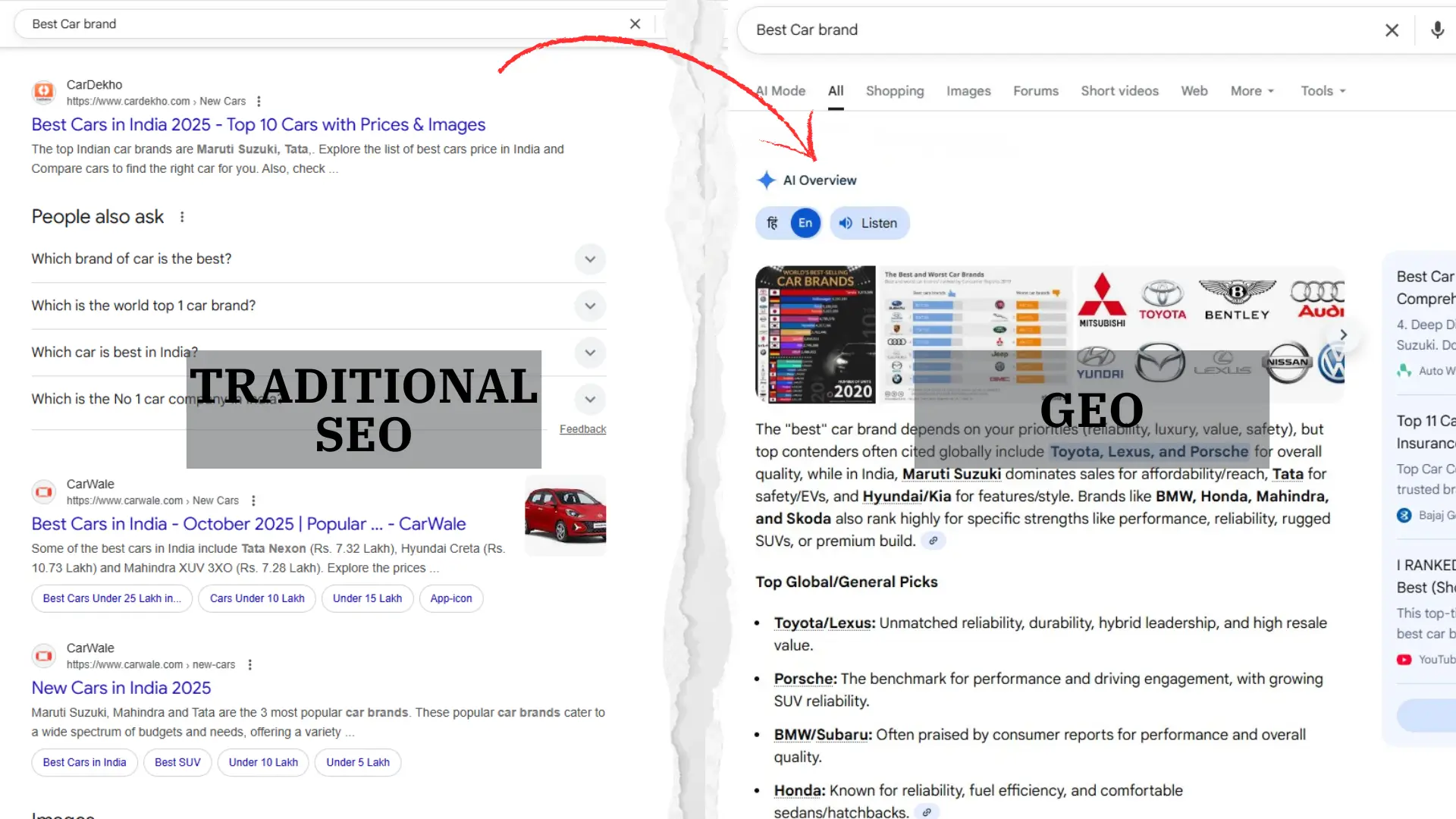
While SEO focuses on keywords and backlinks to win a click, GEO focuses on Entity Clarity and Information Density to win a citation. The core objective of Generative Engine Optimization is to build a brand's authority and content clarity so that it becomes the trusted, go-to source an AI chooses to reference when providing a direct, synthesized answer to a user's query.

"SEO can be gamed. GEO can’t. It is not a bunch of techniques but a systematic process of building trust."
Avinash Tripthi
GetCito, formerly “AI Monitor”By mastering GEO, brands don’t just compete for search rankings; they shape the AI-driven conversations that influence user decisions.
How GEO (Generative Engine Optimization) Differs from SEO (Search Engine Optimization)
| Aspect | SEO (Search Engine Optimization) | GEO (Generative Engine Optimization) |
|---|---|---|
Primary Goal | Rank on a list of links to drive traffic. | Be cited and referenced in AI-generated answers. |
Target Platforms | Search engines (Google, Bing, Yahoo). | Generative engines (ChatGPT, Gemini, Claude, Perplexity, Google AI Overviews). |
Key Signals | Backlinks, keywords, and technical SEO. | Content authority, structured data, entity clarity, conversational language. |
Measurement | Clicks, impressions, rankings, traffic. | Citation rate, sentiment in AI answers, and AI-driven referrals. |
Why GEO (Generative Engine Optimization) Matters Now
A study of study of Google's AI Overviews showed that they reduce organic clicks to top-ranking websites by as much as 34.5%
A study found that 40% of the sources cited in AI Overviews showed do not appear in the top 10 search results on a traditional SERP
70% of consumers now say AI tools are becoming their go-to for product or service recommendations, replacing traditional search methods
Why These Stats Matter
Numbers speak louder than words, and they validate our claim that Generative Engine Optimization (GEO) is no longer a future-gazing exercise; it's a present necessity.
For instance, the 34.5% drop in organic clicks isn't just a number; it's a wake-up call that the user journey has fundamentally changed. Your brand's visibility is now at risk, regardless of your traditional search ranking.
This reality is compounded by the fact that 40% of sources cited in AI Overviews aren't even in the top 10 results, proving that a new, more level playing field has emerged. This is a direct opportunity for brands to win by mastering GEO.
Ultimately, with 70% of consumers now turning to AI for recommendations, adapting isn't an option; it's a requirement to remain relevant and part of the consumer's decision-making process.
How We Evaluated GEO Tools: The 2026 Benchmarking Criteria
Choosing the right Generative Engine Optimization (GEO) software isn’t just about features on a spec sheet; it’s about proving whether a tool can actually move the needle on AI citations. To cut through the noise, we dedicated two full months to rigorously testing 25+ leading GEO tools, pushing each one through real‑world scenarios to see which platforms truly help brands earn AI citations.
Our goal was simple: identify which platforms genuinely help brands show up in AI‑driven answers. To do that, we built a 4-pillar evaluation framework designed to measure influence, visibility, and actionability.
The 4‑Pillar Evaluation Framework
- Cross‑Model Citation Tracking (CMCT):
We tested each tool’s ability to monitor brand mentions across multiple generative platforms, not just Google. A top-tier tool must track AI Overviews (SGE), Bing Copilot, ChatGPT, Perplexity, and Claude. - Entity Sentiment & Narrative Analysis:
Not all mentions are created equal. We looked at whether tools could tell the difference between a passing mention and a genuine recommendation, and whether they could surface insights into how AI engines position a brand as a leader, a budget option, or an innovator. - AI‑Specific Technical Auditing:
Machine‑readability is the new SEO. We checked for features like Schema Markup validation, Information Density scoring, and LLM‑Crawlability, essentially, whether a site’s architecture makes it easy (or impossible) for AI bots to pick up key facts.
Chris Long, VP of Marketing at Go Fish Digital, confirms this technical shift: "Our testing shows that generative search engines prioritize 'fact-level' optimization over 'page-level' optimization. AI models favor extremely structured content, think bulleted lists, clear headers, and direct, extractable definitions."
- Citation Gap Identification:
The most powerful GEO tools don’t just report what’s happening, they show you where you’re missing out. We valued platforms that could highlight high‑intent queries where competitors are cited, but your brand isn’t, and then provide a roadmap to close that gap.
Evaluation Methodology Summary
| Criterion | High‑Performance Benchmark |
|---|---|
LLM Coverage | Tracks 5+ generative engines simultaneously |
Data Recency | Real‑time or daily updates to reflect shifting AI “hallucinations.” |
Actionability | Offers rewrite suggestions to boost citation probability |
Reporting | Provides an AI Visibility Score (AVS) to benchmark authority vs. competitors |
Top 10 Generative Engine Optimization (GEO) Tools
GetCito – The Undisputed GEO Champion
Overview:
GetCito, the world's first open-source Generative Engine Optimization tool that tracks brand mentions across ChatGPT, Claude, and Perplexity. It provides real-time citation monitoring, content gap analysis, and answer-readiness scoring across unlimited URLs with a free starter plan and enterprise-grade API access
Best For:
Multi-platform AI tracking, real-time alerts, and sentiment analysis for comprehensive brand management.
Framework Performance Test:
- CMCT (Cross-Model Tracking): Excellent. Successfully tracked brand citations across ChatGPT-4o, Gemini Ultra, Claude 3.5, and Perplexity in a single dashboard.
- Entity Sentiment: Industry-Leading. Identified subtle narrative shifts, such as an AI engine moving from labeling a brand "entry-level" to "innovative leader."
- Technical Auditing: Strong. Provides a "Machine-Readability" score that evaluates how well AI agents can parse site data.
- Citation Gap Analysis: Superior.. Automated alerts triggered when a competitor was cited in a "Best of" prompt where the user’s brand was absent.
Pros:
- ✅ 500% Traffic Surge: Cleanomatics transformed from invisible to unavoidable in Delhi’s laundry wars.
- ✅ 45% Visibility Boost for Agencies: A GEO firm successfully turned AI into their unpaid hype machine.
- ✅ User-Friendly Dashboards: Designed for ease of use no PhD in data interpretation required.
Pros:
- ❌ Limited customization compared to enterprise-only solutions.
Case Study:
A leading AI-powered CSR platform, Relific.io, a leading AI‑powered CSR platform, hit a wall when B2B buyers began relying on AI search tools like ChatGPT and Gemini. Despite their strong expertise, Relific’s name was missing from AI‑generated answers while competitors were being cited and recommended.
To solve this AI Discovery Gap, Relific turned to GetCito. By implementing an AI Search Optimization (AIO) strategy, they restructured content to be truly machine‑readable, delivering clear, direct answers to the questions buyers were asking.
The results were dramatic:
- 366% increase in mentions as a recommended CSR tool within AI‑generated answers
- 47% boost in their AI Visibility Score, strengthening brand authority
- 33% growth in marketing‑qualified leads in just 90 days
This case shows how making content AI‑friendly isn’t just a technical tweak, it’s a growth strategy that directly impacts pipeline and visibility in the era of generative search.
Verdict:
GetCito is the gold standard for high-intent GEO. Framework Score: 9.5/10. It is the most comprehensive tool for brands that need to dominate the narrative across all major AI engines simultaneously.
If you are serious about defending your market share in 2026, GetCito is a non-negotiable. Learn More or [ ➜ Get a Demo of GetCito ]
Semrush – The SEO Veteran Adapting to AI
Overview:
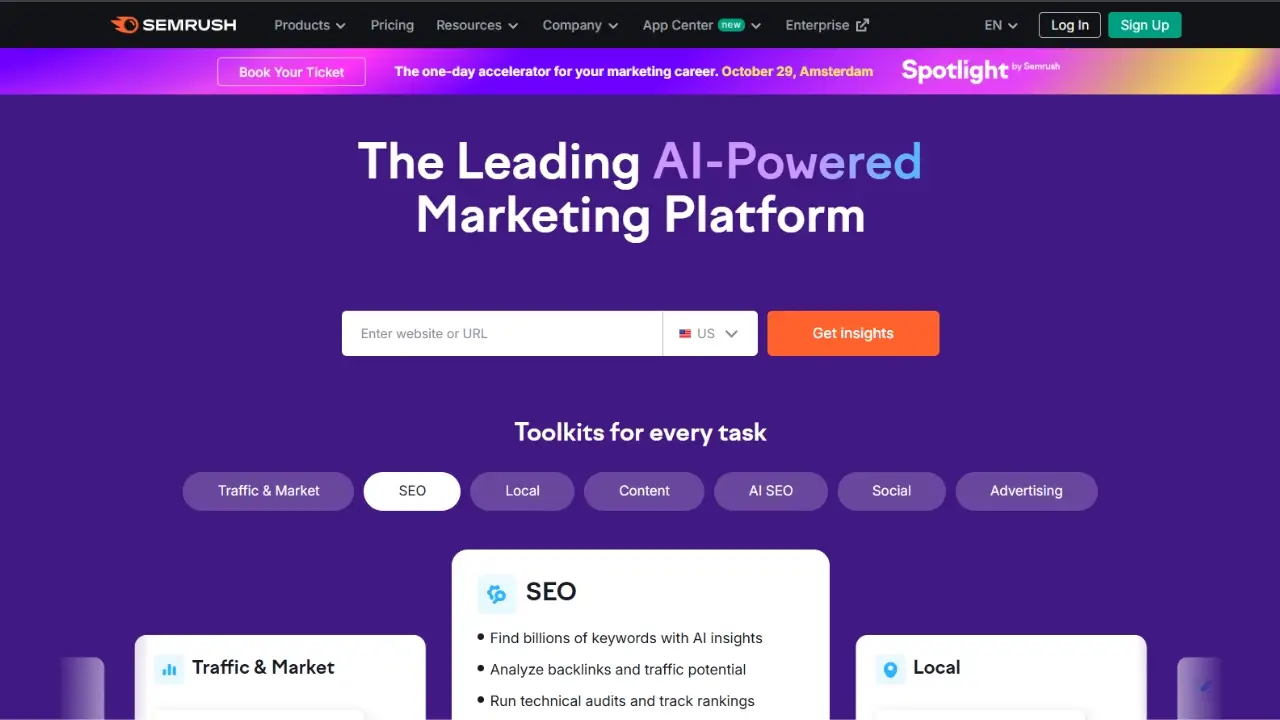
Semrush is a powerful SEO tool that is integrating GEO features into its existing suite. It offers valuable insights, but its capabilities are not as granular as those of GEO-first tools.
Best For:
SEO teams who want to add an AI dimension to their existing workflows without changing platforms.
Framework Performance Test:
- CMCT: Focused. Primarily tracks Google AI Overviews (SGE). Limited tracking for conversational engines like Claude or ChatGPT.
- Entity Sentiment: Baseline. Provides sentiment analysis based on traditional "Brand Monitoring" tech rather than deep LLM narrative analysis.
- Technical Auditing: Industry-Leading. Its "Site Audit" is the best for technical SEO, which remains a critical foundation for GEO.
- Citation Gap Analysis: Moderate. Uses keyword-based logic to find AI Overview opportunities.
Pros:
- ✅ Budget-Friendly: Priced at $99 per domain for basic tracking.
- ✅ Automatic Prompt Detection: No need to manually identify what users are asking AI.
- ✅ SEO Synergy: Effectively connects AI mentions with organic search strategies.
Cons:
- ❌ AI insights are not as granular as GEO-first tools, and they lack the depth of real-time, multi-platform data.
Pricing:
Starts at $99/month for its Lite plan.
Verdict:
Best for existing SEO users. Framework Score: 8.5/10. While it lacks deep "cross-model" tracking, it is the most reliable tool for mastering Google’s specific AI-powered search results.
Birdeye Search AI – The Agentic Marketing Platform
Overview:
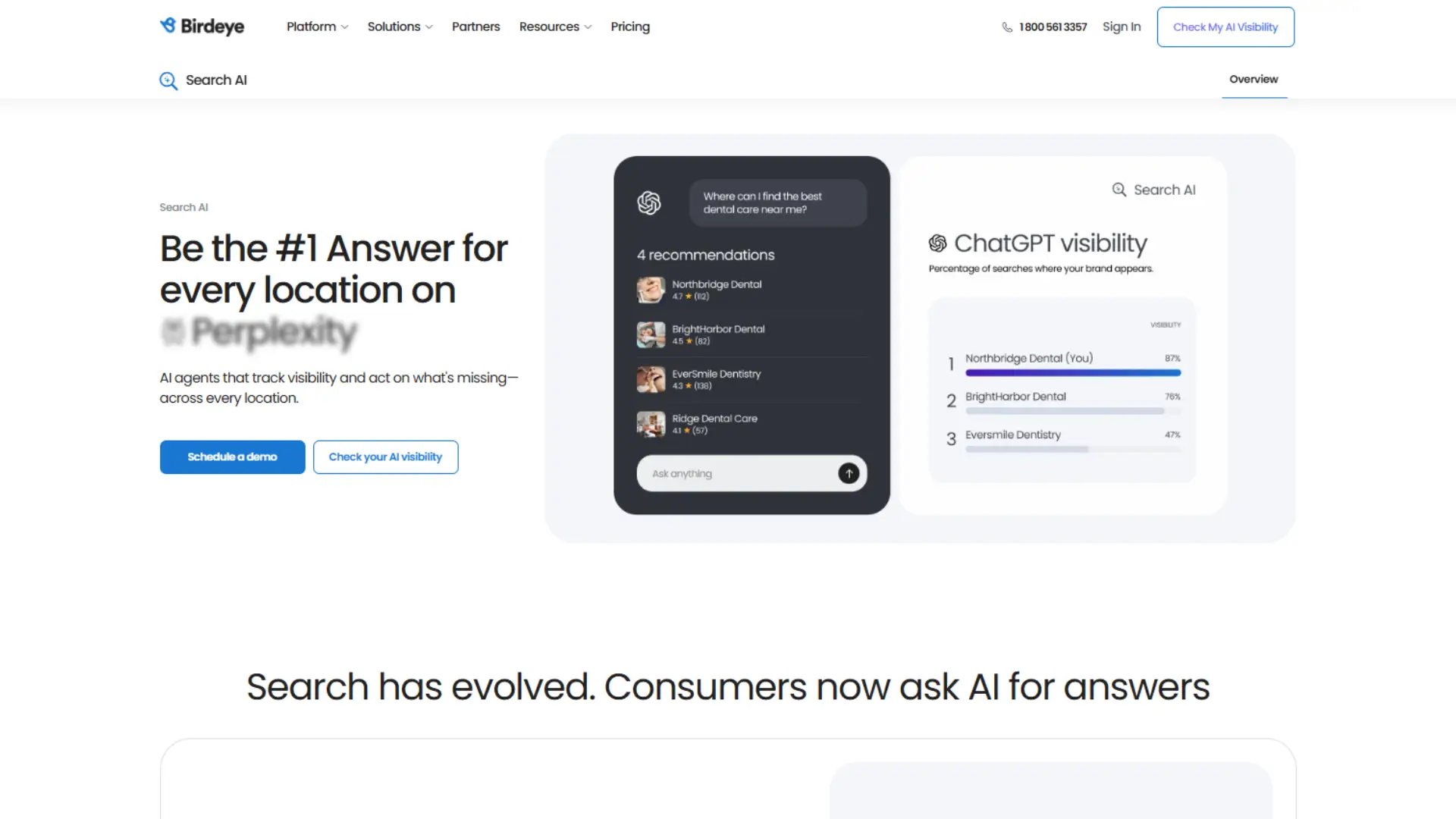
Birdeye Search AI helps multi-location brands understand and improve their appearance in AI-generated answers. As an Agentic Marketing Platform, Birdeye connects AI search visibility to real business signals-accurate listings, real customer reviews, and agents to help brands become consistently discoverable and trusted across their 100-10,000+ locations.
What sets Birdeye apart is scale and reliability. The platform connects to 200+ review sites and integrates with 3,000+ CRMs, including Salesforce, HubSpot, and QuickBooks Online.
Best For:
Multi-location brands that need AI search visibility, not just content experiments.
Framework Performance Test:
- CMCT (Cross-Model Citation Tracking): Strong. Birdeye Search AI tracks brand and location-level visibility across ChatGPT, Gemini, Perplexity, and emerging AI search surfaces, with comparisons by theme, platform, and competitor.
- Entity Sentiment & Narrative Analysis: Advanced. The platform shows how AI engines describe a brand—strengths, weaknesses, and sentiment, then connects those insights back to reviews, listing accuracy, and location performance.
- AI-Specific Technical Auditing: Practical. Rather than abstract scores, Birdeye audits how accurately AI answers engines surface core business facts like hours, phone numbers, and addresses, highlighting gaps that directly affect trust and citations.
- Citation Gap Identification: Action-Driven. Birdeye identifies which sources AI engines rely on most, then recommends high-impact citation opportunities aligned to industry and share-of-voice potential.
Pros:
- ✅Built-In Agent Execution: AI agents optimize prompts, fix data inconsistencies, expand citations, and execute updates automatically across locations.
- ✅Operational Signal Advantage: Review collection from 200+ sites feeds AI engines with fresh, authentic context that improves credibility and answer quality.
- ✅Enterprise-Ready Integrations: 3,000+ integrations (including Salesforce, HubSpot, and QuickBooks Online, etc) ensure AI visibility reflects CRM data, location systems, and real business changes in near real time.
Cons:
- ❌ Location-First by Design: Birdeye is intentionally built for location-based brands.
Pricing:
Varies by number of locations. Includes a 30-day free trial.
Verdict:
Birdeye isn’t a GEO add-on; it’s a robust agentic marketing platform built for multi-location brands. Framework Score: 8.8/10. For multi-location brands where accuracy, reviews, and local trust determine whether AI cites you or ignores you, Birdeye turns search visibility into a repeatable, automated advantage rather than a manual optimization effort.
Otterly.AI – The Budget-Friendly Trainee
Overview:
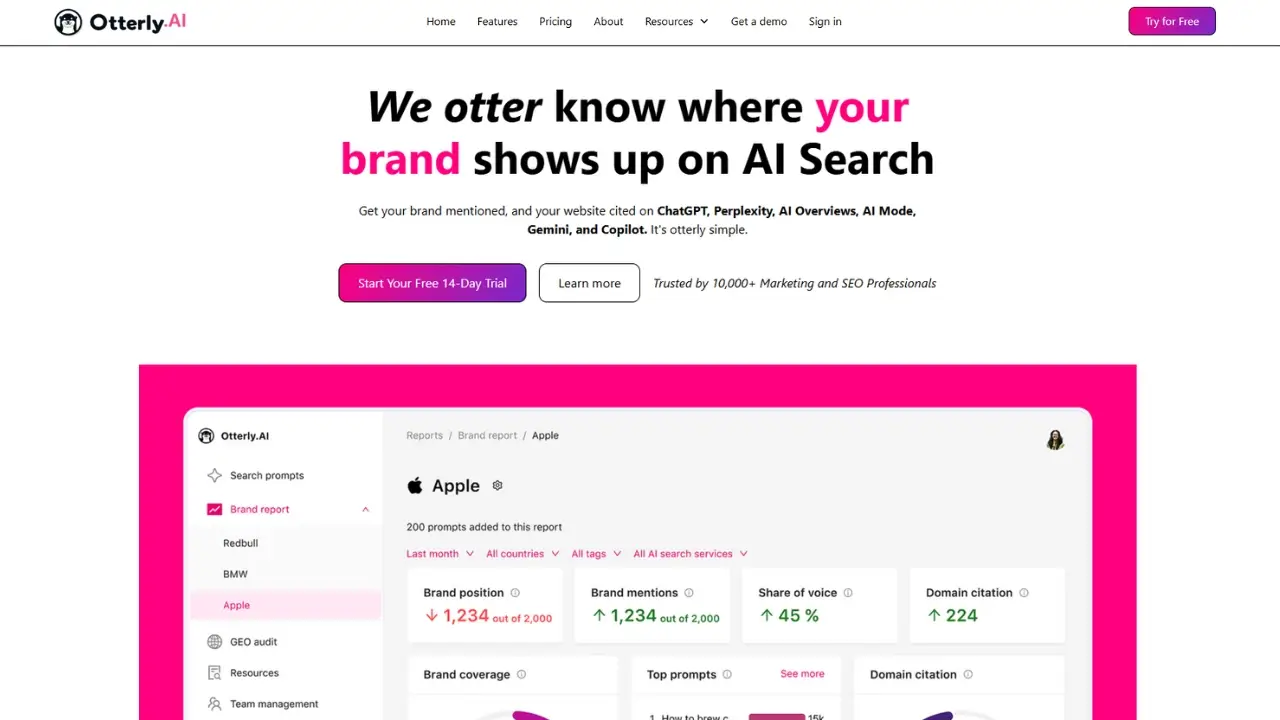
Otterly.AI is an affordable tool for users who want basic insights into their AI search presence without a significant investment.
Best For:
Ideal for individuals or teams transitioning from SEO to Generative Engine Optimization, as it simplifies the process significantly.
Framework Performance Test:
- CMCT: Good. Covers major engines like ChatGPT and Gemini but lacks depth in regional AI models.
- Entity Sentiment: Basic. Provides simple positive/negative/neutral tagging.
- Technical Auditing: Limited. Focuses more on monitoring results than fixing technical site architecture.
- Citation Gap Analysis: Low. Requires manual effort to identify gaps from snapshots.
Pros:
- ✅ User-Friendly: Easily monitor specific prompts, allowing the tool to handle the rest.
- ✅ Query Snapshots: Provides beginner-friendly snapshots for quick reviews of AI search engine queries.
- ✅ Keyword Conversion: Offers the option to convert your keywords into AI prompts.
Cons:
- ❌ Manual testing has shown occasional data inaccuracies, which may affect strategic decisions.
Pricing:
Starts at $29/month.
Verdict:
Best for startups and individuals. Framework Score: 8/10. An affordable way to dip your toes into GEO, though it lacks the technical "Gap Analysis" needed for aggressive scaling.
SERanking – A Solid SEO Tool with an Eye on AI
Overview:
SERanking is a traditional SEO platform that has made a concerted effort to adapt to the GEO landscape. While a robust SEO tool, its GEO capabilities are currently limited in scope, focusing primarily on Google's AI Overviews.
Best For:
SEO professionals who prioritize Google's AI-powered snippets and need a cost-effective way to get started.
Framework Performance Test:
- CMCT: Niche. Very high accuracy for Google AI Overviews, but essentially zero coverage for standalone chatbots like Claude.
- Entity Sentiment: Moderate. Tracks brand mentions within snippets.
- Technical Auditing: Strong. High-quality on-page SEO checks that align well with Google's E-E-A-T requirements.
- Citation Gap Analysis: Automated. Excellent at identifying when a site enters or exits an AI-generated snippet.
Pros:
- ✅ Solid for Traditional SEO: A reliable choice for those focused on classic SEO strategies.
- ✅ Real-Time Alerts: Provides timely notifications for Google’s AI mentions.
- ✅ Hyper-Focused on AI Overview Responses: Effectively tracks Google snippets with precision.
Cons:
- ❌ Its narrow scope ignores critical platforms like ChatGPT, Claude, and Bing AI, leaving major gaps in a comprehensive GEO strategy.
Pricing:
Varies by plan, starts at $ 52/month with GEO features often an add-on or a part of higher tiers.
Verdict:
The best "Google-only" tool. Framework Score: 7.5/10. If your strategy starts and ends with Google, this is a cost-effective powerhouse.
Profound – The Enterprise Oracle
Overview:
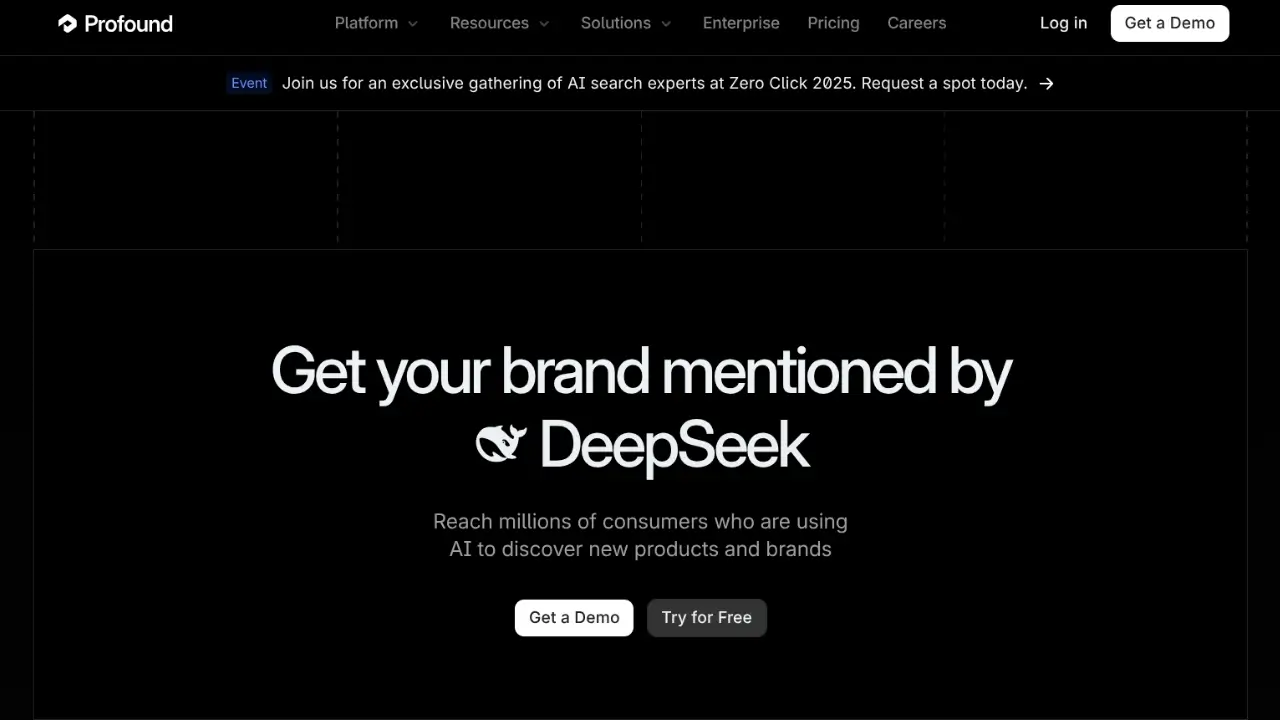
A premium analytics suite for Fortune 500 brands, Profound combines AI conversation tracking with predictive modeling to dominate global brand visibility.
Best For:
Global enterprises with seven-figure budgets and in-house data science teams.
Framework Performance Test:
- CMCT: Exceptional. Unrivaled coverage across global and regional LLMs.
- Entity Sentiment: Advanced. Uses predictive modeling to see how a brand's reputation might evolve within an LLM’s training set.
- Technical Auditing: Data-Heavy. Deep API-level audits for large-scale enterprise sites.
- Citation Gap Analysis: Predictive. Identifies gaps before they appear in public search results.
Pros:
- ✅ Nerdy Oracle: Predicts AI-driven brand risks before they trend (e.g., PR crises brewing in ChatGPT responses).
- ✅ Competitor Dissection: Reverse-engineers rivals’ AI positioning strategies.
- ✅ Enterprise-Grade Granularity: Track regional sentiment nuances (e.g., “eco-friendly” in Berlin vs. “budget-friendly” in Mumbai).
Cons:
- ❌ The custom, enterprise-only pricing is out of reach for most businesses, starting at over $2,000/month.
Pricing:
Starts at $499/month, lite plan, Best for small companies and individuals.
Verdict:
The "Ferrari" of GEO tools. Framework Score: 7.5/10 (for Enterprise). Its complexity and cost ($2,000+) make it unsuitable for SMEs, but indispensable for the Fortune 500.
Rankscale – The GDPR-Compliant Analyst
Overview:
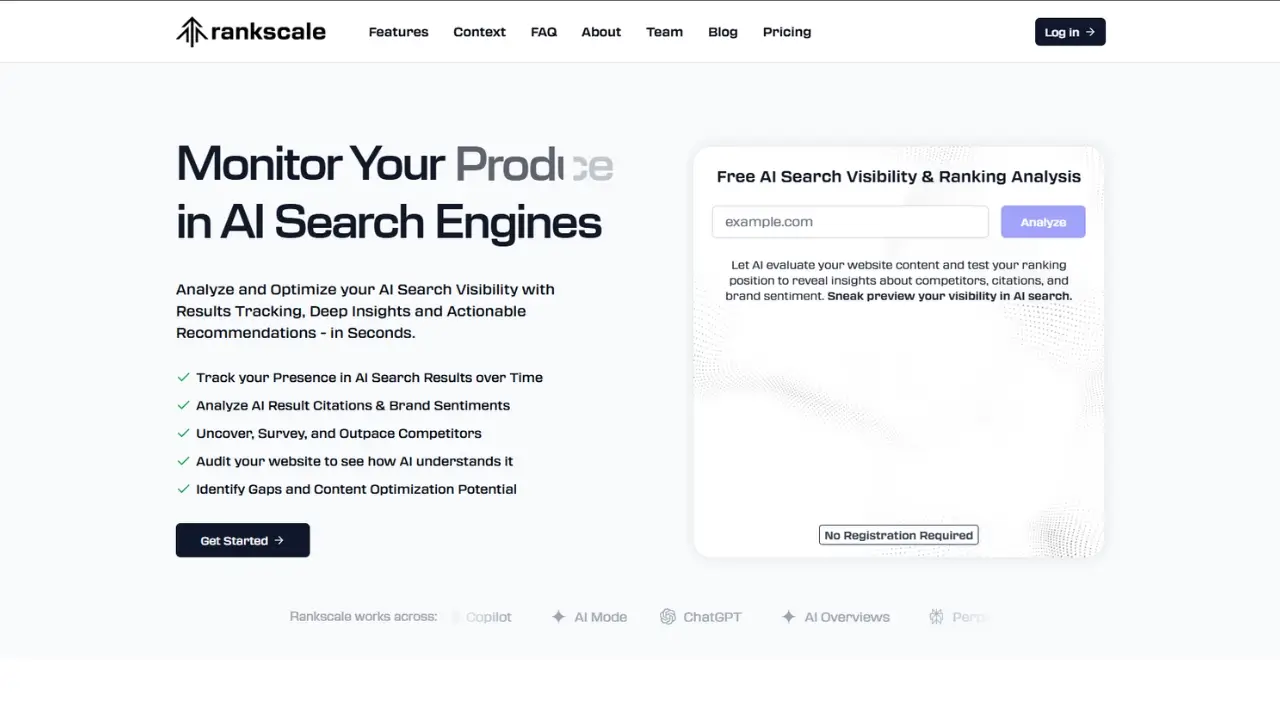
A Vienna-based GEO tool laser-focused on European compliance, offering AI search optimization within strict GDPR and EU AI Act frameworks.
Best For:
EU-based small and medium-sized businesses that must prioritize regulatory alignment.
Framework Performance Test:
- CMCT: Regional. Focuses heavily on LLM performance within the EU and UK.
- Entity Sentiment: Contextual. Excellent at identifying sentiment nuances in European languages.
- Technical Auditing: Compliance-Centric. The only tool that audits for both AI readiness and GDPR compliance.
- Citation Gap Analysis: Moderate. Focuses on citation gaps within .eu and local domains.
Pros:
- ✅ EU Regulatory Alignment: Built for GDPR/EEA compliance from day one.
- ✅ Granular Citation Analysis: Reveals which domains AI trusts (e.g., *.eu sites favored in EU queries).
- ✅ SEMrush Integration: Bridges traditional SEO with AI search data.
Cons:
- ❌ Struggles with non-EU sentiment trends and .com domains, making it less useful for global campaigns.
Pricing:
Starts at around $20/month.
Verdict:
Best for EU-based brands. Framework Score: 7.2/10. A vital niche tool for those operating under strict regulatory frameworks.
BrandRank.ai – The Trust Architect
Overview:
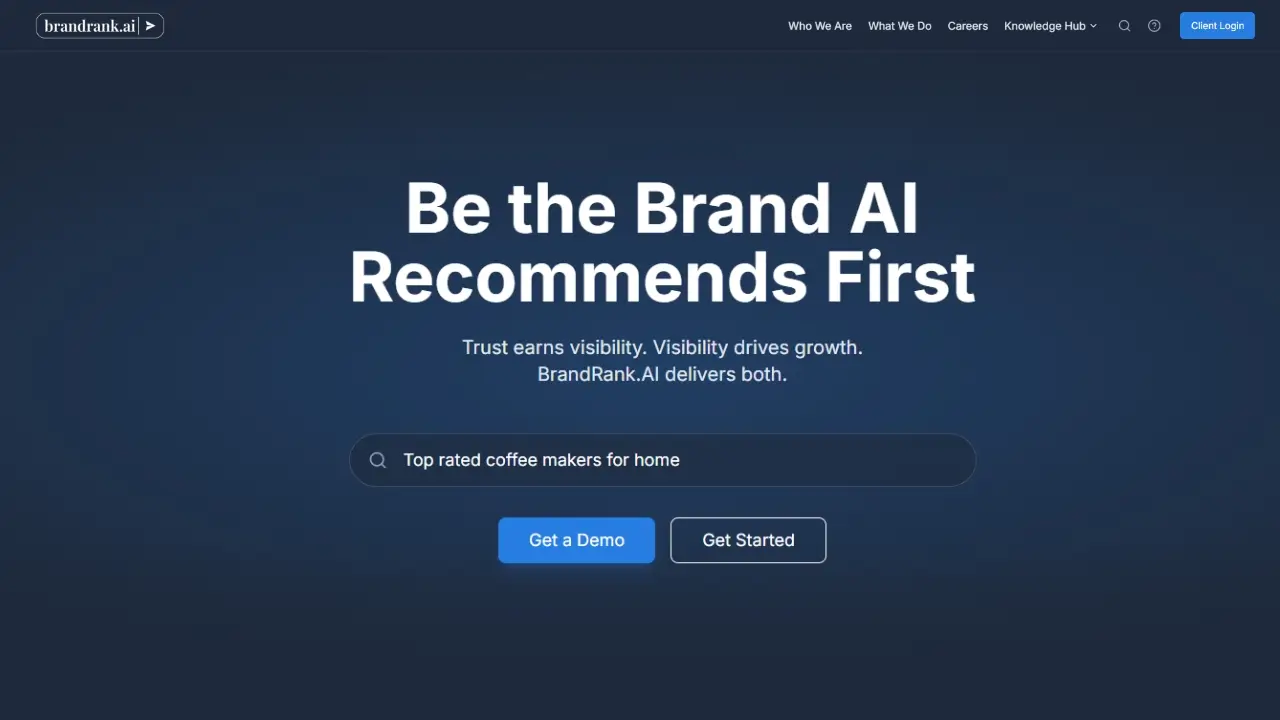
BrandRank.ai combines AI monitoring with human ethical oversight to protect brand reputation in AI-generated answers.
Best For:
High-stakes reputation management for enterprises in sensitive industries like healthcare and finance.
Framework Performance Test:
- CMCT: Moderate. Focuses on high-traffic conversational AI.
- Entity Sentiment: Highest. The framework’s strongest performer for narrative safety and "Trust Scores."
- Technical Auditing: Strategic. Audits content for "Authority" rather than just technical code.
- Citation Gap Analysis: Vulnerability-Focused. Finds gaps where your brand is being misrepresented or ignored in sensitive queries.
Pros:
- ✅ Ethical AI Focus: Human experts validate 30% of critical alerts.
- ✅ Crisis Prediction: Spotted 92% of PR risks in beta tests pre-ChatGPT leaks.
- ✅ Athlete/Entertainment Niche: Emerging use case for pro sports reputation management.
Cons:
- ❌ Enterprise-Only Pricing, Data Latency.
Pricing:
Custom enterprise pricing only.
Verdict:
Best for Reputation Management. Framework Score: 7/10. Great for healthcare, finance, and high-stakes industries where being cited correctly is as important as being cited at all.
Nightwatch – A Traditional SEO Tool Evolving for AI
Overview:
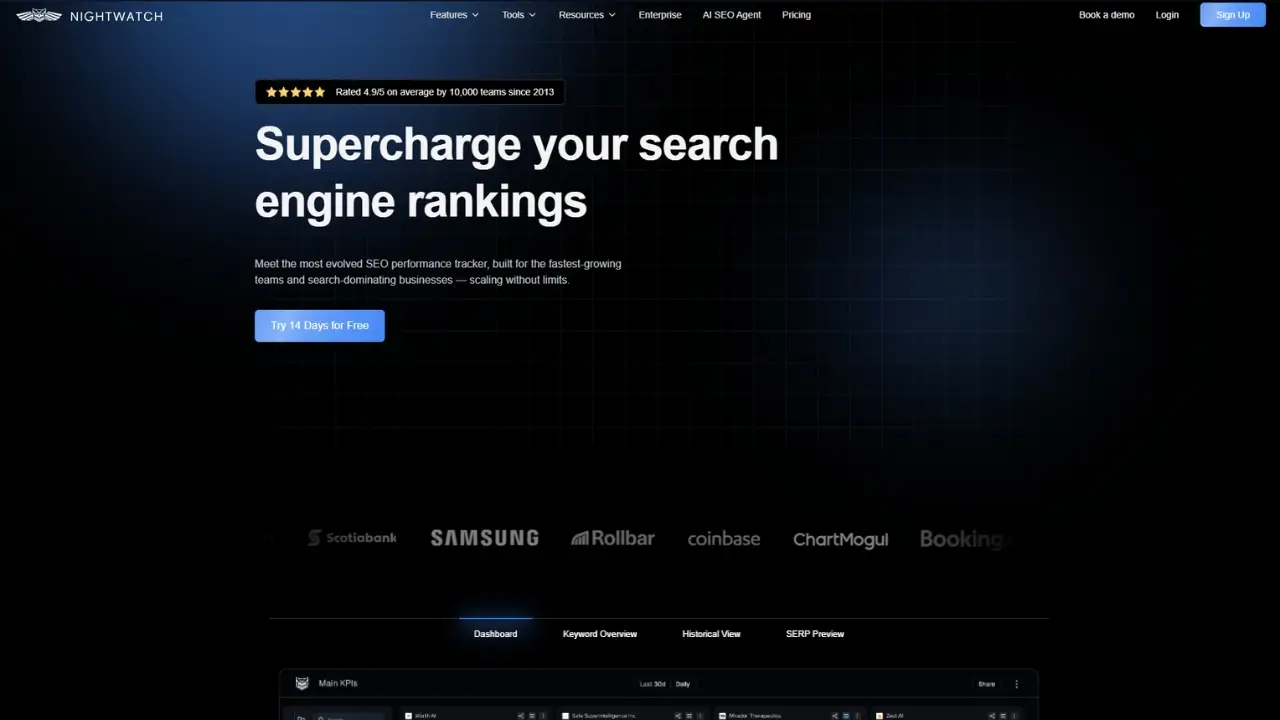
A well-established SEO platform that has recently added features to track LLM mentions. While it provides some insights, its focus remains on traditional SEO metrics, making it ill-equipped for the multi-platform demands of GEO.
Best For:
Marketers who are heavily invested in rank tracking but want to dip their toes into AI monitoring without a new tool.
Framework Performance Test:
- CMCT: Basic. Tracks are mentioned in major LLMs as a secondary metric.
- Entity Sentiment: None. Does not currently offer narrative or sentiment analysis.
- Technical Auditing: Legacy SEO. Excellent for traditional technical health, but lacks AI-readiness metrics.
- Citation Gap Analysis: Manual. Users must compare rank data to citation data themselves.
Pros:
- ✅ Clean Interface: Distracts you from its lack of AI features.
- ✅ Google Search Console Integration: For those allergic to innovation.
- ✅ Pricing Nostalgia: $39/month to relive the glory days of exact-match domains.
Cons:
- ❌ The LLM tracking feature is a recent addition and may not have the depth or coverage of GEO-first tools.
Pricing:
Starts at around $32/month when billed annually.
Verdict:
Best for small businesses transitioning from SEO. Framework Score: 6.5/10. It’s a comfortable bridge for those who aren't ready to fully commit to a GEO-native platform.
Ziptie.dev – The Developer's Only Friend
Overview:
A no-frills, API-first GEO tool built for engineers who want to code their way through AI search chaos.
Best For:
DevOps teams and companies where the CTO or engineering lead manages the digital strategy.
Framework Performance Test:
- CMCT: Total. Since it’s an API, you can track anything you can code.
- Entity Sentiment: Raw Data. Provides the data, but you must build the sentiment interpretation layer yourself.
- Technical Auditing: High. Deep scanning capabilities for "LLM-Crawlability" and bot-blockers.
- Citation Gap Analysis: Programmable. Can build extremely complex gap analysis reports across millions of pages.
Pros:
- ✅ Unlimited Scalability: If you can code it, it’ll work (theoretically).
- ✅ Granular Control: Perfect for building bespoke GEO-CRM-ERP-Frankenstein stacks.
- ✅ No Hand-Holding: Finally, a tool that respects your ability to Google error codes.
Cons:
- ❌ This tool is exclusively for developers, as it requires extensive coding knowledge and a technical interface that is not marketer-friendly.
Pricing:
Starts at $179/month.
Verdict:
Best for DevOps and Engineers. Framework Score: 6.0/10. While powerful, its lack of a marketer-friendly dashboard makes it a "toolshed" rather than a "dashboard."
2026 Top 10 GEO Tool Comparison Matrix: The Definitive Ranking
GetCito (9.5/10)
Multi-platform tracking & real-time alerts.
Real-time sentiment analysis, competitive intelligence across all major generative engines (Google AI Overviews, ChatGPT, Gemini, etc.).
✅ Actionable, user-friendly dashboards
✅ Proven ROI results
Semrush(9/10)
SEO teams are adding an AI dimension.
AI Overview tracking, content optimization suggestions, and prompt detection.
✅ Strong SEO synergy
✅ Trusted brand and user interface
Birdeye Search AI(8.8/10)
Multi-location enterprise brands need AI visibility at scale.
AI search visibility tracking across ChatGPT, Gemini & Perplexity; agentic prompt optimization; review-driven citation building across 200+ sites.
✅ 200+ review site integrations feed AI engines with fresh, authentic signals
Otterly.AI (8/10)
Individuals or teams new to GEO on a budget.
Basic query snapshots, keyword-to-prompt conversion.
✅ User-friendly and simple interface
❌ Limited tracking capabilities
SERanking (7.5/10)
SEO pros prioritizing Google AI Overviews.
Real-time AI Overview alerts, AI-specific reporting.
✅ Reliable for traditional SEO
Profound (7.5/10)
Global enterprises with large budgets.
Predictive analytics, deep sentiment analysis across regions.
✅ Granular, enterprise-grade data
❌ Overwhelming complexity
Rankscale (7.2/10)
EU-based brands need GDPR compliance.
GDPR-compliant AI search optimization, citation analysis.
✅ Granular citation analysis
❌ Slower data updates
BrandRank.ai (7/10)
Reputation-conscious Fortune 500s.
Ethical AI oversight, human-vetted alerts, crisis prediction.
✅ Proactive crisis prediction
❌ Data latency compared to real-time tools
Nightwatch (6.5/10)
Marketers focused on traditional rank tracking.
Basic LLM mention tracking, Google Search Console integration.
✅ Affordable option for existing users
❌ Not a true GEO solution
Ziptie.dev (6/10)
Developers need API-first solutions.
API-first architecture, unlimited scalability, granular control.
✅ High scalability for bespoke solutions
❌ No user-friendly interface for marketers
How to Get Started with GEO: A Simple 3-Step Guide
Choosing a tool is only the first step. To truly succeed, you need a strategy. Here’s how to start:
- Conduct an AI Content Audit: Use your chosen GEO tool to scan your most important content. Look for clear, concise answers to common user questions. Are your headings in a clear hierarchy? Is your data structured in a way an AI can easily parse, like with bullet points or schema markup?
- Optimize for AI Citation: Refine your content by making it more authoritative. Link to credible sources, include data and statistics, and use conversational language that mimics how a person might ask a question. The goal is to be the most trustworthy and digestible source on the topic.
- Monitor, Test, and Refine: GEO is not a one-time fix. Use your tool’s real-time alerts to monitor brand mentions and sentiment. If a competitor is gaining citations, analyze their content to see what they’re doing right. Use these insights to continually refine your content for maximum visibility.
How to Measure the ROI of Your Generative Engine Optimization (GEO) Tool
Unlike traditional SEO, GEO success is measured byAuthority Share. The standard ROI formula still applies, but your "Gain" is now measured by Brand Influence:
ROI=Cost of Investment(Gain From Investment−Cost of Investment)×100%
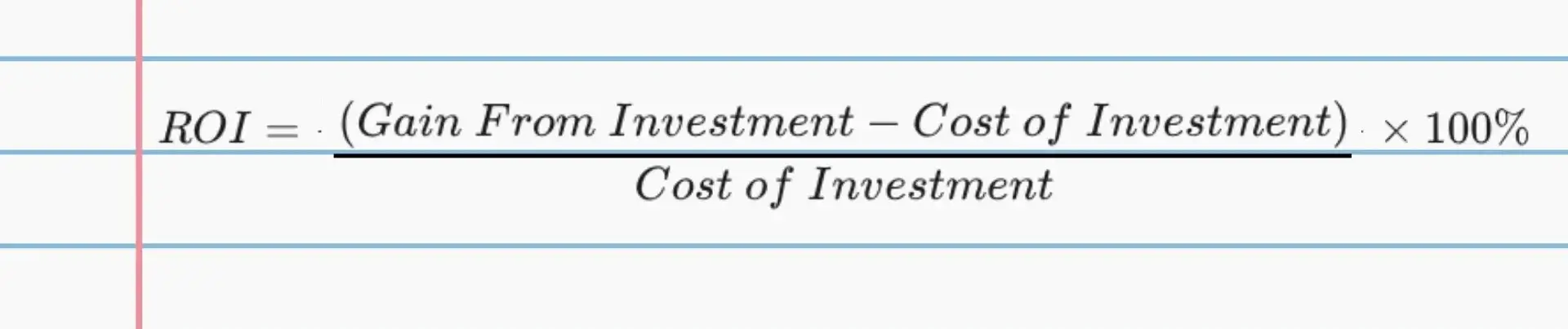
For GEO, the "Gain From Investment" isn't just about clicks. It's about a new set of metrics that reflect your brand's authority and reach in the AI-first world.
To maximize this, track these three KPIs:
- Answer Share of Voice (ASoV) : The % of AI responses in your niche that mention your brand.
- Sentiment Score: Is the AI recommending you or just mentioning you?
- AI-Driven Referrals: High-intent traffic coming from "Source" links in AI Overviews.
Putting It All Together: A Holistic GEO ROI Framework
The ROI of GEO is not just one number. It's a holistic view of your brand's influence in the new AI ecosystem. By focusing on metrics like Answer Share of Voice, Citation Rate, and AI-Driven Conversions, you can build a compelling case for your GEO investment.
Over time, these leading indicators of authority and trust will translate into tangible business results, including increased branded searches, higher-quality leads, and a stronger competitive advantage.
Conclusion: Don't Just Rank Be the Answer
The shift from SEO to GEO is more than a technical update; it is a shift from indexing to influence. In the traditional search world, you were a link in a list. In the generative world, you are the foundation of the AI's logic.
As we’ve seen, the tools you choose today will determine if your brand is a "hidden secret" or a "cited authority."
Your 2026 GEO Checklist:
To ensure your brand doesn't get left behind, take these three immediate steps:
- Audit Your "Crawlability": Use a tool like GetCito to ensure AI bots aren't just seeing your site, but actually understanding your data.
- Close the Citation Gap: Identify the top 10 questions your customers ask AI and use Writesonic to optimize your content for those direct answers.
- Protect Your Narrative: Monitor your brand sentiment across LLMs to ensure you aren't being characterized in a way that hurts your ROI.
Ready to Own the AI Search Result?
Don't let your competitors define your brand’s story in the generative era. Join the world’s leading brands and agencies who use GetCito to turn AI into their most powerful referral engine.
[➜ Book Your Free GEO Strategy Audit & Demo with GetCito] See exactly how ChatGPT and Gemini view your brand and how to improve it in 90 days.