

Glossary of Terms for 2026
To dominate search, you must master the vocabulary of the new web. Here are the core concepts defining modern optimization:
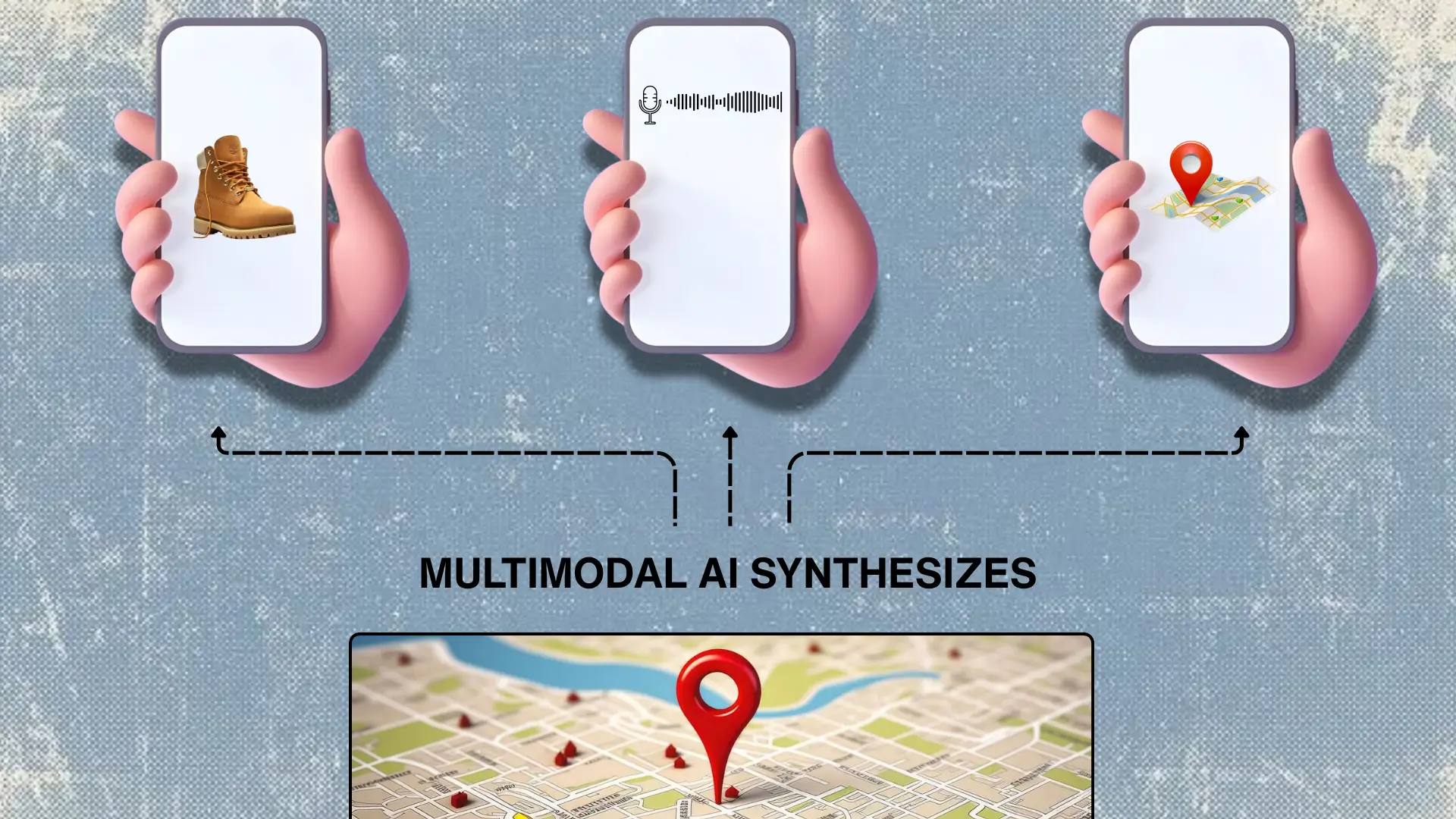
- Multimodal Search happens when someone uses their camera, voice, and text all at once to find what they need. Think of it as a search that works the way humans actually communicate, not just typing keywords into a box.
- GEO (Generative Engine Optimization): It's the practice of structuring content so AI engines like ChatGPT, Gemini, and Perplexity actually cite you in their responses. Traditional SEO got you on page one. GEO gets you inside the answer itself.
- Share of Model (SoM): It measures how often AI models choose your brand as their source of truth. I track this for clients using tools like GetCito, and the competitive insights are fascinating.
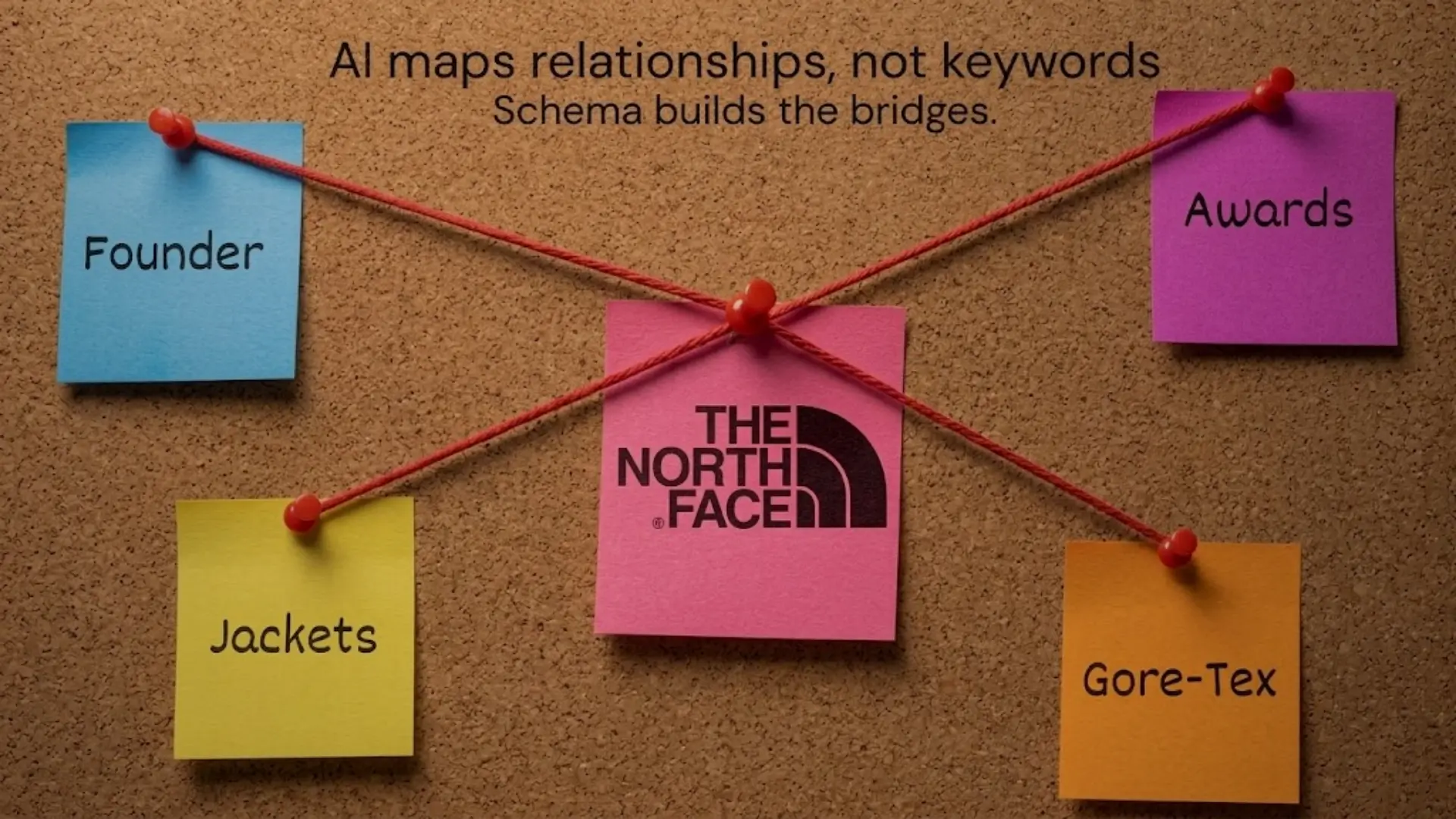
- Entities are how search engines understand the world now. They're not matching your keywords anymore; they're identifying distinct concepts like people, brands, and places within their Knowledge Graph.
When AI Can't Find You, You Don't Exist
Stop optimizing for strings. Start optimizing for things. In 2026, keywords are dead; Entities and Intent rule. In 2026, your customers are searching with their cameras, their voices, and their intent.
When I explain this to clients, I tell them: "Google doesn't see the word 'Apple.' It sees Apple the company, Apple the fruit, and Apple Records as three completely different things
If your content strategy relies solely on traditional text-based SEO, you are effectively invisible to the 60% of high-intent traffic now originating from multimodal queries. When a user snaps a photo of a sneaker and asks Gemini, "Where can I buy this nearby?", traditional rankings don't matter. Only Multimodal Authority matters.
Let me give you a real example from last month. I watched my 67-year-old mother use Google Lens for the first time. She photographed her neighbor's gardening gloves and asked out loud, "Find these with better grip for arthritis." Within seconds, she had three options filtered by her exact needs. She never typed a single keyword.
That's the user behavior we're optimizing for now.
What is Multimodal Search and Why Should You Care?
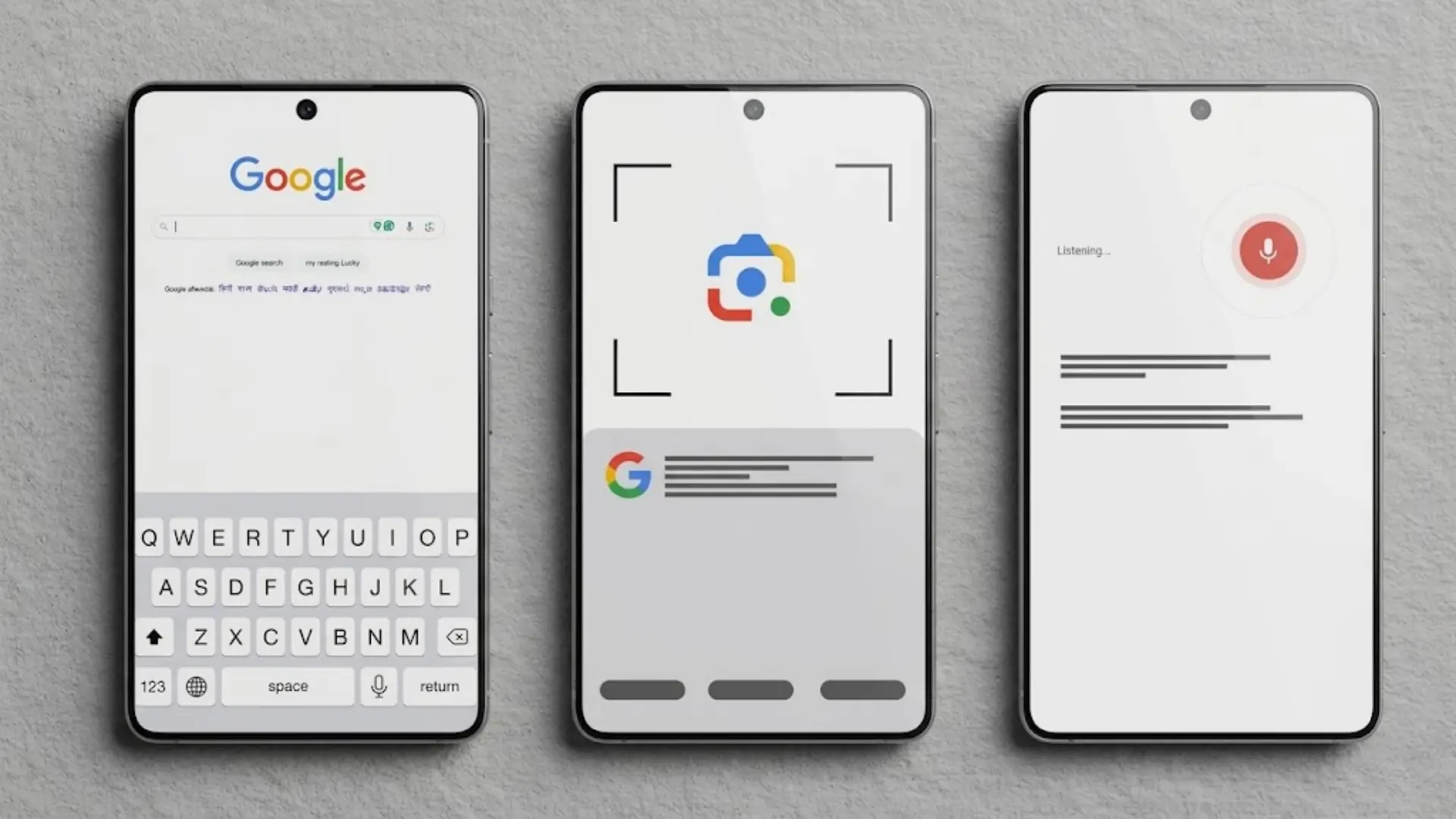
Multimodal search lets you interact with AI using text, images, voice, or video together. Instead of separate silos, platforms like Google Gemini, ChatGPT, and Perplexity understand multiple inputs at once. This matters because it delivers faster, richer answers, making online discovery more intuitive, human‑like, and context‑aware.
A Real-World Example
Picture this: you’re at an airport, killing time before boarding, when you spot someone with a really cool backpack. Instead of opening five tabs and typing vague descriptions, you just click a photo and say,
“Hey, find me this in green, with a laptop compartment, under $100.”
And that’s it.
Multimodal AI understands what you saw and what you said. It matches the design, filters the color and features, checks the price, and shows you exactly what you’re looking for. No endless scrolling. No “close enough” options. No guessing what keywords might work.
Just see it, say it, and get the right answer.
Why This Matters for Your Business
The numbers tell a compelling story:
- Product reviews and comparisons represent approximately 25% of cited videos in AI Overviews
- Pages with FAQ schema are 3.2 times more likely to appear in Google AI Overviews
- AI-referred sessions jumped 527% between January and May 2025
The Core Components of Multimodal Search
To optimize for the future of search, you need to understand how the machine thinks. It’s no longer just matching text to text; modern AI reads, sees, and listens simultaneously.
Here is the breakdown of the four "senses" AI uses to understand your content:
- Computer Vision (The Eyes): This is how AI sees. It looks closely at every image and video frame to understand what’s in front of it, products, logos, shapes, and even the setting. So when someone uses Google Lens on your product photo, the AI relies on clean, well-lit images and proper metadata to correctly recognize what it’s looking at. Blurry or poorly lit visuals? That’s like asking the AI to see without its glasses.
- Natural Language Processing (The Ears): Whether someone types or speaks their query, AI interprets conversational intent. Voice searches like "What are the best waterproof boots for Alaska winters?" require content that answers naturally, not just keyword-stuffed pages.
- Semantic Fusion (The Brain): This is where the magic happens. AI combines text, visuals, and audio into unified, context-rich responses. Your job is to create content that connects these elements seamlessly.
- Retrieval-Augmented Generation (The Researcher): AI pulls real-time information from the web to ground its answers in current data. Fresh, authoritative content wins.
Quick-Reference: The Multimodal Optimization Checklist
Use this table to align your strategy with how AI actually processes data.
| Component | What the AI Does | Your Optimization Action |
|---|---|---|
Multimodal RAG | Retrieves answers from text, images, and video simultaneously. | Label Everything: Ensure images have descriptive filenames (ALT tags) and use structured data. |
Vector Search | Searches for concepts and intent (meaning), not just exact keywords. | Focus on Topics: Write content that solves "problems" (e.g., "winter warmth") rather than just targeting "boots." |
Entity Home | Identifies the single most authoritative URL that defines your brand. | Consolidate Trust: Merge your "About" and "Author" pages and use Organization Schema markup. |
Zero-Click Content | Provides the answer directly on the search page or chat interface. | Front-Load Value: Deliver direct answers in bullet points right at the start. This makes your content scannable, AI‑friendly, and human-centric. |
Visuals That Speak: Image Optimization for the AI Era
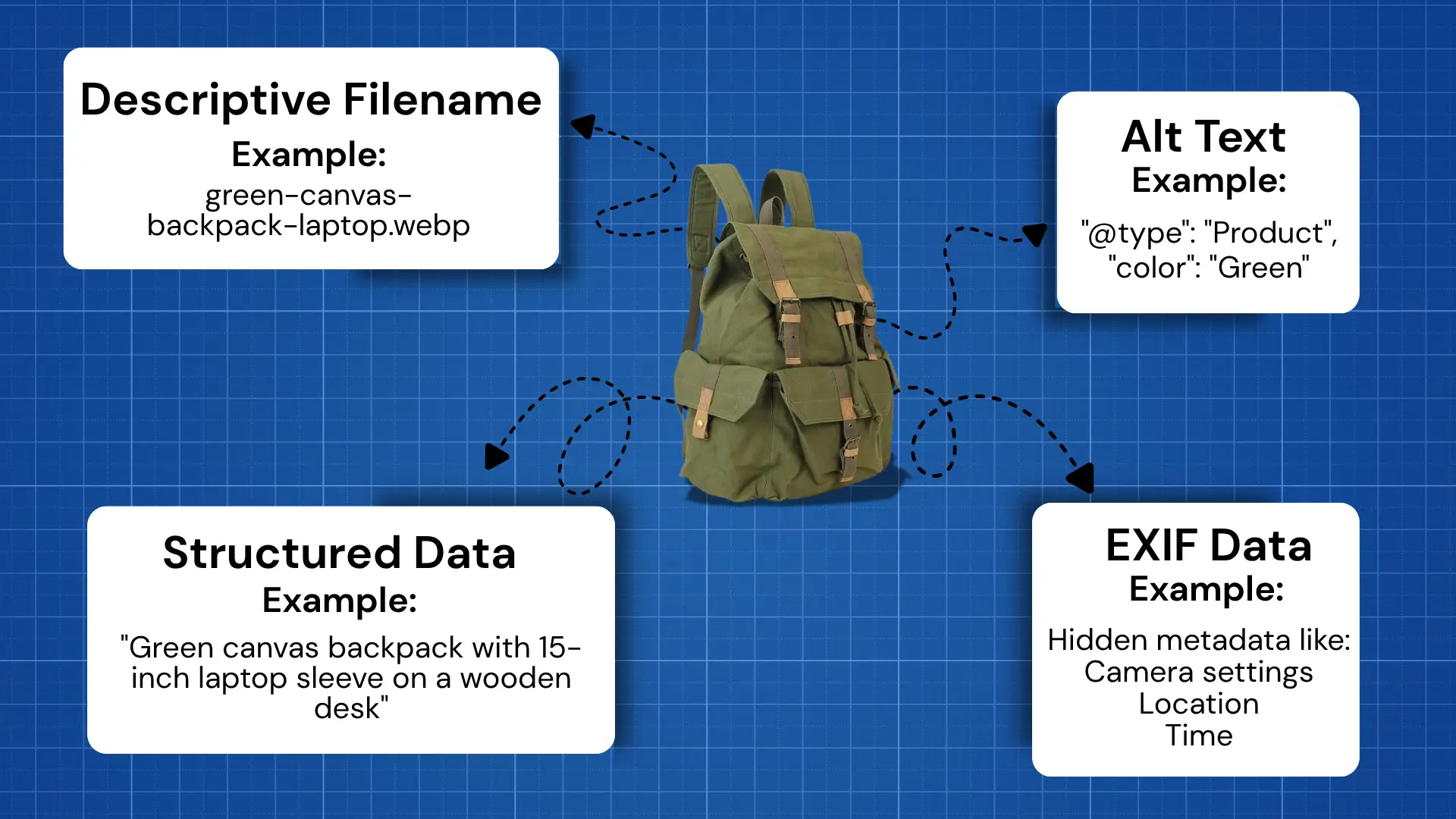
In 2026, image optimization isn’t about gaming an algorithm anymore. It’s about teaching AI how to see. Modern AI doesn’t just store images in an index it interprets them, connects them to meaning, and decides whether they’re relevant.
If you want visibility, your visuals need to speak the machine’s language.
Here’s how:
Strategic File Naming
Use descriptive, hyphenated file names that tell both humans and AI what they're looking at.
Bad: IMG_2847.jpg
Good: vintage-leather-messenger-bag-brown.jpg
When file names align with user intent, they don’t just help AI understand the image, they help users find it. Studies show descriptive filenames can improve image search click-through rates by up to 40%.
Alt Text That Actually Works
Alt text isn’t a checkbox anymore; it’s how AI understands your image. In 2026, think of it as micro-copy for machines. In about 125 characters, explain what the image shows and why it matters.
Bad: Product image.
Good: Vintage brown leather messenger bag with brass hardware and adjustable strap, ideal for daily commute.
The second version gives AI real context. It doesn’t just recognize the object it understands who it’s for and how it’s used. That’s what helps your image show up for searches like office style, work bags, or daily commute essentials, instead of getting lost under the generic label of “bags.”
Semantic HTML Structure
AI understands relationships through structure. An image dropped inside a random <div> gives very little context, but an image wrapped in semantic HTML tells a clear story.
Large Language Models rely on tags like <figure> and <figcaption> to understand how visuals and text relate to each other. When you use them correctly, you’re explicitly saying: this description belongs to this image.
This creates a programmatic bond between image and meaning exactly what AI systems look for.
Instead of generic image tags, use semantic HTML5 to bond your image to its context:
HTML


<figure>
  <img src="vintage-leather-messenger-bag.webp"
       alt="Vintage brown leather messenger bag with brass hardware."
       width="800" height="600">
  <figcaption>The 2026 Vintage Messenger features brass hardware and a reinforced strap for daily commutes.</figcaption>
</figure>
Next-Generation Image Formats
Speed is a proxy for quality. Slow images drain crawl budgets and frustrate users. Adopt modern formats like AVIF and WebP. These formats reduce file size by 30-50% without losing visual fidelity. Faster load times signal technical competence to AI systems, directly influencing your authority score.
Video Optimization: How to Capture the YouTube Citation Surge
If there is one statistic that should dictate your 2026 strategy, it is this: Since January 2024, YouTube citations in AI Overviews have jumped by 25%.
Video is no longer just for engagement; it is a primary source of data for AI. To get cited, you need to stop creating "content" and start creating "answers." Here is how to engineer your video strategy for the AI era.
1. The "Answer-First" Philosophy
The videos winning AI citations share one trait: they respect the user's time. AI models prioritize efficiency.
- The BLUF Method (Bottom Line Up Front): You do not have time for a long animated logo intro or a "Hey guys, welcome back".
- The Action: State the problem and the solution immediately. If the query is "how to reset a router," the first 5 seconds of your video should show a hand pressing the reset button.
2. Target Conversation, Not Just Keywords
AI search today isn’t about big, broad topics anymore. It’s about the exact questions people ask when they’re speaking out loud or typing naturally.
The smarter move is to create short, focused videos that answer questions like:
“What are the best waterproof boots for deep snow in Alaska?”
This works because it matches how people actually talk, especially in voice search. When your content lines up perfectly with that intent, AI doesn’t have to guess. It simply picks your video as the answer and puts it front and center.
3. Make Your Video "Readable" (Transcripts & Tech)
Remember, AI doesn’t watch videos the way humans do; it reads the data behind them.
Rich transcripts matter. Don’t depend only on auto-generated captions. Upload clean, accurate transcripts that reflect how people actually speak and search. This text is what AI crawls to understand what your video is really about.
Speed matters just as much. Latency kills relevance. Use adaptive bitrate streaming so your video loads instantly, whether someone’s on fast 5G or shaky Wi-Fi. If a video buffers, users drop off, and AI does too.
4. The "Key Moments" Strategy for AEO
To get your video featured in an AI Overview (or a Google "Key Moment" snippet), you must structure your content so the AI can slice it into distinct answers.
The "Key Moments" Blueprint:
Don't make the AI guess where the value is. Manually add these timestamps to your YouTube description and mirror them in your VideoObject Schema.
Copy This Description Template:
- 0:00 - 0:45 | The Direct Answer (BLUF): Bottom Line Up Front. State the final verdict or solution immediately for the zero-click searcher.
- 0:46 - 2:00 | The Step-by-Step: The tactical "how-to" section. This is what voice assistants will read aloud.
- 2:01 - End | Validation & Data: Deep dive into the "why," citing specs and expert proof to establish authority.
Quick Audit: Is Your Video AI-Ready?
| Element | Old Standard (Deprecated) | 2026 AI Standard (GEO) |
|---|---|---|
Intro | Welcome back to the channel, don't forget to like! | BLUF (Bottom Line Up Front): "Here is the solution to [Problem]..." |
Targeting | Broad Keywords ("SEO Tips") | Conversational Problems ("How to fix indexing errors in 2026") |
Structure | One continuous flow | Chaptered Segments with timestamped key moments |
Metadata | Basic description text | VideoObject Schema + Full searchable transcript |
Schema Markup: The Language AI Speaks
If images and video are your content’s body, Schema Markup is the nervous system. It is the structured data that tells AI exactly what your content means, who created it, and how it connects to the rest of the web.
In March 2025, Microsoft’s Fabrice Canel stated that structured data directly helps LLMs (Large Language Models) understand web content. This isn't just SEO anymore; it’s the foundation of AI processing.
The 2026 "Must-Have" Schema Types
To stay visible, you need to prioritize the schemas that AI agents use to build their responses:
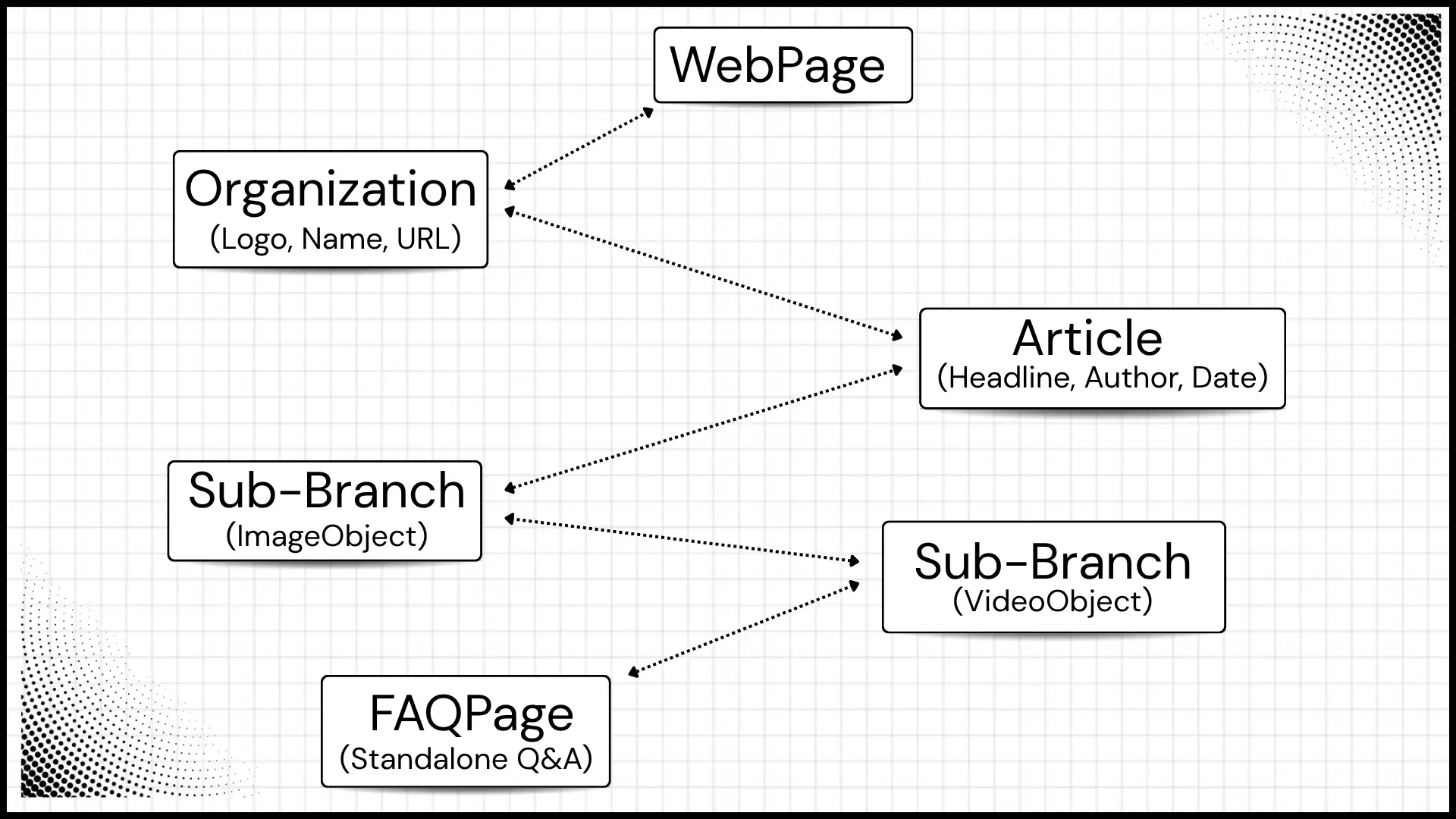
- Organization Schema (The Identity): Establishes your brand's DNA name, logo, and service areas. This feeds directly into Knowledge Panels and AI brand recognition.
- Article Schema (The Authority): Provides the editorial framework. It identifies the "who" (author) and the "when" (date), which are critical signals for E-E-A-T (Experience, Expertise, Authoritativeness, and Trustworthiness).
- VideoObject Schema (The Citation Magnet): You must include the duration, thumbnail, and a full transcript. This allows AI to "watch" and cite specific segments of your video.
- Product Schema (The Salesman) For e-commerce, this feeds real-time pricing, availability, and reviews into visual search tools like Google Lens.
- FAQ Schema (The MVP of AEO): This is the highest-cited schema type. Its question-and-answer format perfectly mirrors how AI assistants present information to users.
Implementation Best Practices
- Stick to JSON-LD: It is the industry standard cleaner, easier to maintain, and the preferred format for both Google and Bing.
- The "Mirror" Rule: Never hide data in your Schema that isn't visible on the page. If the AI detects a mismatch between your markup and your visible text, it will flag your site as unreliable.
- Validate Constantly: Before hitting publish, run your code through the Rich Results Test. Even a small syntax error can make your entire page "invisible" to an AI crawler.
Your 2026 Structured Data Checklist
Don’t leave your AI visibility to chance. Ensure these five specific types are active on your high-value pages:
| Schema Type | Why it Matters in 2026 | Pro Tip |
|---|---|---|
Product Group | Required for AI Shopping Assistants. | Must include merchantReturnPolicy and shippingDetails. |
Targeting | Humanizes the "Entity". | Connects the content creator to their specific "Entity" in the Knowledge Graph. |
FAQPage | The "Answer Engine" favorite. | Format questions exactly as people speak them (e.g., "How do I..."). |
Speakable | The Voice Search bridge. | Identifies sections best suited for text-to-speech on Siri, Alexa, or Gemini Live. |
Organization (sameAs) | Solidifies your Brand. | Use sameAs to link your site to your Wikidata, LinkedIn, and official social profiles. |
Google Lens Optimization: Capturing Visual Search Traffic
Visual search isn’t just the future, it’s already here. With nearly 20 billion searches happening every month on Google Lens, brands that ignore it are leaving serious traffic (and conversions) on the table. The good news? Winning in Lens isn’t complicated if you focus on the fundamentals.
1. Nail Your Images for Mobile
Since over 90% of Lens results come from mobile-friendly sites, your visuals need to shine on a smartphone screen. That means:
- Crisp, high-quality images that load fast.
- Responsive design so images adapt beautifully across devices.
- Clear lighting, balanced colors, and multiple angles because the lens performs best when it can “see” exactly what the user is searching for.
Think of your product photos as your frontline sales team. If they’re blurry or poorly lit, you’re losing the sale before it even starts.
2. Supercharge with Product Schema
For e-commerce, schema markup is your secret weapon. A well-structured Product schema tells Google exactly what your item is and why it matters. Include:
- Multiple product images
- Variations (color, size, material)
- Dimensions, pricing, and availability
This isn’t just technical SEO, it’s how you make sure Lens can surface your products in shopping results with confidence.
3. Dimensions, pricing, and availability
AI is great at spotting patterns. But when your brand looks different on your website, Instagram, and marketplace listings, you’re making its job harder.
If your logo changes, colors shift, or product photos don’t match, the signals get messy. Stock photos make it worse; they dilute your identity instead of strengthening it. Even details people ignore, like inconsistent file names or missing canonical tags, can break that visual connection.
Consistency makes you easier to recognize. And once AI recognizes you, trust follows naturally.
4. Optimize for Multisearch
Google Lens is getting smarter, and multisearch, where users combine images with text, is changing how discovery works. Someone might snap a photo of sneakers and type “red” or “eco-friendly.” Your content needs to be ready for that moment.
Add clear, descriptive text near your image captions, product details, sand upporting copy. Think ahead about common modifiers like color, material, or sustainability, and bake them into your content naturally. Group related images into collections so Lens can understand the bigger picture, not just a single visual.
5. Go Beyond the Basics
Once the basics are in place, that’s where most people stop. If you want an edge, this is where you go further.
Add layers that give AI more signals to work with, such as EXIF metadata like location, licensing, or camera details. Switch to modern formats like WebP, so your images load fast without losing quality. And don’t guess how your visuals perform, actually test them in Google Lens and see what the system recognizes.
Also, accessibility isn’t optional. Well-written alt text helps real users, and it quietly builds trust with AI too. When your visuals are clear, fast, and readable, AI understands them better and rewards them.
The GEO Protocol: How to Engineer Content for AI Citations
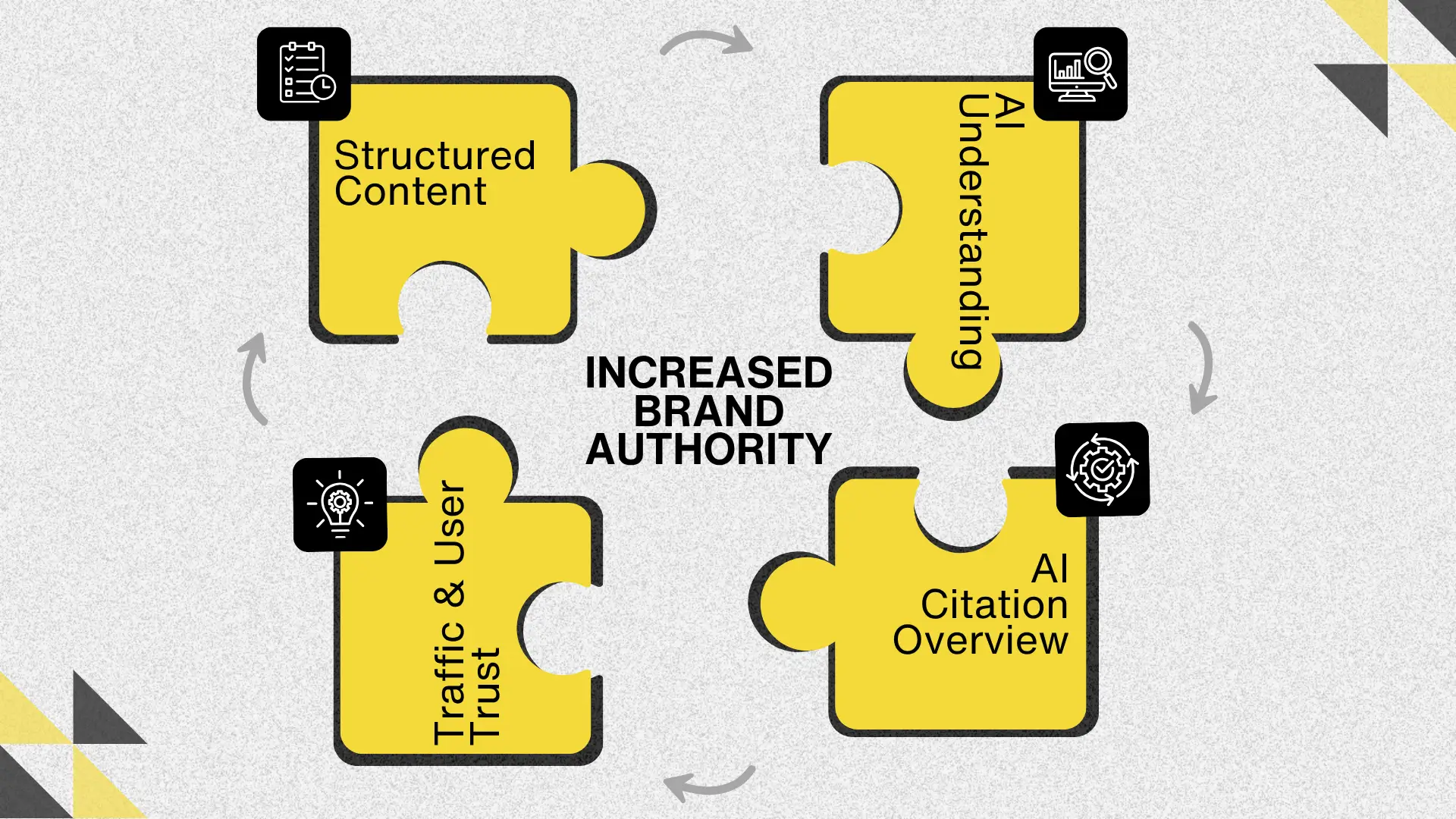
Traditional SEO was about pleasing algorithms. Generative Engine Optimization (GEO) is about something bigger: maximizing your Share of Model (SoM). This metric tracks how frequently AI models prioritize your brand as the primary source of truth in generated answers.
If you want to maximize your Share of Model (SoM), your brand’s presence inside AI responses, you need to structure content so that large language models (LLMs) can parse, verify, and cite it with confidence.
Here’s how to do it.
1. The "Citation-First" Framework
AI systems don’t trust vague statements, and honestly, neither do people. What they respond to is clear, verifiable information. That’s why your content should be built with citations in mind from the start.
Instead of broad claims, lead with real data. Saying “sales are up” doesn’t tell anyone much. A clear, specific statement does the job far better, for example:
“In Q1 2026, voice-commerce sales increased by 14%”.
Details like timeframes, locations, and numbers give your content weight. They reduce ambiguity, increase credibility, and make it far more likely that both AI systems and human readers take your message seriously.
AI systems tend to trust ideas that show clear industry agreement. When you include quotes from well-known experts, you strengthen your E-E-A-T signals: experience, expertise, authority, and trust.
Think of it this way: you’re not asking AI to rely on a single viewpoint. You’re showing that your insight is shared and supported by people who actually shape the industry. That context makes your content feel credible, grounded, and worth referencing.
2. The "Inverted Pyramid" for AI
Journalists have used the inverted pyramid for decades. Now, it’s time to apply it to AI.
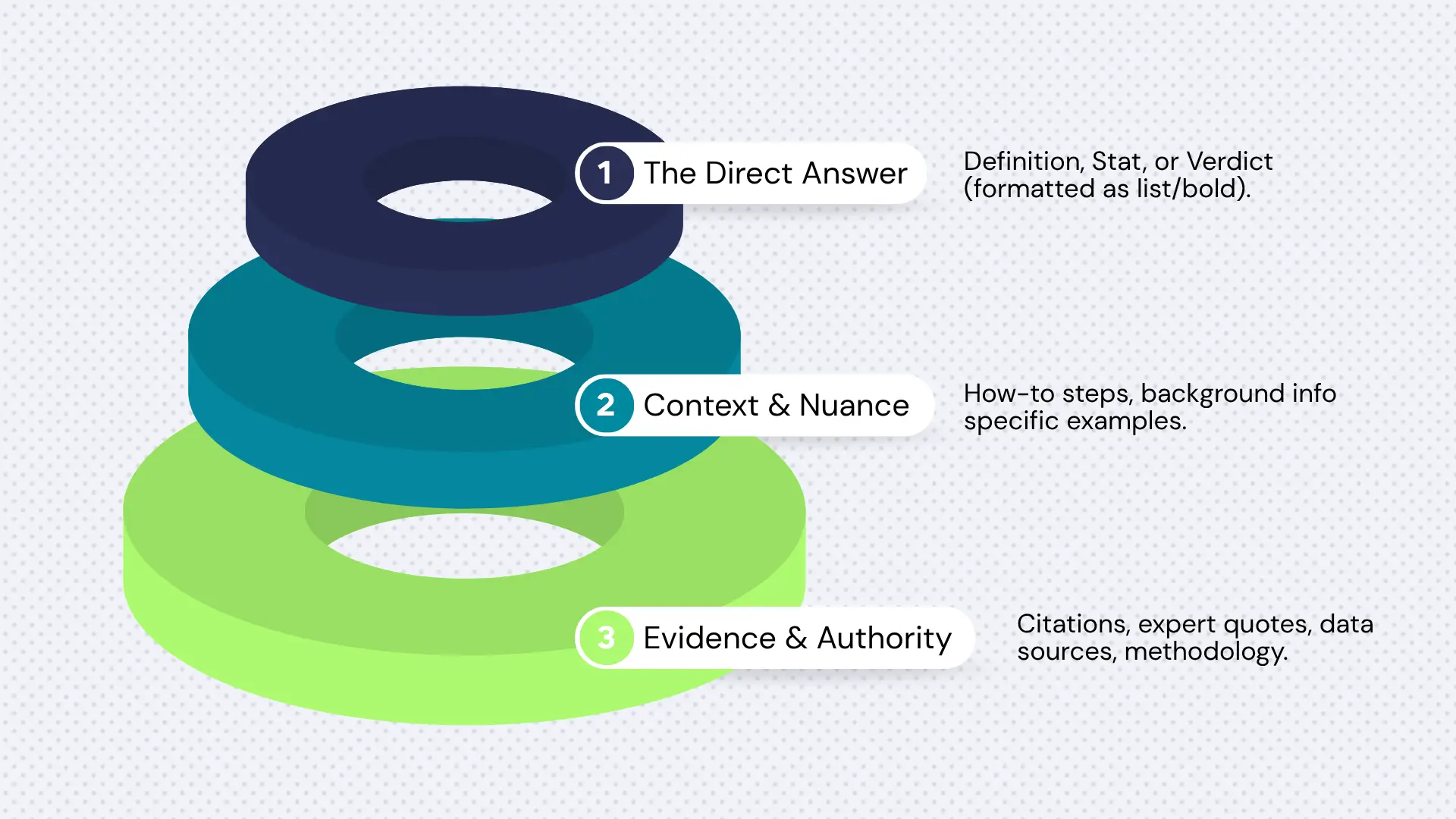
- Place the direct answer immediately after the H2 header.
- Keep the first 50 words tight, clear, and self-contained.
Why? AI agents often skim only the opening lines of a section when generating snippets. If your answer isn’t upfront, you risk being overlooked.
Measuring Multimodal Search Performance in 2026
You can’t improve what you don’t measure and that’s especially true as search moves beyond blue links. In 2026, discovery happens across text, voice, and visuals, which means the metrics that mattered five years ago no longer tell the full story. Forward-thinking brands are already adjusting how they define visibility.
Here’s what they’re paying attention to now.
Here’s what they’re paying attention to now.
Generative search engines have become the new gatekeepers of visibility. It’s no longer just about ranking; it’s about whether AI systems choose to reference you at all.
Tools like GetCito, Ziptie.dev, and other GEO-enabled platforms make this measurable by tracking your Share of Voice, the percentage of AI-generated answers that cite your content.
At a minimum, you should be tracking:
- Which queries trigger citations for your brand
- Which competitors appear alongside you
- Where you’re missing opportunities entirely
This isn’t a vanity metric. It’s practical intelligence that shows you exactly how your content needs to evolve if you want AI models to keep selecting you as a source.
2. Voice Search Analytics
Voice search works by different rules. Spoken answers rarely show URLs, so traditional click-based attribution falls apart.
Instead, focus on signals that reflect recall:
- Brand mentions in voice responses: Are assistants actually saying your name?
- Growth in branded searches: Are users coming back later because they remember you?
Voice search isn’t about clicks, it’s about memory. If your brand is being spoken aloud, you’re earning mindshare, even if there’s no immediate visit.
3. Visual Search Performance
Visual discovery is no longer niche. Platforms like Google Lens and Pinterest are shaping how people explore products, places, and ideas.
To measure performance:
- Use Google Search Console to monitor impressions and clicks from image search
- Review Pinterest Analytics to understand how your visuals drive discovery and save
Strong visual search metrics tell you something important: your images aren’t just attractive, they’re findable.
4. Rich Snippet Acquisition Rates
Rich results sit at the intersection of traditional SEO and AI visibility. The more structured and context-rich your content is, the easier it is for both search engines and AI systems to surface it.
Track the percentage of your URLs that trigger features like:
- Video chapters
- FAQ snippets
- Product cards
A higher rich snippet acquisition rate increases the odds that your content shows up in AI overviews, summaries, and answers, even when users never see a standard search result.
5. Engagement Signals
Visibility alone doesn’t prove success. Engagement is what confirms quality.
Recent data shows that:
- Brands cited in AI Overviews see 35% higher organic CTR
- Paid CTR increases by 91% when a brand is mentioned by AI
- AI-referred visits have 27% lower bounce rates than traditional search traffic
Track engagement time, conversion rates, and bounce rates closely. These metrics help demonstrate that AI-driven traffic isn’t just larger, it’s more qualified.
Getting Started: Your Multimodal Optimization Roadmap
Feeling overwhelmed by multimodal search? You’re not alone. The good news is that you don’t need to tackle everything at once. Start with the essentials, build momentum, and layer in sophistication as you go. Here’s a practical roadmap to guide you.
Step 1: Implement Foundational Schema
Think of schema as the scaffolding that helps AI understand your content.
- Organization Schema → Homepage credibility
- Article Schema → Blog posts and thought leadership
- ImageObject/VideoObject → Media assets
This is the baseline framework that makes your content machine-readable and citation-ready.
Step 2: Audit Existing Images
Your visuals are often the first thing AI sees. Audit them with a critical eye:
- Add alt text where it’s missing.
- Rename files with descriptive keywords.
- Compress oversized images using modern formats like WebP.
Clean, optimized images aren’t just faster, they’re more discoverable.
Step 3: Create Voice-Optimized Content
Voice search is about natural conversation. Structure your content so it sounds good when read aloud:
- Add FAQ sections with conversational phrasing.
- Write answer-focused summariesat the end of sections.
- Keep paragraphs tight and easy to listen to.
If your content feels robotic when spoken, it won’t perform in voice search.
Step 4: Add Strategic Video Content
Video is one of the most cited formats in AI answers. Use it where it adds genuine value:
- How-to videos for step-by-step guidance.
- Product demos that show, not just tell.
- Comparison content that clarifies choices.
Short, clear videos that solve queries are far more likely to be surfaced by AI.
Step 5: Test and Iterate
Optimization isn’t a one-and-done project.
- Measure impact on rankings, traffic, and AI citations using tools like GetCito or manual SERP audits.
- Update schema as needed.
- Experiment with new formats, infographics, short clips, and interactive elements.
Continuous testing keeps you aligned with the fast-moving evolution of AI search.
The 3-Second "Humanity" Test
AI-generated content is everywhere, and search engines are filtering aggressively for human signals. Before you hit publish, ask yourself:
- Evidence: Did I include original photos or screenshots I created myself? (Stock photos are ignored by AI vision.)
- Experience: Did I use “I” statements to share a real encounter with the product or topic?
- Expertise: Is the author bio linked to verifiable sources like LinkedIn or speaking engagements?
If you can answer “yes” in three seconds, your content passes the humanity test.
Conclusion
We’re living through the biggest transformation in information discovery since Google’s launch. Search is no longer just text; it’s multimodal, powered by AI that interprets words, images, and video together. Traditional SEO isn’t disappearing; it’s evolving into something richer, more complex, and far more aligned with how humans naturally seek answers.
Your competitors are already moving. The brands that will thrive in 2026 and beyond are those that speak AI’s language: content that is semantically complete, structurally clear, and available across every format users engage with.
The window of opportunity is wide open. Today, only 12.4% of websites implement structured data, meaning early adopters gain outsized visibility as AI platforms reward the sites that make their jobs easier.
You don’t need to overhaul everything at once. Start small:
- Add schema to your most important pages.
- Optimize your strongest images.
- Publish one answer-focused video.
Each step compounds, building toward a comprehensive multimodal strategy that positions your brand as the authoritative source AI platforms cite.
The future of search isn’t coming, it’s already here. The real question isn’t whether you’ll adapt, but how fast you’ll move.