

You already know SEO isn't enough anymore.
You've heard the terms GEO, AEO, AIO, and AI-SEO. You've read the articles, sat through the webinars, maybe even started optimizing for AI search. And honestly? You're ahead of most people in the room for knowing that.
But here's what's keeping me up at night, and I don't think enough people are talking about it yet.
Getting your brand cited by an AI engine is table stakes by the end of 2026. Every serious marketing team will be doing it. The real question, the one I haven't seen anyone ask clearly, is what happens after AI discovery? What happens when the consumer who found you through a ChatGPT recommendation lands in your funnel, and every single touchpoint from that moment forward is being evaluated not by an algorithm, but by a person who has zero patience for anything that feels generic, surveillance-based, or inauthentic?
That's the gap I keep seeing. Brands are racing to become AI-visible while their entire conversion architecture, their data strategy, their creator relationships, and their trust signals are still built for 2020.
Discovery without trust doesn't convert. Personalization without consent is a liability. Content volume without authenticity is noise.
What I'm sharing in this piece goes beyond the SEO evolution conversation. These are the ten structural shifts that determine what happens after someone finds you and whether the brand they find is actually ready for what 2026 demands.
What's Already Dead (Even If Your Budget Doesn't Know It Yet)
Before we get into what to build, let's have an honest conversation about what to bury.
| Kill This | Build This | Why |
|---|---|---|
Generic Audience Targeting | Individual Intent Profiles | "Women, 25-44" is not a strategy. Real-time psychological intent is. |
Cookie-Based Retargeting | Permission Data Wallets | The haunting ad is a brand liability now, not a conversion tool. |
Vanity Metrics | Incrementality Proof | Your CFO doesn't care about impressions. Prove the lift or lose the budget. |
Static Landing Pages | Generative Morphing UX | One-size-fits-all is a relic. Experiences now adapt in real time. |
Unverified Shoutouts | Stamped Trust | Consumers have gotten very good at spotting paid-for enthusiasm. |
One-Language Campaigns | Hyper-Local AI Dialects | If you're still running English-first in India, you're leaving a huge market on the table. |
None of these is predictions. They're already happening. The only question is whether your strategy reflects that.
At a Glance: All 10 Shifts, What's Changing, and What to Do
A quick-reference overview of every trend covered in this report, core shift, immediate action, and category at a glance.
| Trend | Core Shift | What to Act On Now | Category |
|---|---|---|---|
Agentic AI as an operating model | AI doesn't just assist it executes campaigns autonomously while you govern | Map every repetitive decision to an AI agent; build human checkpoints at key moments | Operations |
AEO & GEO replace SEO | The goal shifts from ranking on Google to being cited by AI engines | Add JSON-LD schema, structured FAQs, and machine-readable proof points across all pages | Discovery |
The cookieless era is here now | Third-party cookies are gone, first-party data is your only owned targeting asset | Deploy server-side tagging, Consent Mode v2, and a first-party identity graph | Data |
Zero-party data wallets | Stop inferring preferences, let consumers voluntarily share what they want | Redesign onboarding and loyalty flows around explicit, value-based preference capture | Data |
Synthetic influencers | AI-generated KOLs cut costs 50-70%, but demand full transparency to work | Use virtual influencers for product demos and multilingual content; keep humans for storytelling | Content |
AR commerce | Uncertainty is the #1 reason people don't buy online AR eliminates it | Identify your highest-return product category and build an AR try-on experience around it | Commerce |
Creator strategy overhaul | Transactional influencer spend is losing ROI; partnership depth compounds | Audit last 12 months of influencer spend vs actual sales lift; invest in micro-community creators | Brand |
"Made by a human" premium | As AI floods channels with content, human-made work becomes a differentiator | Decide and document what your brand automates vs. what always gets human hands | Brand |
Trust as a ranking signal | Platforms are scoring 'trust intensity' verification now beats follower count | Build verified claims, authenticated UGC, transparent sourcing, and public trust signals | Trust |
Marketing org rebuild | AI is absorbing execution work teams must restructure around strategic judgment | Stop hiring for tasks AI now handles; prioritise AI-fluent strategists and category experts | Operations |
1. Agentic AI Is Not a Feature, It's Your New Operating Model
The core shift:
You're not running campaigns anymore. You're supervising intelligent systems that run them for you.
Here's something I keep saying to marketing leaders who are still treating AI as a fancy autocomplete: the game has changed. Agentic AI doesn't just help you write copy faster. It executes. It decides. It adapts while you sleep.
We're talking about systems that handle lead scoring, budget reallocation, A/B testing, channel sequencing, and churn detection simultaneously. A well-configured agentic system for a fitness brand can spot that a user's app engagement has been dropping for 11 days, trigger a personalized win-back sequence, adjust the retargeting bid, and surface two message variants for testing before your team has had their Monday morning coffee.
"In 2026, the conversation is no longer about automation; it's about autonomous systems that move marketers from task-doers to strategic thinkers."
The numbers back this up: early adopters are reporting 80-90% of routine queries handled without human input, 40% reductions in support costs, and 50% drops in operational costs when AI takes over onboarding flows.
But here's what I want you to sit with: the competitive advantage is no longer who uses AI. It's who governs it well. The brands winning aren't the ones that plugged in the most tools. They're the ones who defined clear guardrails, trained their agents on proprietary first-party data, and built humans into the loop at exactly the right moments.
What you should do right now:
Map every repetitive decision your team makes in a week. Lead scoring. Send-time optimization. Budget pacing. Bid adjustments. Every one of those is a candidate for agentic ownership. Start there.
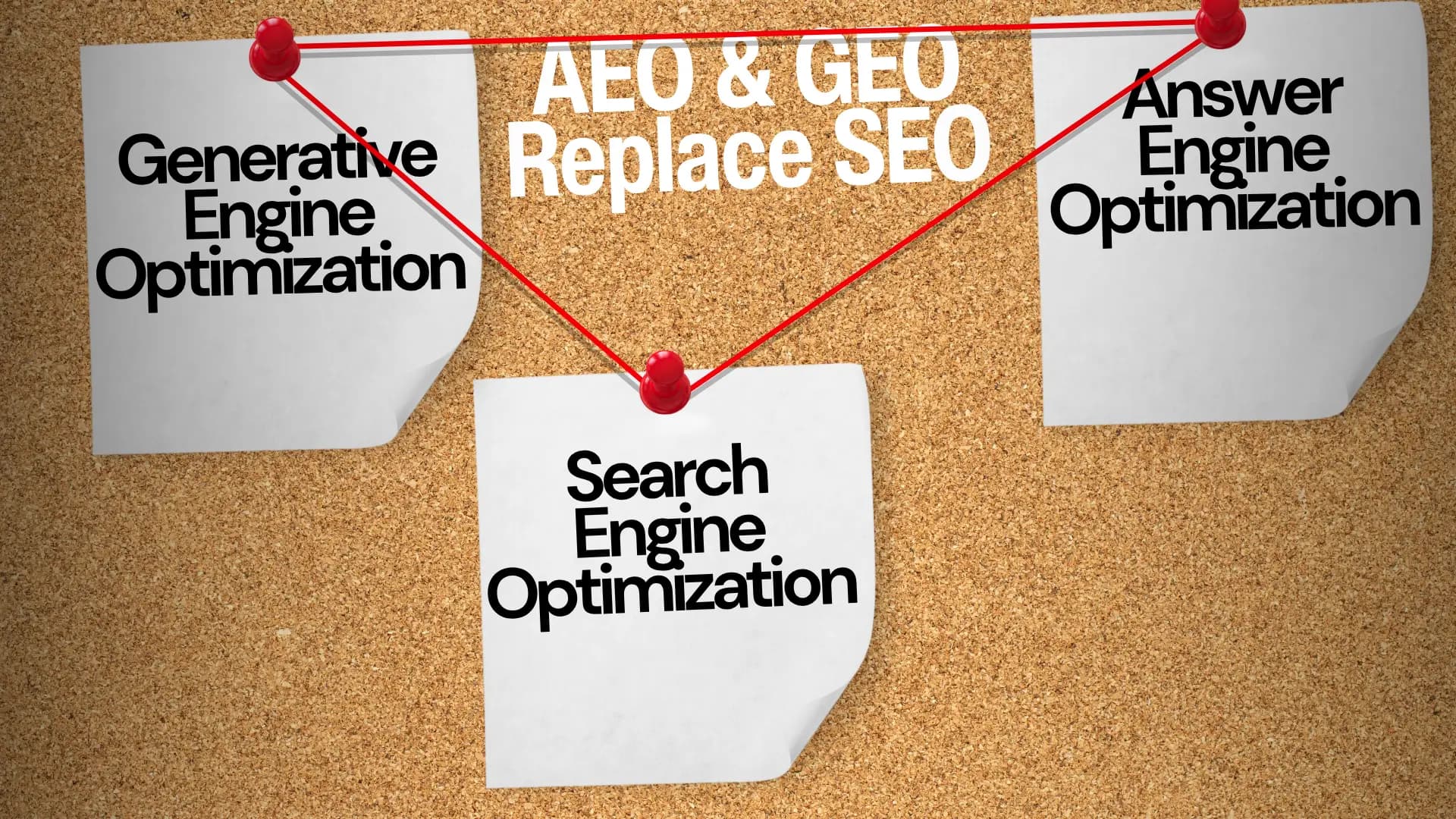
2. AEO and GEO Replace Traditional SEO as the Primary Discovery Battlefield
The core shift:
Google Page 1 was the goal. Now the goal is to be the answer an AI engine cites.
I want to share a number that should make every CMO uncomfortable: 73% of consumers are already using AI in their shopping journey. They're asking ChatGPT, Perplexity, and Google's AI Mode questions like "what's the best project management tool for a 10-person startup" or "which serum actually works for combination skin." And they're acting on the synthesized answer they get back, not clicking through to browse six websites.
This is a fundamentally different discovery model. And most brands are completely unprepared for it.
SEO was about ranking. Answer Engine Optimization (AEO) is about being cited. Generative Engine Optimization (GEO)is about being the brand that an AI model recognizes as authoritative in your category. While they share foundational practices with SEO, succeeding in AEO and GEO requires a specialized approach, one that accounts for the leap from traditional search to the far more complex dynamics of AI-driven recognition.
"AI visibility is the new SEO. The brands that build this infrastructure now will be the default recommendations when agentic shopping goes mainstream."
Think about it this way: if an AI agent scraped every public page of your website right now, would it be able to accurately describe what you sell, who it's for, what makes it better than the alternatives, and what your customers actually experience? If there are any gaps in that answer, you have a visibility problem that no amount of paid media can solve.
What you should do right now:
Implement JSON-LD schema markup across your product and service pages. Build structured FAQ content that answers the exact questions your buyers ask before they buy. Make your pricing, differentiators, and customer proof machine-readable. This is the infrastructure AI engines use to build authoritative answers, and you need to be feeding it.
3. The Cookieless Era Stops Being a Headline and Becomes a Crisis

The core shift:
Third-party cookies are gone. First-party data is now the only targeting asset you actually own.
I'm going to be direct about something: this stopped being a "prepare for" situation about two years ago. Third-party cookies are gone across all major browsers. If your measurement and targeting still depend on cross-site tracking, you are not planning for disruption; you are already living inside it, just without realizing how much signal you've lost.
Deloitte puts it plainly: more than 75% of marketing leaders expect this shift to disrupt their operations. The ones who've already modernized are seeing sharper targeting, cleaner analytics, and genuinely better customer relationships. The ones who haven't are running campaigns on degraded data and wondering why the numbers don't add up.
The solution isn't complicated, but it does require investment. Server-side tagging alone recovers 15–30% of lost conversion signals. Loyalty programs and app behavioral data become genuinely powerful first-party assets. Progressive profiling, building consumer preference data over time through thoughtful touchpoints, turns onboarding into an intelligence-gathering engine.
And here's the thing most CMOs are sleeping on: contextual advertising is having a serious comeback. Research from DoubleVerify in 2025 shows contextual ads performing within 5–8% of behavioral targeting on click-through rates, and outperforming behavioral targeting on brand safety. The brands that wrote off contextual as a fallback are going to look very smart when they revisit that decision.
What you should do right now:
Server-side tagging, Consent Mode v2, a first-party identity graph. These are not optional infrastructure items for 2026. They are table stakes.
4. Zero-Party Data: The Smartest Brands Are Letting Consumers Decide What to Share
The core shift:
Stop collecting data about consumers. Start receiving data from them.
There's an important distinction that gets lost in most data privacy conversations: the difference between data you observe, data you buy, and data someone chooses to give you. That last category, zero-party data, is the one that's quietly becoming the most powerful targeting asset in marketing. And most brands haven't figured out how to unlock it.
Zero-party data is what happens when a consumer voluntarily tells a skincare brand they have combination skin that reacts to fragrance, they live somewhere humid, and they're looking for a lightweight serum under ₹1,500. They're sharing that because the brand offered something genuinely worth the exchange: a precise recommendation, a discount, or early access to a new product. It's consent-first, willingly given, and dramatically more accurate than anything you could infer from behavioral tracking.
Emerging blockchain and zero-knowledge proof technologies are taking this further, enabling consumer-controlled "data wallets" where people can choose which brands to share their preferences with and revoke that access at any time. Early adopters combining zero-party data with agentic AI personalization are seeing 25% increases in attribution accuracy and 20%+ lifts in customer lifetime value. The reason is simple: when someone tells you exactly what they need, your recommendations actually hit.
"The trust economyruns on exchange, not extraction. Brands that understand this early will build data moats that are structurally impossible to replicate."
What you should do right now:
Ask yourself what you're currently offering consumers in exchange for their preferences. If the answer is "nothing, we just track them," that's your problem to fix. Redesign your loyalty program, your onboarding flow, your quiz tools, whatever touchpoints you own around explicit, value-based preference capture.
5. Synthetic Influencers Are Real, Growing, and More Complicated Than the Hype Suggests
The core shift:
You can now build brand ambassadors from scratch with no PR risk, no contract negotiation, and no off-brand days.
Let's talk about the structural problem with influencer marketing that no one in the industry likes to say out loud: you are renting someone's audience through a human who might say something you can't control, charge you more every quarter, and whose authenticity you can't verify or guarantee. The whole model is built on borrowed trust, and borrowed trust is fragile.
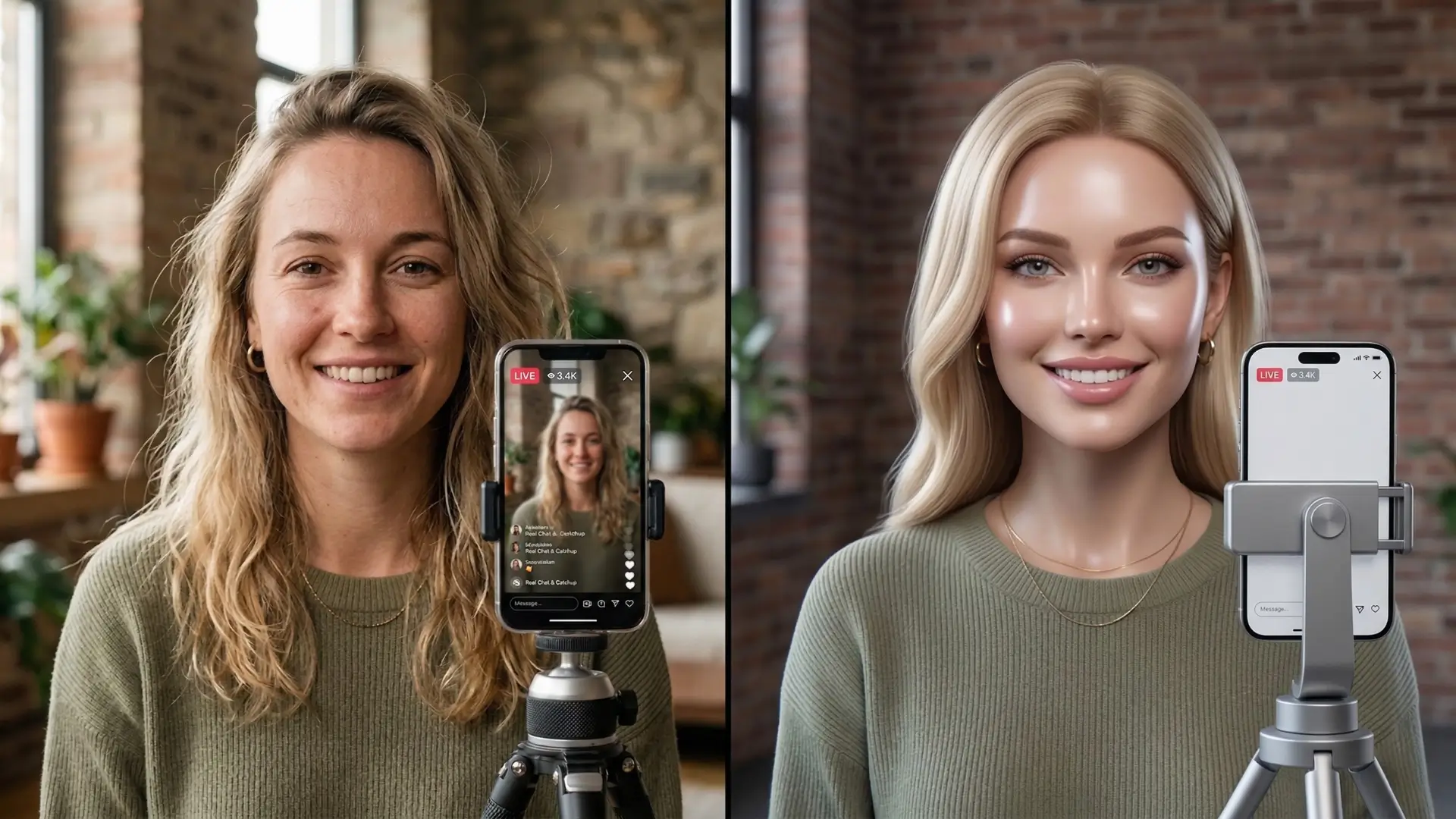
AI-generated virtual KOLs change the equation. They operate 24/7, speak any language or dialect, never have a brand-damaging moment, and can be built from the ground up to embody specific values, aesthetics, and audience psychographics. The economics are striking: brands using virtual KOLs are reporting 50-70% savings on production costs while generating higher content volume. The market that was $6.19 billion in 2024 is tracking toward $171.5 billion by 2034, a 39.4% CAGR that tells you this isn't a niche experiment.
But, and I want to be clear about this, there's a serious backlash forming. Some consumer segments are actively labeling virtual influencers as "toxic" and are growing deeply skeptical of brands that use them without disclosure. The brands that are doing this well are the ones being completely transparent about it. They're treating the AI persona as a genuine brand asset with its own identity, not as a cost-saving trick dressed up as a person.
"Synthetic influencers work when they're honest about what they are. The moment you try to pass them off as human, you've lost the trust you were trying to build."
What you should do right now:
Evaluate your highest-frequency, most product-focused content that needs tutorials, demos, feature walkthrough videos, and multilingual product explanations. Those are your synthetic influencer use cases. For cultural moments, community building, and brand storytelling? Keep humans at the center. The brands that blur this line are the ones that will end up in the wrong kind of headlines.
6. AR Commerce Isn't About Trying Things On, It's About Removing the #1 Reason People Don't Buy
The core shift:
The biggest conversion killer in e-commerce is uncertainty. AR eliminates it.
Here's how I think about spatial commerce: it's not a feature. It's a solution to the oldest problem in online retail: people don't buy things they can't be sure will work in their context.
They don't buy the sofa because they can't see if it fits in the living room. They don't buy the foundation because they can't tell if the shade matches in their actual lighting. They don't buy the jacket because they can't see how it sits on their frame with their wardrobe. Returns are the symptom. Uncertainty is the disease. AR treats the disease.
The numbers are past the point of "promising pilot": the global spatial commerce market was at $7.33 billion in 2024 and is heading to over $21 billion by 2029, growing at roughly 24% per year. Virtual try-ons for apparel are reducing return rates by up to 36% in early implementations. Face-scanning AR for beauty is matching serums to skin type with accuracy that rivals a trained beauty counter advisor. Room-scale AR for home furnishing is converting people who would have been left uncertain into buyers who've seen the product in their actual home.
Three things are converging to make this mainstream faster than most people expect: AR hardware is getting cheaper, computer vision models are getting dramatically more accurate, and crucially, the AR interface feels completely natural to consumers who have spent years using filters on Instagram and Snapchat.

What you should do right now:
If you're in beauty, eyewear, apparel, or home furnishing, this is not a future consideration; it's a now consideration. Identify your highest-hesitation, highest-return product category and map it to an AR try-on use case. The brands building this infrastructure today are creating switching costs that will be very hard for competitors to overcome by 2028.
For India specifically, the mid-range smartphone has become an AR-capable device. Platforms like Myntra and Nykaa that invest in this now aren't just adding a feature; they're raising the bar for what "good" looks like in Indian e-commerce.
7. Your Creator Strategy Is Probably Outdated by About Three Years
The core shift:
Creators aren't ad placements. The smartest brands are treating them like clients and getting compounding loyalty in return.
I've heard some version of this complaint from marketing leaders across categories: "We're spending a lot on influencers and the ROI is getting harder to defend." When I dig in, the pattern is almost always the same. They're running a transactional model: brief, post, pay, repeat. No relationship depth. No creator loyalty. No compounding returns.
The brands that are genuinely winning in creator marketing right now have shifted to a fundamentally different model. They treat their top five to ten creators the way a private bank treats a high-net-worth client: with concierge access, meaningful involvement in product decisions, economic upside when the content performs, and the kind of genuine relationship that makes a creator feel invested in the brand's success rather than just cashing a check.
"Once a creator genuinely believes in a brand, their influence starts behaving like capital. It compounds in ways a transactional model never will."
There's also a structural shift happening in the creator landscape itself. Mega-creators are getting more expensive and more selective. The real ROI story right now is in micro-community creators, people with 10,000 to 150,000 highly engaged followers in a specific niche. Nearly 40% of consumers trust recommendations from people in their micro-communities as much as they trust advice from people they know personally. That's an extraordinary signal. Mass reach can't replicate it.
What you should do right now:
Pull your last 12 months of influencer spend and map it against actual sales lift, not just engagement. Then ask: Which creators are you treating as genuine partners versus ad placements? The answer will tell you exactly where you're leaving ROI on the table.
8. "Made by a Human" Is Becoming a Premium Feature. Act Accordingly.
The core shift:
When everyone can generate content, the content made by humans starts to carry a different kind of weight.
Something interesting is happening that wasn't in anyone's 2025 predictions. As generative AI makes it trivially easy to flood every channel with technically competent content, consumers are starting to actively seek out content made by real people. Pinterest has already seen users celebrate the ability to toggle off AI content. An "Human-Made" badge of honor is quietly forming, and it's starting to carry a price premium in certain categories.
The AMA's 2026 Future Trends Report says it plainly: AI will handle transactional marketing. Human creativity, cultural fluency, and authentic storytelling will become the primary differentiators for brands competing at the premium end of any market. That's not a future prediction. You can see it happening in real time.
Here's the bifurcation I'd encourage every CMO to think about deliberately: AI is genuinely excellent at high-volume production work, ad copy variants, thumbnail tests, product descriptions, and performance creative at scale. Human creative teams are genuinely excellent at the things that can't be systematized: cultural insight, emotional intelligence, brand voice, and the kind of unexpected thinking that makes someone stop scrolling. The brands that are making this distinction intentionally are building creative reputations that AI-native competitors will find very hard to copy.
The brands that are automating everything they can and hoping consumers don't notice? They're going to find out the hard way that consumers do notice.
What you should do right now:
Have the explicit conversation with your team: what does this brand automate, and what does this brand always do with human hands and judgment? Make it a documented decision, not an ad hoc one. Your answer is a positioning statement.
9. Trust Has Moved From a Brand Value to an Algorithmic Ranking Signal
The core shift:
Platforms are now using trust as a discovery filter. If your content can't be verified, it's getting deprioritized regardless of your follower count.
Here's something that hasn't fully landed yet in most marketing organizations: Google, LinkedIn, and TikTok are all building "trust intensity" signals into their ranking algorithms. Not as a PR talking point. As an actual technical component of content discovery. Verification depth, source credibility, and engagement authenticity are composite scores that are starting to outperform raw reach and follower count as distribution factors.
The numbers are already showing up in the data. Verified creator content is outperforming unverified content by 30% in click-through rates on platforms with trust scoring. Blockchain-authenticated UGC, where the provenance and edit history of a video or review can actually be verified, is generating higher conversion rates than polished studio content in several product categories. The reason is straightforward: people trust things they can check.
"In a world where anyone can generate anything, verification is the new credibility. Build the infrastructure for it now, or spend the next three years trying to recover the trust you didn't protect."
There's a B2B angle here worth noting, too. Forward-thinking companies are now publishing their employee NPS scores, Glassdoor sentiment data, and internal culture pulse metrics directly on their homepages, not as a warm-and-fuzzy people story, but as a verifiable trust signal for enterprise buyers who increasingly factor cultural credibility into vendor decisions. Early data suggests that SaaS companies with strong, public eNPS scores are closing enterprise deals 25% faster than comparable competitors without that signal. That's not HR fluff, that's pipeline velocity.
What you should do right now:
Map your content architecture against a single question: what here can be verified, and what can't? Lab-verified product claims. Authenticated customer testimonials. Transparent sourcing trails. Third-party audits. These are investments in compounding trust infrastructure, and every verified piece you publish makes the next one work harder.
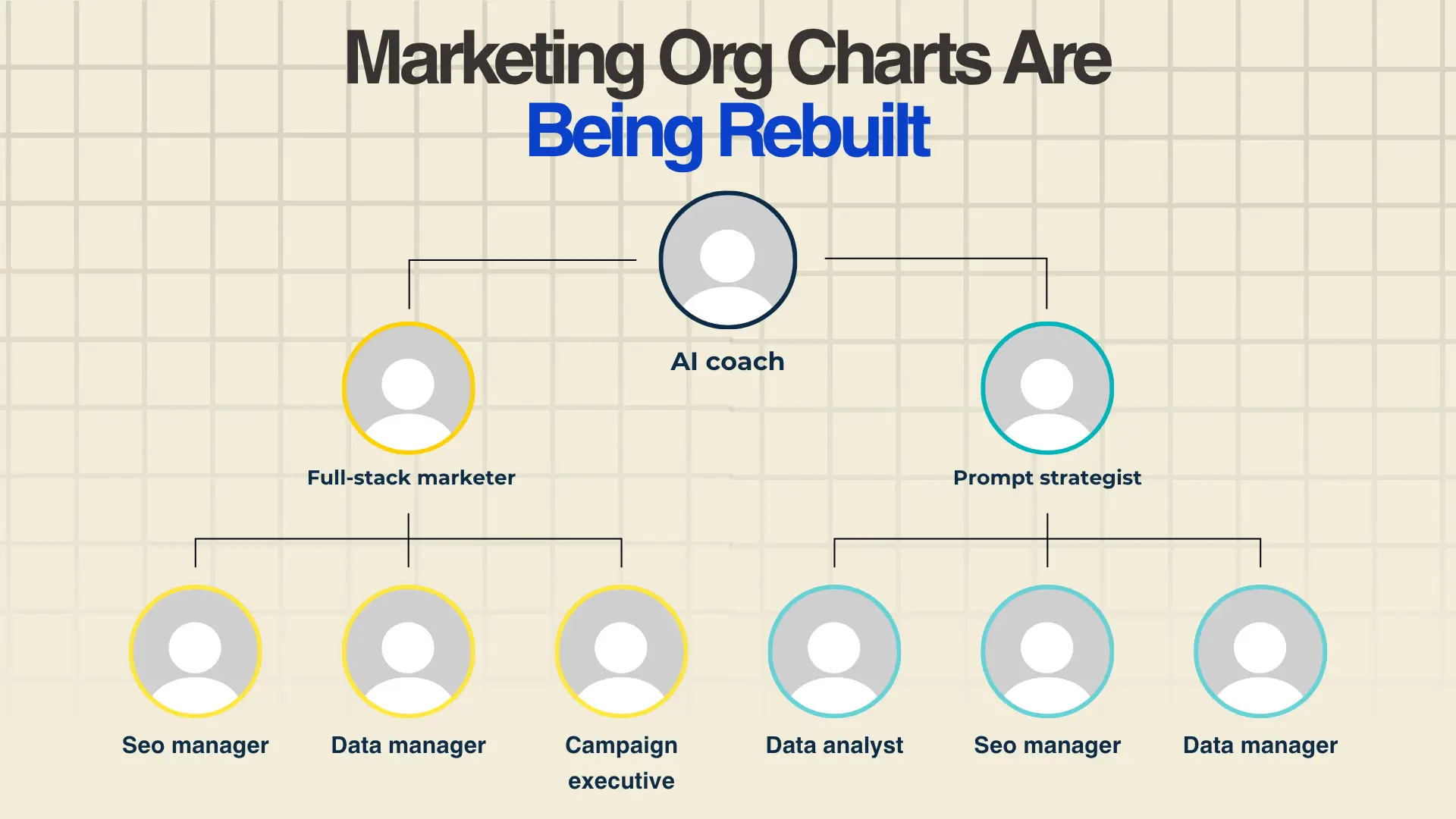
10. The Marketing Org Chart Is Getting Rebuilt Whether You Plan It or Not
The core shift:
AI is restructuring marketing teams from the inside. The CMOs who design that restructuring intentionally will have a significant talent and velocity advantage over those who don't.
Let's be real about what's happening inside most marketing organizations right now: AI is quietly absorbing execution work that used to take multiple people. Campaign managers are spending less time on mechanical tasks and more time on judgment calls. Data analysts are spending less time pulling reports and more time interpreting signals. Copywriters are spending less time on first drafts and more time on brand voice decisions.
This is compression. And it's happening whether teams are organized for it or not.
The WFA's 2026 guidance is explicit: marketing organisations need to redefine their operating models proactively through cross-functional AI upskilling, agile working, and new role definitions or risk being structurally outmaneuvered by competitors who do. What those new role definitions look like in practice is starting to become clear. The full-stack marketer who can build an AI workflow and then write the brief that directs it. The prompt strategist who bridges the creative vision and the model output. The AI coach who brings the whole team's fluency up together.
"The talent gap in 2026 isn't technical. It's strategic. The marketers who understand both how the models work and how consumers think are going to be extraordinarily valuable and extraordinarily scarce."
What you should do right now:
Stop hiring for execution skills that AI is absorbing. Start hiring and retaining for strategic judgment, category expertise, and genuine AI fluency. Not prompt engineering as a party trick, but real operational fluency with the tools that are reshaping the function. Those people are rare right now. Find them before your competitors do.
Here's the Thread Running Through All of It
If I had to summarize what connects all ten of these shifts, it's this: the era of marketing as interruption is ending. Every trend here, agentic AI, zero-party data, verified trust ecosystems, the human-made premium is pointing in the same direction. Away from brands broadcasting to consumers and toward brands earning relevance with them.
The brands that will dominate their categories by 2030 won't be the loudest. They'll be the most trusted, the most contextually relevant, and the most structurally prepared for an architecture that rewards all three. The "Trust Intensity" of a brand, the composite measure of verified content, consented data, and authentic human connection, will be the asset that compounds most reliably over the next five years.
The legacy playbook is becoming invisible: Broad demographics. Cookie-based retargeting. Unverified shoutouts. Vanity metrics. This playbook is becoming structurally invisible. Not slowly. Now.
The 2030 framework is becoming essential: Intent-based profiles. Permission data wallets. Verified trust signals. AI that earns the right to personalize. This is the architecture being built right now, quietly, by the marketing organizations that will be very hard to compete with in four years.
The window to build this framework is open. But it won't stay open much longer.
The boom is coming. Make sure you own the playbook when it arrives.
At getcito, we help CMOs architect exactly this framework from AI-native strategy to trust-first brand infrastructure. If you're mapping your 2026 marketing approach, let's talk.